THE ADVENTURE COLLECTIVE® · Independent discovery and booking for outdoor travel

Walk Kibera with a local guide and move beyond headlines into everyday life—handmade crafts, open-air markets, and a home visit that supports community programs. This three-hour tour mixes cultural insight with practical, on-the-ground perspective.
Walk Kibera with a local guide and move beyond headlines into everyday life—handmade crafts, open-air markets, and a home visit that supports community programs. This three-hour tour mixes cultural insight with practical, on-the-ground perspective.
You step from an air-conditioned minivan into a pulse of Nairobi—narrow lanes threaded with tin roofs, children darting between stalls, and the steady rhythm of daily life that gives Kibera its shape.
Verified experiences and guided adventures in the surrounding area.
Operated by Kibera · Nairobi, Nairobi County
You step from an air-conditioned minivan into a pulse of Nairobi—narrow lanes threaded with tin roofs, children darting between stalls, and the steady rhythm of daily life that gives Kibera its shape.
This three-hour community walking tour moves at a human pace: five stops including a crafts center where salvaged plastic and metal become jewelry, a lively open-air market hawking secondhand goods, and an intimate home visit that offers a practical window into household routines. Kibera’s story is modern and layered—its expansion accelerated during colonial-era labor migrations and continued through urban migration after independence—so the settlement is as much social history as it is geography.
Geology here is unassuming: low-lying Nairobi plains, compacted soil, and improvised drainage channels that shape movement through the neighborhood. Culture is tactile—local entrepreneurship, recycling crafts, and community-led education programs anchor daily life. Guides are often Kibera residents; on this tour, half of the fee goes back to community projects supporting children.
Practical guidance: wear closed-toe shoes for uneven surfaces and bring small-denomination Kenyan shillings for market purchases and tips. Photography is welcomed but always ask before taking portraits. The tour is wheelchair accessible in parts—confirm specifics when booking.
Timing matters—morning light brings cooler temperatures and livelier markets; afternoons can be hot. Respectful clothing and a willingness to listen make the experience richer. This is a civic-facing walk: you’ll leave with hands-on impressions of resilience and everyday innovation, not voyeuristic snapshots—an urban adventure that asks for curiosity and care.
easy.
3 hours.
Light walking fitness; accessible to most people who can manage short distances on uneven ground
Yes; tours are guided by local residents familiar with routes and community norms—standard urban caution applies, and guides manage group safety.
Ask your guide and the host first; many families welcome respectful visitors but expect permission and sometimes a small fee or contribution.
Yes; the tour is family-friendly but consider younger children’s tolerance for crowds and heat—strollers may be difficult in tighter lanes.
According to the operator, 50% of the booking fee funds school supplies and programs for orphans and vulnerable children; ask the guide for specifics on current projects.
Kibera expanded during colonial and post-colonial labor migrations to Nairobi; it evolved into a dense, self-organized neighborhood with strong local networks and informal economies.
Local groups emphasize recycling and income-generating crafts made from reclaimed materials; waste and sanitation are ongoing challenges addressed by community initiatives.
Kibera operates guided outdoor trips and adventures with an emphasis on safety, stewardship, and memorable experiences.
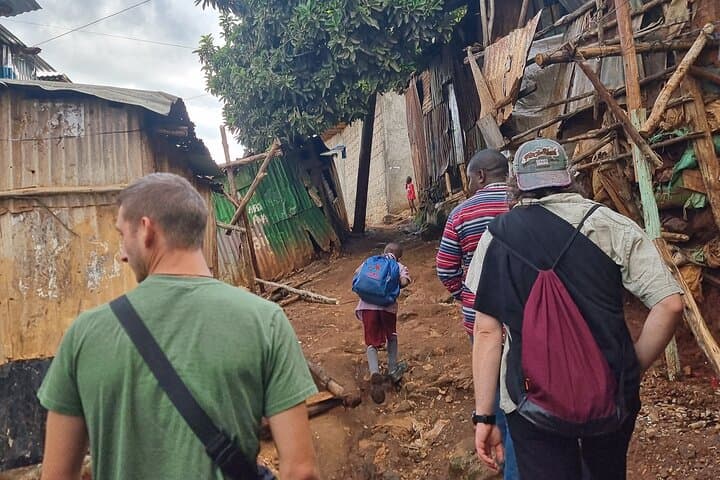



You step from an air-conditioned minivan into a pulse of Nairobi—narrow lanes threaded with tin roofs, children darting between stalls, and the steady rhythm of daily life that gives Kibera its shape.
You step from an air-conditioned minivan into a pulse of Nairobi—narrow lanes threaded with tin roofs, children darting between stalls, and the steady rhythm of daily life that gives Kibera its shape.
This three-hour community walking tour moves at a human pace: five stops including a crafts center where salvaged plastic and metal become jewelry, a lively open-air market hawking secondhand goods, and an intimate home visit that offers a practical window into household routines. Kibera’s story is modern and layered—its expansion accelerated during colonial-era labor migrations and continued through urban migration after independence—so the settlement is as much social history as it is geography.
Geology here is unassuming: low-lying Nairobi plains, compacted soil, and improvised drainage channels that shape movement through the neighborhood. Culture is tactile—local entrepreneurship, recycling crafts, and community-led education programs anchor daily life. Guides are often Kibera residents; on this tour, half of the fee goes back to community projects supporting children.
Practical guidance: wear closed-toe shoes for uneven surfaces and bring small-denomination Kenyan shillings for market purchases and tips. Photography is welcomed but always ask before taking portraits. The tour is wheelchair accessible in parts—confirm specifics when booking.
Timing matters—morning light brings cooler temperatures and livelier markets; afternoons can be hot. Respectful clothing and a willingness to listen make the experience richer. This is a civic-facing walk: you’ll leave with hands-on impressions of resilience and everyday innovation, not voyeuristic snapshots—an urban adventure that asks for curiosity and care.