THE ADVENTURE COLLECTIVE® · Independent discovery and booking for outdoor travel

Escape Nairobi for a half-day at Kiambethu Tea Farm in Limuru—walk tea fields, learn traditional and modern processing, and enjoy a farm-to-table lunch with possible Colobus monkey sightings. Practical enough for a relaxed morning or afternoon away from the city.
Escape Nairobi for a half-day at Kiambethu Tea Farm in Limuru—walk tea fields, learn traditional and modern processing, and enjoy a farm-to-table lunch with possible Colobus monkey sightings. Practical enough for a relaxed morning or afternoon away from the city.
Mist lifts off the ridgeline as the minivan drops you into a bowl of green—rows of young tea shoots ripple like a muted sea, and the air smells faintly of earth and steam. A guide leads the way along narrow paths between bushes, fingers brushing leaves still warm from the morning sun. Colobus monkeys sometimes watch from the indigenous forest, curious and quick, while distant hills roll toward Nairobi.
Verified experiences and guided adventures in the surrounding area.
Operated by Muringa Kenya Tours & Safaris Ltd · Limuru, Kiambu County
Mist lifts off the ridgeline as the minivan drops you into a bowl of green—rows of young tea shoots ripple like a muted sea, and the air smells faintly of earth and steam. A guide leads the way along narrow paths between bushes, fingers brushing leaves still warm from the morning sun. Colobus monkeys sometimes watch from the indigenous forest, curious and quick, while distant hills roll toward Nairobi.
Kiambethu sits on volcanic soils typical of the central Kenyan highlands; those fertile slopes have supported tea cultivation since the early 20th century when colonial plantations reshaped the landscape and local economies. Today the farm balances traditional tea processing with demonstrations that show how withering, rolling and firing transform plucked tips into the black tea Kenya exports worldwide. Cultural touches—stories of farm life, the role of tea in Kenyan cuisine, and the rhythms of harvest—thread through the walk.
Expect easy walking on compacted earth and grassy tracks, a 45–90 minute guided field tour followed by a tea-making talk and a farm-to-table lunch on a veranda overlooking the fields. This is low-impact, accessible countryside exploration that pairs natural observation with simple agro-heritage learning.
Practical tips: go early for cooler air and brighter animal activity, wear closed-toe shoes for uneven ground, carry sunscreen and water, and bring modest cash for small purchases. The day is ideal as a half-day escape from Nairobi—simple, sensory, and grounded in the working landscape of Kenya’s tea country.
easy.
4 hours.
Suitable for most fitness levels; requires standing and short-medium walks on gentle slopes.
The full experience runs about 4 hours including round-trip transfer from Nairobi and roughly 1–1.5 hours on the farm for walks, a tea talk, and lunch.
Yes; the activity is physically easy. Infants are required to sit on a caregiver’s lap during transport per the operator’s policy.
Colobus monkeys and common forest birds are frequently seen at the farm; sightings are more likely in the morning.
Yes—round-trip transfer from Nairobi CBD is included; confirm your pickup point when booking.
Tea farming expanded in Limuru during the early 20th century on volcanic soils that proved ideal for Camellia sinensis, shaping local settlement and trade patterns.
The farm’s mix of plantation and preserved indigenous forest supports biodiversity; visitors are encouraged to stick to paths and avoid feeding wildlife to minimize disturbance.
Muringa Kenya Tours & Safaris Ltd operates guided outdoor trips and adventures with an emphasis on safety, stewardship, and memorable experiences.
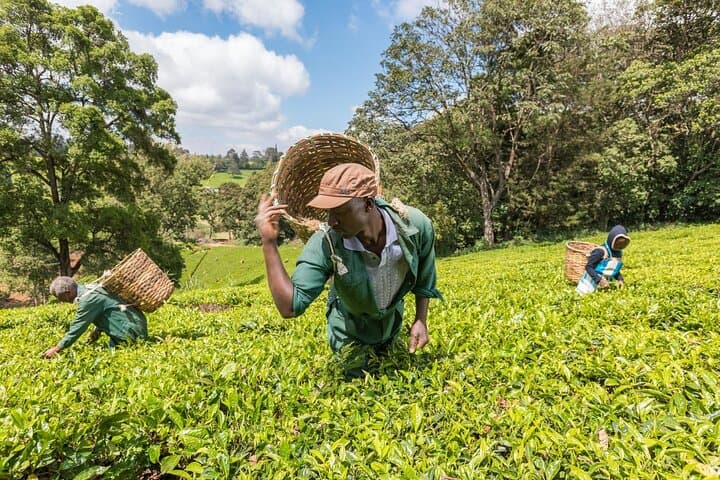


Mist lifts off the ridgeline as the minivan drops you into a bowl of green—rows of young tea shoots ripple like a muted sea, and the air smells faintly of earth and steam. A guide leads the way along narrow paths between bushes, fingers brushing leaves still warm from the morning sun. Colobus monkeys sometimes watch from the indigenous forest, curious and quick, while distant hills roll toward Nairobi.
Mist lifts off the ridgeline as the minivan drops you into a bowl of green—rows of young tea shoots ripple like a muted sea, and the air smells faintly of earth and steam. A guide leads the way along narrow paths between bushes, fingers brushing leaves still warm from the morning sun. Colobus monkeys sometimes watch from the indigenous forest, curious and quick, while distant hills roll toward Nairobi.
Kiambethu sits on volcanic soils typical of the central Kenyan highlands; those fertile slopes have supported tea cultivation since the early 20th century when colonial plantations reshaped the landscape and local economies. Today the farm balances traditional tea processing with demonstrations that show how withering, rolling and firing transform plucked tips into the black tea Kenya exports worldwide. Cultural touches—stories of farm life, the role of tea in Kenyan cuisine, and the rhythms of harvest—thread through the walk.
Expect easy walking on compacted earth and grassy tracks, a 45–90 minute guided field tour followed by a tea-making talk and a farm-to-table lunch on a veranda overlooking the fields. This is low-impact, accessible countryside exploration that pairs natural observation with simple agro-heritage learning.
Practical tips: go early for cooler air and brighter animal activity, wear closed-toe shoes for uneven ground, carry sunscreen and water, and bring modest cash for small purchases. The day is ideal as a half-day escape from Nairobi—simple, sensory, and grounded in the working landscape of Kenya’s tea country.