THE ADVENTURE COLLECTIVE® · Independent discovery and booking for outdoor travel

Drive from the Khorfakkan coast into the folded valleys of the eastern Hajar, visiting the Madha and Nahwa enclaves, farmland pockets, Dabba Cave and small dams. A compact 3–4 hour tour combining short walks and scenic drives.
Drive from the Khorfakkan coast into the folded valleys of the eastern Hajar, visiting the Madha and Nahwa enclaves, farmland pockets, Dabba Cave and small dams. A compact 3–4 hour tour combining short walks and scenic drives.
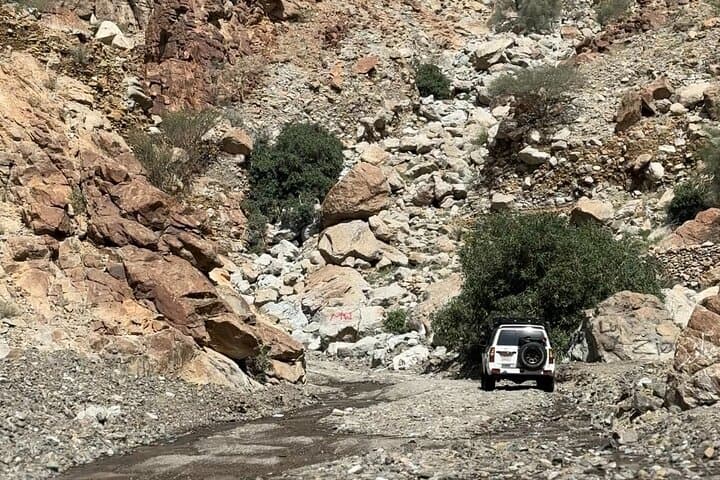
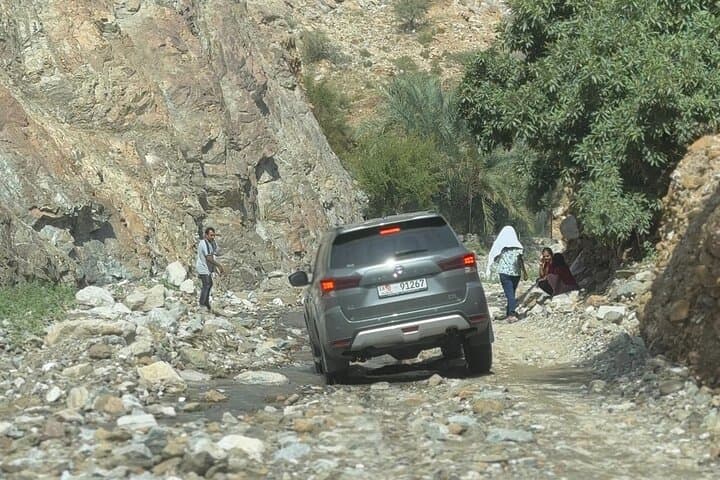
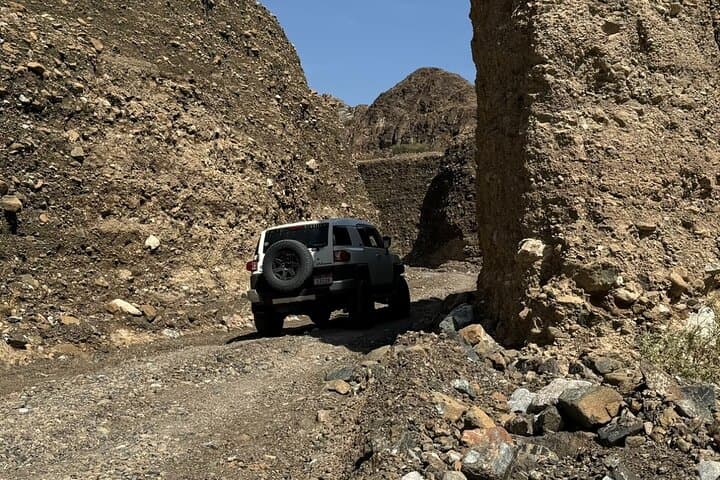
A wind off the Gulf breathes across the parking lot and the car hums inland toward ribs of rock that rise from the coast. Within twenty minutes the flatness of the shoreline drops away and you’re threading into narrow valleys where ancient tracks still carve through terraces and small farms. The tour moves with a steady, curious pace: a drive through the Madha Omani enclave, a short stop at Nahwa’s clustered homes, and deeper into a valley that passes dams, a pocket of farms, and the low-mouth of Dabba Cave.
Verified experiences and guided adventures in the surrounding area.
Operated by The Gate · Khorfakkan, Sharjah
A wind off the Gulf breathes across the parking lot and the car hums inland toward ribs of rock that rise from the coast. Within twenty minutes the flatness of the shoreline drops away and you’re threading into narrow valleys where ancient tracks still carve through terraces and small farms. The tour moves with a steady, curious pace: a drive through the Madha Omani enclave, a short stop at Nahwa’s clustered homes, and deeper into a valley that passes dams, a pocket of farms, and the low-mouth of Dabba Cave.
Geology here reads like an open chapter of the Hajar foothills — folded limestone and ophiolite outcrops shaped by uplift and runoff, where wadis cut abrupt gullies and seasonal streams dare you to follow them downstream. Culturally the route touches on cross-border history: Madha and Nahwa are living examples of boundary lines drawn centuries ago, with villagers keeping mountain farming traditions and date palms in small orchards.
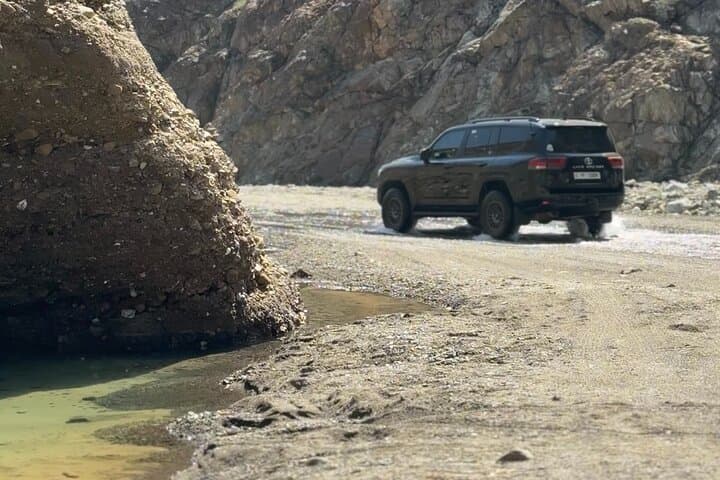
Expect a mix of short roadside walks and easy valley scrambling rather than technical climbing. If weather allows, guides may ford shallow channels where water runs; otherwise the route stays on stony tracks and village lanes. Practicalities are simple but important: bring sun protection, sturdy shoes, and photo-ready layers; carry ID for border enclaves and check weather — flash floods can change plans.
This is a compact, 3–4 hour snapshot of eastern UAE geography and cross-border culture: intimate, visual, and best taken early in the day when the light sharpens the ridgelines and the air still favors walking.
moderate.
3–4 hours.
Participants should have moderate fitness; able to walk short distances on uneven ground and climb low rocky sections.
Yes—this route crosses or passes by international enclaves (Madha/Nahwa). Carry your passport or UAE ID and confirm documentation requirements with the operator before booking.
Walks are short and on mixed terrain: village lanes, rocky tracks, and low valley scrambles. Good mobility and sure-footed shoes are sufficient for most participants.
Stops at Dabba Cave are typically external viewpoints or short walks to the cave mouth; full spelunking is not included and depends on weather and group fitness.
Operators may cancel or reroute for heavy rain or flash-flood risk; this particular tour’s cancellation policy states tours can be canceled for bad weather, so reconfirm on the day.
The Madha–Nahwa enclave pattern reflects historical tribal land claims and strategic choices dating back centuries, leaving a patchwork of jurisdictional pockets in the eastern Hajar foothills.
The valleys are sensitive to erosion and flash floods; stick to tracks, avoid disturbing farm plots, and take all trash with you to minimize impact.
The Gate operates guided outdoor trips and adventures with an emphasis on safety, stewardship, and memorable experiences.
A wind off the Gulf breathes across the parking lot and the car hums inland toward ribs of rock that rise from the coast. Within twenty minutes the flatness of the shoreline drops away and you’re threading into narrow valleys where ancient tracks still carve through terraces and small farms. The tour moves with a steady, curious pace: a drive through the Madha Omani enclave, a short stop at Nahwa’s clustered homes, and deeper into a valley that passes dams, a pocket of farms, and the low-mouth of Dabba Cave.
A wind off the Gulf breathes across the parking lot and the car hums inland toward ribs of rock that rise from the coast. Within twenty minutes the flatness of the shoreline drops away and you’re threading into narrow valleys where ancient tracks still carve through terraces and small farms. The tour moves with a steady, curious pace: a drive through the Madha Omani enclave, a short stop at Nahwa’s clustered homes, and deeper into a valley that passes dams, a pocket of farms, and the low-mouth of Dabba Cave.
Geology here reads like an open chapter of the Hajar foothills — folded limestone and ophiolite outcrops shaped by uplift and runoff, where wadis cut abrupt gullies and seasonal streams dare you to follow them downstream. Culturally the route touches on cross-border history: Madha and Nahwa are living examples of boundary lines drawn centuries ago, with villagers keeping mountain farming traditions and date palms in small orchards.
Expect a mix of short roadside walks and easy valley scrambling rather than technical climbing. If weather allows, guides may ford shallow channels where water runs; otherwise the route stays on stony tracks and village lanes. Practicalities are simple but important: bring sun protection, sturdy shoes, and photo-ready layers; carry ID for border enclaves and check weather — flash floods can change plans.
This is a compact, 3–4 hour snapshot of eastern UAE geography and cross-border culture: intimate, visual, and best taken early in the day when the light sharpens the ridgelines and the air still favors walking.