THE ADVENTURE COLLECTIVE® · Independent discovery and booking for outdoor travel

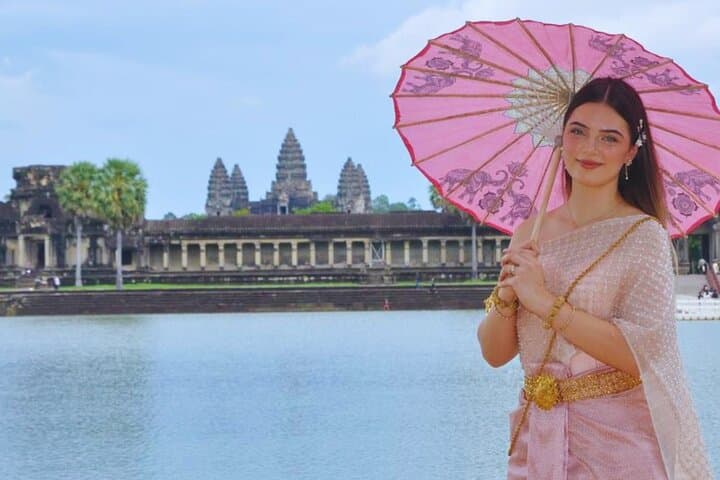
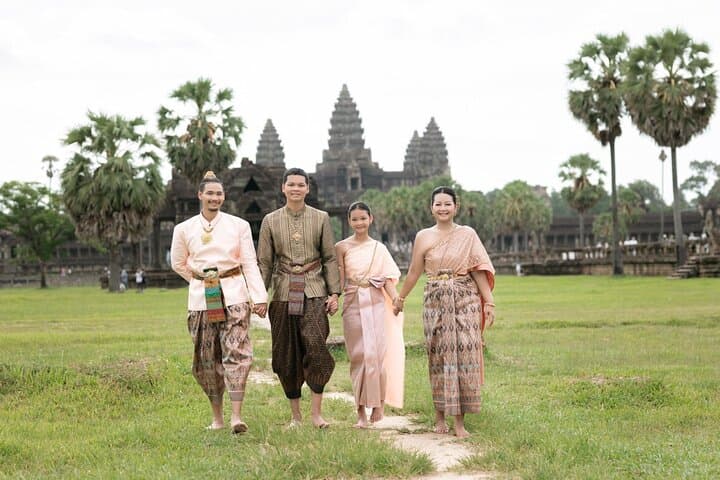
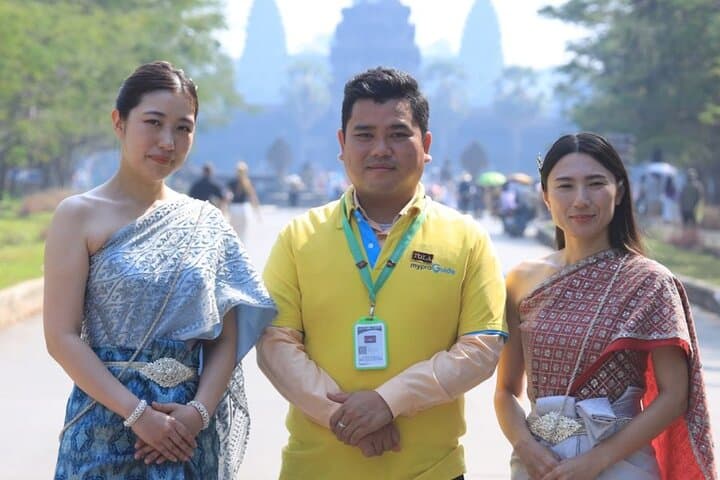
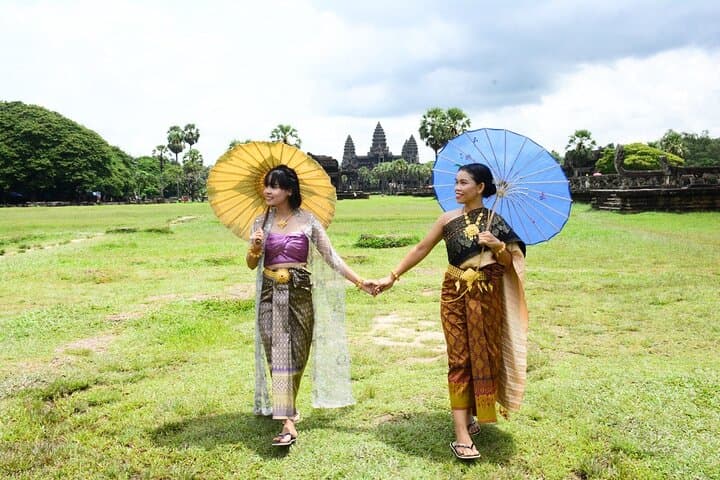
Dress in authentic Khmer costume and walk Angkor Wat as both participant and subject. This four-hour experience pairs traditional attire and accessories with guided photography and temple history at one of Southeast Asia’s most iconic monuments.
Dress in authentic Khmer costume and walk Angkor Wat as both participant and subject. This four-hour experience pairs traditional attire and accessories with guided photography and temple history at one of Southeast Asia’s most iconic monuments.
You step out of your tuk-tuk into the wash of morning light: sandstone facades cool under a faint mist, and the single silhouette of Angkor Wat's central towers rises against a wide, sultry sky. A local dresser guides you through clasps and folds while temple guards watch the slow procession of visitors — the costume settles, and the site changes from monument to stage.
Verified experiences and guided adventures in the surrounding area.
Operated by MyProGuide Cambodia · Siem Reap, Siem Reap Province
You step out of your tuk-tuk into the wash of morning light: sandstone facades cool under a faint mist, and the single silhouette of Angkor Wat's central towers rises against a wide, sultry sky. A local dresser guides you through clasps and folds while temple guards watch the slow procession of visitors — the costume settles, and the site changes from monument to stage.
Angkor Wat was begun in the early 12th century by King Suryavarman II as a Hindu state temple and later adapted for Buddhist worship; its sandstone galleries, bas-reliefs and steep staircases record centuries of ritual and empire. The complex sits on uplifted sandstone bedrock shaped by monsoon runoff; water management—barays and canals—remains visible in the landscape and explains why Siem Reap grew here.
This tour combines cultural dressing with a guided photo route: plan for roughly four hours, including a dressing session (about an hour) and two hours of guided photography and temple history. Expect uneven stone surfaces, brief climbs to the higher galleries and strict dress codes inside some sanctuaries. Angkor Park admission is not included — buy your pass ahead to avoid lines.
Practical edge: go at dawn for soft light and cooler temperatures; bring a modest base layer under the costume, sturdy closed-toe shoes for temple steps, and a lightweight rain layer in the wet season. Respect entry rules, remove shoes where required, and consider a local tip for your dresser — this is one of the ways the tour supports local artisans and guides.
easy.
4 hours.
Light walking ability; must be able to climb steep temple steps and stand for photo sessions.
No — the tour does not include the official Angkor Archaeological Park pass; buy a one-day or multi-day pass at the ticket center or online before the tour.
The tour provides traditional Khmer costume and accessories crafted by local vendors; upgrade options may be available for more elaborate sets.
Most exterior areas and photo zones allow costumes, but some inner sanctuaries require modest dress and shoe removal — follow your guide’s directions and local rules.
If the tour has just two people, transport may be by tuk-tuk instead of a larger vehicle; the itinerary and dressing service remain the same.
Angkor Wat was built in the early 12th century under Suryavarman II and evolved from a Hindu royal temple to a major Buddhist pilgrimage site.
High visitor numbers put pressure on fragile stonework and local communities; follow path restrictions, avoid touching carvings, and support local artisans who practice traditional crafts.
MyProGuide Cambodia operates guided outdoor trips and adventures with an emphasis on safety, stewardship, and memorable experiences.
You step out of your tuk-tuk into the wash of morning light: sandstone facades cool under a faint mist, and the single silhouette of Angkor Wat's central towers rises against a wide, sultry sky. A local dresser guides you through clasps and folds while temple guards watch the slow procession of visitors — the costume settles, and the site changes from monument to stage.
You step out of your tuk-tuk into the wash of morning light: sandstone facades cool under a faint mist, and the single silhouette of Angkor Wat's central towers rises against a wide, sultry sky. A local dresser guides you through clasps and folds while temple guards watch the slow procession of visitors — the costume settles, and the site changes from monument to stage.
Angkor Wat was begun in the early 12th century by King Suryavarman II as a Hindu state temple and later adapted for Buddhist worship; its sandstone galleries, bas-reliefs and steep staircases record centuries of ritual and empire. The complex sits on uplifted sandstone bedrock shaped by monsoon runoff; water management—barays and canals—remains visible in the landscape and explains why Siem Reap grew here.
This tour combines cultural dressing with a guided photo route: plan for roughly four hours, including a dressing session (about an hour) and two hours of guided photography and temple history. Expect uneven stone surfaces, brief climbs to the higher galleries and strict dress codes inside some sanctuaries. Angkor Park admission is not included — buy your pass ahead to avoid lines.
Practical edge: go at dawn for soft light and cooler temperatures; bring a modest base layer under the costume, sturdy closed-toe shoes for temple steps, and a lightweight rain layer in the wet season. Respect entry rules, remove shoes where required, and consider a local tip for your dresser — this is one of the ways the tour supports local artisans and guides.