THE ADVENTURE COLLECTIVE® · Independent discovery and booking for outdoor travel

A full‑day hike from Khinalig to Galeykhudat threads high alpine ridgelines, scree slopes and centuries‑old villages. Expect long transfers, rugged footing and close encounters with traditional mountain life in the Greater Caucasus.
A full‑day hike from Khinalig to Galeykhudat threads high alpine ridgelines, scree slopes and centuries‑old villages. Expect long transfers, rugged footing and close encounters with traditional mountain life in the Greater Caucasus.
A cool morning presses into the cab as the road climbs away from Guba. By the time the 4x4s drop you at Khinalig, the air is thinner and the stone houses sit like watchful neighbors on the ridge. The trail out of the village threads alpine meadows, switchbacks and scree as it drops and then climbs toward Galeykhudat: a three‑hour hike that compresses the Greater Caucasus into a single day.
Verified experiences and guided adventures in the surrounding area.
Operated by Outdoor Caucasus · Khinalig, Quba Rayon
A cool morning presses into the cab as the road climbs away from Guba. By the time the 4x4s drop you at Khinalig, the air is thinner and the stone houses sit like watchful neighbors on the ridge. The trail out of the village threads alpine meadows, switchbacks and scree as it drops and then climbs toward Galeykhudat: a three‑hour hike that compresses the Greater Caucasus into a single day.
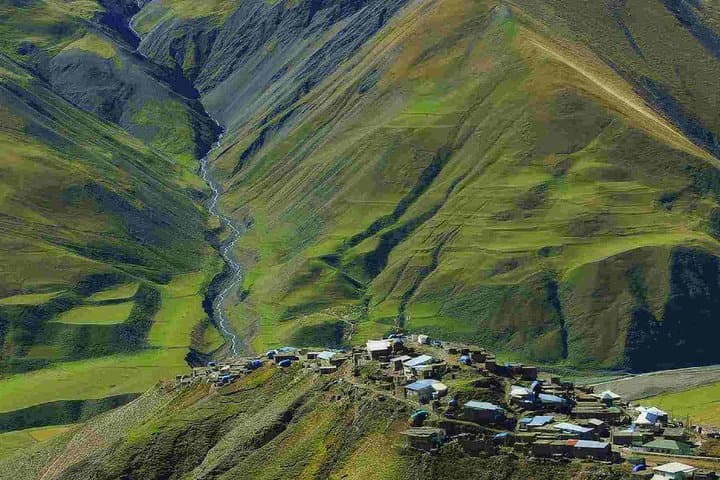
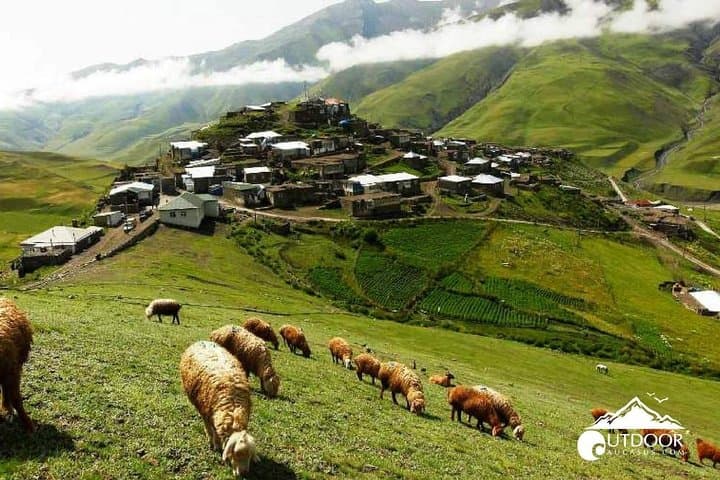
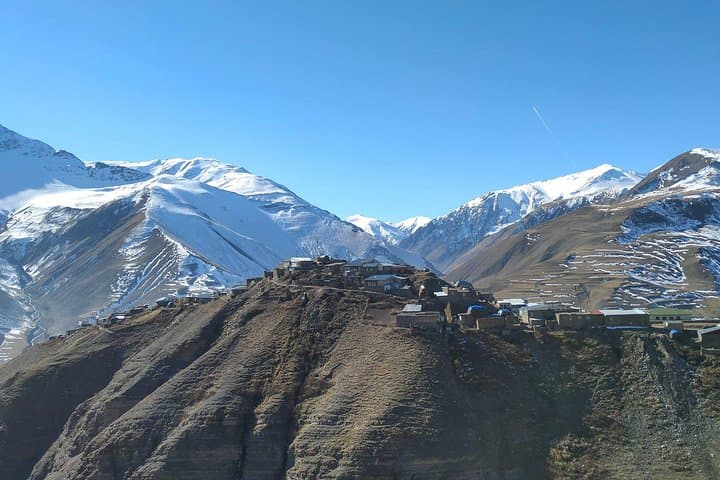
Khinalig is one of the oldest continuous settlements in the range, inhabited for millennia and hanging in a hollow of volcanic and metamorphic rock shaped by glaciation and steep erosion. The Gizilgaya plateau’s cliffs frame the route; streams cut gullies and dare hikers across simple footbridges. Culturally the region retains distinct language, dress and shepherding practices — expect to see terraced fields, stone pens and local flocks tended by families who’ve kept these patterns for generations.
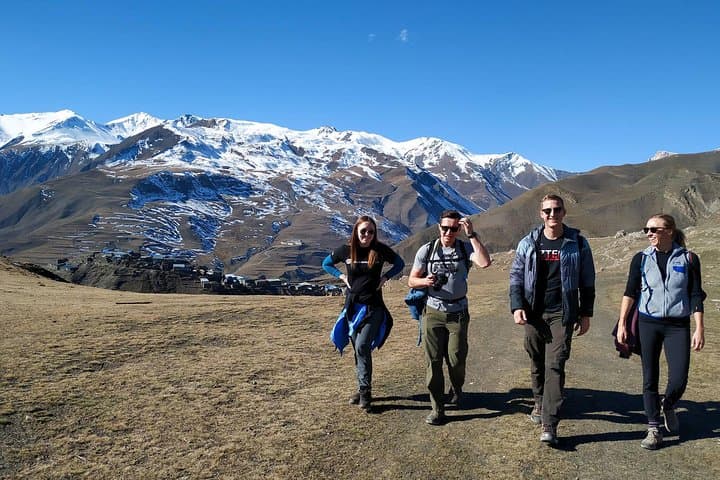
On the trail, the geology is practical: rocky footing, short steep pitches and exposed sections where wind and sun can be sudden companions. Bring layered clothing for rapid temperature shifts, solid boots for scree and poles for the descents. Carry at least 2–3 liters of water; bottled water and a packed local lunch are typically provided with guided trips.
Logistics are straightforward but firm: transfers from Baku to Guba then 4x4 access to Khinalig mean early departures and a long day—plan for 10–12 hours total. Respect private land and local customs, give shepherds room, and pack out all waste. The reward is immediate: raw mountain air, sweeping valley views and an intimate look at one of the Caucasus’s highest living villages.
moderate.
10–12 hours.
Moderate level — comfortable with sustained uphill and downhill hiking and full‑day activity
The hike is moderate: roughly 3 hours on marked but rocky trails with short steep pitches; a basic level of fitness and steady footing are required.
The route reaches around 2,200 m; most people tolerate this well but drink water, move at steady pace and inform guides of any symptoms.
Tours use experienced local guides and the route between Khinalig and Galeykhudat is trodden by villagers, but some sections are indistinct; a guide is recommended.
Guided tours typically include bottled water and a packed or local lunch; carry extra snacks if you need more calories during the hike.
Khinalig is one of the region’s ancient villages, inhabited for millennia and noted for its distinct language, clothing and pastoral traditions.
The alpine environment is fragile—stay on established trails, pack out waste and avoid disturbing pastures and seasonal grazing herds.
Outdoor Caucasus operates guided outdoor trips and adventures with an emphasis on safety, stewardship, and memorable experiences.
A cool morning presses into the cab as the road climbs away from Guba. By the time the 4x4s drop you at Khinalig, the air is thinner and the stone houses sit like watchful neighbors on the ridge. The trail out of the village threads alpine meadows, switchbacks and scree as it drops and then climbs toward Galeykhudat: a three‑hour hike that compresses the Greater Caucasus into a single day.
A cool morning presses into the cab as the road climbs away from Guba. By the time the 4x4s drop you at Khinalig, the air is thinner and the stone houses sit like watchful neighbors on the ridge. The trail out of the village threads alpine meadows, switchbacks and scree as it drops and then climbs toward Galeykhudat: a three‑hour hike that compresses the Greater Caucasus into a single day.
Khinalig is one of the oldest continuous settlements in the range, inhabited for millennia and hanging in a hollow of volcanic and metamorphic rock shaped by glaciation and steep erosion. The Gizilgaya plateau’s cliffs frame the route; streams cut gullies and dare hikers across simple footbridges. Culturally the region retains distinct language, dress and shepherding practices — expect to see terraced fields, stone pens and local flocks tended by families who’ve kept these patterns for generations.
On the trail, the geology is practical: rocky footing, short steep pitches and exposed sections where wind and sun can be sudden companions. Bring layered clothing for rapid temperature shifts, solid boots for scree and poles for the descents. Carry at least 2–3 liters of water; bottled water and a packed local lunch are typically provided with guided trips.
Logistics are straightforward but firm: transfers from Baku to Guba then 4x4 access to Khinalig mean early departures and a long day—plan for 10–12 hours total. Respect private land and local customs, give shepherds room, and pack out all waste. The reward is immediate: raw mountain air, sweeping valley views and an intimate look at one of the Caucasus’s highest living villages.