THE ADVENTURE COLLECTIVE® · Independent discovery and booking for outdoor travel

A full-day drive from Tbilisi carries you over the Datvijvari Pass into Khevsureti’s stone towers, medieval Lebaiskari Tower, and the haunting Anatori Necropolis. Expect dramatic mountain views, narrow roads, and short exploratory walks among ancient village ruins.
A full-day drive from Tbilisi carries you over the Datvijvari Pass into Khevsureti’s stone towers, medieval Lebaiskari Tower, and the haunting Anatori Necropolis. Expect dramatic mountain views, narrow roads, and short exploratory walks among ancient village ruins.
You crest Datvijvari Pass and the road drops into a bowl of stone towers and steep terraces — wind carving the air and turquoise water glinting at the reservoir below. The vehicle eases through hairpin turns; mountains press close, and the scattered towers of Shatili appear like a compact, defensive village frozen between cliffs.
Verified experiences and guided adventures in the surrounding area.
Operated by BB Georgia Travel · Shatili, Mtskheta-Mtianeti
You crest Datvijvari Pass and the road drops into a bowl of stone towers and steep terraces — wind carving the air and turquoise water glinting at the reservoir below. The vehicle eases through hairpin turns; mountains press close, and the scattered towers of Shatili appear like a compact, defensive village frozen between cliffs.
This is Khevsureti: a highland district shaped by tectonics and centuries of border life. The Jinvali Reservoir reflects the Caucasus slopes, while the pass at roughly 2,700 meters gives a clear view of glaciated ridgelines and folded geology that once pushed these peaks skyward. Shatili’s stacked stone houses and Lebaiskari Tower recall a medieval frontier culture where architecture doubled as armor. Nearby, the Anatori Necropolis—stone crypts carved into the hillside—offers a sober glimpse into epidemic-era funerary practice and local ritual.
Expect short on-foot exploration rather than long hikes: cobbled alleys, tower interiors, viewpoints, and a walk among crypts. The route follows narrow highland roads that can be rough; summer is the most reliable window. Local hospitality and shepherding traditions remain visible—watch for small herds and seasonal alpine pastures.
Practical guidance: bring layered clothing for rapid temperature shifts, sturdy footwear for uneven stone surfaces, and a good camera with spare batteries. Hydrate before reaching high passes and allow time for slow driving on narrow roads. If you have mobility limits, mention that for pickup and drop-off options — much of the visit is vehicle-assisted but the village terrain is steep and stepped.
moderate.
6 hours.
Suitable for most fitness levels; involves short, steep walks and steps in village terrain.
The tour is approximately 6 hours round-trip from central Tbilisi including stops at Jinvali Reservoir, Datvijvari Pass, Shatili, Lebaiskari Tower, and Anatori Necropolis.
Roads include narrow, steep mountain sections; most operators use sturdy vehicles—confirm vehicle type if you require a smoother ride.
Some towers are open to visitors, but interiors can be tight and uneven; follow guide instructions and avoid climbing unstable structures.
Summer and early fall (June–September) are most reliable for road access; snow can render the pass impassable in winter.
Khevsureti was historically a highland buffer zone; its stone towers and compact villages reflect centuries of clan defense and pastoral life.
The area’s fragile alpine ecosystems and historical structures benefit from low-impact visitation—stick to paths, avoid collecting artifacts, and support local guides.
BB Georgia Travel operates guided outdoor trips and adventures with an emphasis on safety, stewardship, and memorable experiences.
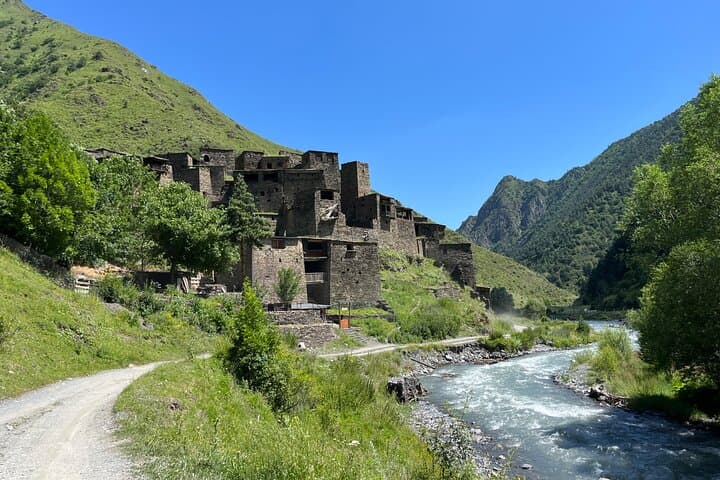
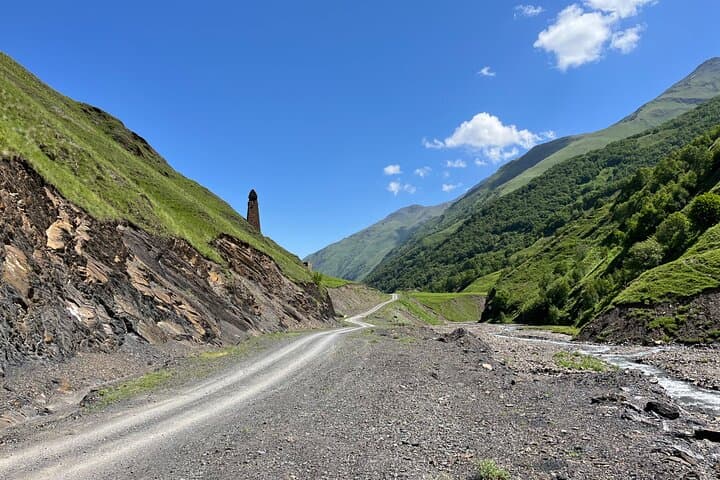
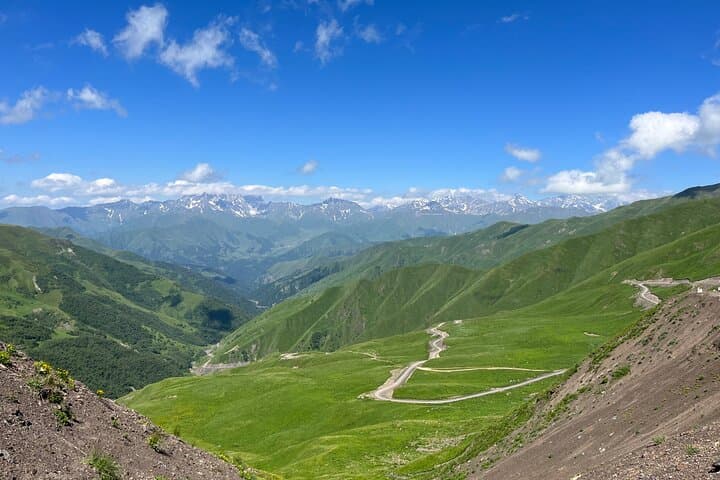
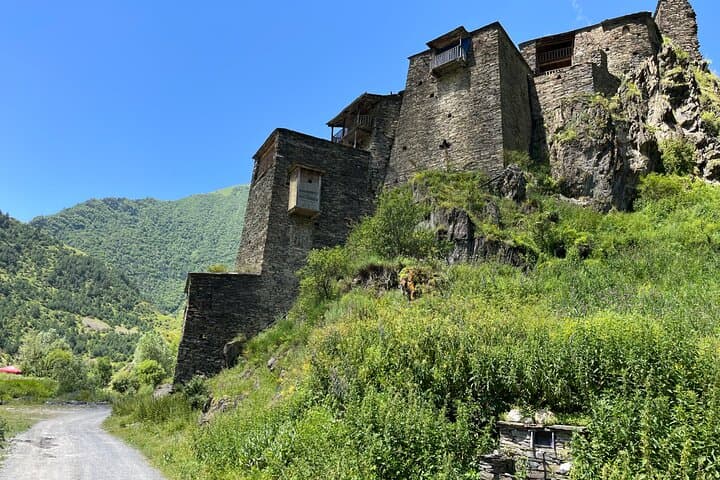
You crest Datvijvari Pass and the road drops into a bowl of stone towers and steep terraces — wind carving the air and turquoise water glinting at the reservoir below. The vehicle eases through hairpin turns; mountains press close, and the scattered towers of Shatili appear like a compact, defensive village frozen between cliffs.
You crest Datvijvari Pass and the road drops into a bowl of stone towers and steep terraces — wind carving the air and turquoise water glinting at the reservoir below. The vehicle eases through hairpin turns; mountains press close, and the scattered towers of Shatili appear like a compact, defensive village frozen between cliffs.
This is Khevsureti: a highland district shaped by tectonics and centuries of border life. The Jinvali Reservoir reflects the Caucasus slopes, while the pass at roughly 2,700 meters gives a clear view of glaciated ridgelines and folded geology that once pushed these peaks skyward. Shatili’s stacked stone houses and Lebaiskari Tower recall a medieval frontier culture where architecture doubled as armor. Nearby, the Anatori Necropolis—stone crypts carved into the hillside—offers a sober glimpse into epidemic-era funerary practice and local ritual.
Expect short on-foot exploration rather than long hikes: cobbled alleys, tower interiors, viewpoints, and a walk among crypts. The route follows narrow highland roads that can be rough; summer is the most reliable window. Local hospitality and shepherding traditions remain visible—watch for small herds and seasonal alpine pastures.
Practical guidance: bring layered clothing for rapid temperature shifts, sturdy footwear for uneven stone surfaces, and a good camera with spare batteries. Hydrate before reaching high passes and allow time for slow driving on narrow roads. If you have mobility limits, mention that for pickup and drop-off options — much of the visit is vehicle-assisted but the village terrain is steep and stepped.