THE ADVENTURE COLLECTIVE® · Independent discovery and booking for outdoor travel

Drive one of the highest motorable passes to reach Nubra Valley’s sand dunes, hot springs and hilltop monasteries. This private overnight trip pairs Hunder’s desert scenes with Diskit Gompa views and easy high-altitude exploration.
Drive one of the highest motorable passes to reach Nubra Valley’s sand dunes, hot springs and hilltop monasteries. This private overnight trip pairs Hunder’s desert scenes with Diskit Gompa views and easy high-altitude exploration.
You round a final hairpin and the road throws open — a broad riverplain cut by the silver braid of the Shyok, sand dunes waiting like islands against a backdrop of craggy, wind-sculpted peaks. This is Nubra Valley: high cold desert where long light and sudden wind shape everything.
Verified experiences and guided adventures in the surrounding area.
Operated by Agora Voyages Pvt. Ltd. · Diskit, Ladakh
You round a final hairpin and the road throws open — a broad riverplain cut by the silver braid of the Shyok, sand dunes waiting like islands against a backdrop of craggy, wind-sculpted peaks. This is Nubra Valley: high cold desert where long light and sudden wind shape everything.
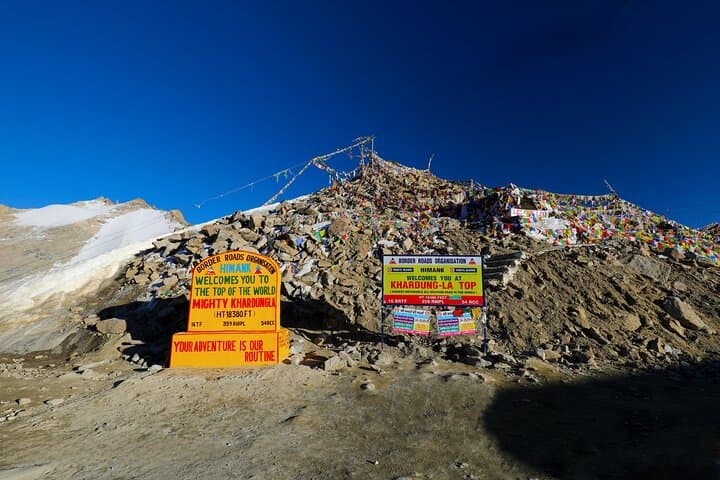
The route from Leh climbs Khardung La, one of the world’s highest motorable passes (reported at about 18,379 ft). Historically this corridor connected Ladakh with Central Asian trade routes and still carries the feel of a frontier road: sparse settlements, prayer flags marking passes and monasteries like Diskit Gompa watching the floodplain below.
Geologically, Nubra is a laid-down riverbed—sandy expanses and alluvial flats below steep Himalayan ridgelines—creating the conditions for Hunder’s sand dunes and the surprising presence of double-humped Bactrian camels. Culturally the valley is Tibetan Buddhist: gompas, mani walls and music of wind through prayer flags punctuate visits to Sumur and Diskit.
Practical beat: the drive is about 160 km each way from Leh and usually takes five hours with stops. Altitude is the real variable — acclimatize in Leh for at least 24–48 hours before attempting the pass, carry water, and dress in layers for rapid temperature swings. Inner Line Permits are required for travel into Nubra and are handled in Leh. Expect sleeps in tents or simple guesthouses; bring sun protection, a warm hat and sturdy footwear for dune walks and monastery steps.
The trip balances easy driving with high-altitude realities: panoramic reward for relatively little technical effort, provided you respect the thin air and fragile landscape.
moderate.
2 days.
Suitable for travelers in average fitness who can tolerate short walks, dune climbs and basic hiking at altitude
Yes — an Inner Line Permit is required for Indian and foreign visitors entering Nubra; permits are issued in Leh at the DC office or sometimes arranged by operators.
Khardung La is reported around 18,379 ft; roads are generally passable in summer but can be narrow, steep and affected by weather — experienced drivers and acclimatized passengers are recommended.
Yes — the double-humped Bactrian camels are commonly seen at Hunder dunes and are a popular photo stop; rides are offered but check animal welfare practices first.
Late May through September is the main season when roads are open and temperatures are manageable; winters bring heavy closures and extreme cold.
Nubra was a branch of old Trans-Himalayan trade routes and preserves Tibetan Buddhist traditions; Diskit Gompa stands as a cultural and spiritual landmark overlooking the valley.
The cold desert is ecologically fragile with scarce water; stick to marked paths, avoid single-use plastics and support local homestays to keep tourism sustainable.
Agora Voyages Pvt. Ltd. operates guided outdoor trips and adventures with an emphasis on safety, stewardship, and memorable experiences.



You round a final hairpin and the road throws open — a broad riverplain cut by the silver braid of the Shyok, sand dunes waiting like islands against a backdrop of craggy, wind-sculpted peaks. This is Nubra Valley: high cold desert where long light and sudden wind shape everything.
You round a final hairpin and the road throws open — a broad riverplain cut by the silver braid of the Shyok, sand dunes waiting like islands against a backdrop of craggy, wind-sculpted peaks. This is Nubra Valley: high cold desert where long light and sudden wind shape everything.
The route from Leh climbs Khardung La, one of the world’s highest motorable passes (reported at about 18,379 ft). Historically this corridor connected Ladakh with Central Asian trade routes and still carries the feel of a frontier road: sparse settlements, prayer flags marking passes and monasteries like Diskit Gompa watching the floodplain below.
Geologically, Nubra is a laid-down riverbed—sandy expanses and alluvial flats below steep Himalayan ridgelines—creating the conditions for Hunder’s sand dunes and the surprising presence of double-humped Bactrian camels. Culturally the valley is Tibetan Buddhist: gompas, mani walls and music of wind through prayer flags punctuate visits to Sumur and Diskit.
Practical beat: the drive is about 160 km each way from Leh and usually takes five hours with stops. Altitude is the real variable — acclimatize in Leh for at least 24–48 hours before attempting the pass, carry water, and dress in layers for rapid temperature swings. Inner Line Permits are required for travel into Nubra and are handled in Leh. Expect sleeps in tents or simple guesthouses; bring sun protection, a warm hat and sturdy footwear for dune walks and monastery steps.
The trip balances easy driving with high-altitude realities: panoramic reward for relatively little technical effort, provided you respect the thin air and fragile landscape.