THE ADVENTURE COLLECTIVE® · Independent discovery and booking for outdoor travel

A one-day Khao Lak excursion that combines class II–III white-water rafting, a canopy zipline and a refreshing waterfall swim, with a stop at the Wat Suwan Khuha 'Monkey Temple.' Practical for families and first-time rafters, it’s a high-energy way to see Phang Nga’s karst country.
A one-day Khao Lak excursion that combines class II–III white-water rafting, a canopy zipline and a refreshing waterfall swim, with a stop at the Wat Suwan Khuha 'Monkey Temple.' Practical for families and first-time rafters, it’s a high-energy way to see Phang Nga’s karst country.
You step off the minivan and the air immediately changes: cooler, spiked with forest humidity, and threaded with the sound of a river daring you forward. Guides unload paddles and bright helmets while macaques chatter at the temple entrance—an early warning that this day will move between human history and raw jungle energy. By the time the raft pushes away from shore the current has already decided the pace; you’re along for a seven-hour ride that stitches zipline platforms, limestone grottos and a waterfall-swim into one continuous pulse.
Verified experiences and guided adventures in the surrounding area.
Operated by Best Rafting 4U · Khao Lak, Phang Nga
You step off the minivan and the air immediately changes: cooler, spiked with forest humidity, and threaded with the sound of a river daring you forward. Guides unload paddles and bright helmets while macaques chatter at the temple entrance—an early warning that this day will move between human history and raw jungle energy. By the time the raft pushes away from shore the current has already decided the pace; you’re along for a seven-hour ride that stitches zipline platforms, limestone grottos and a waterfall-swim into one continuous pulse.
Phang Nga’s landscape reads like a geology primer: fractured limestone karsts rising from emerald foliage, the product of millions of years of marine deposition and fresh-water erosion. Wat Suwan Khuha—often called the Monkey Temple—sits in a cave cleaved from one of those karsts and has been a spiritual waypoint for locals for generations. The valley below, drained by fast, seasonal rivers, was once part of a regional tin-trade corridor; today its motor for tourism is adventure travel and community-run camp operations.
Culturally the region is austere and practical—temple visits are quiet, and lunch is a shared, lively pause where grilled fish and Thai curries taste better after morning exertion. Guides usually come from nearby towns; many grew up on these rivers and read current, rock and weather the way others read maps. Conservation is visible in small practices: operators use reusable equipment, manage trash at camps, and route small groups to keep banks from eroding.
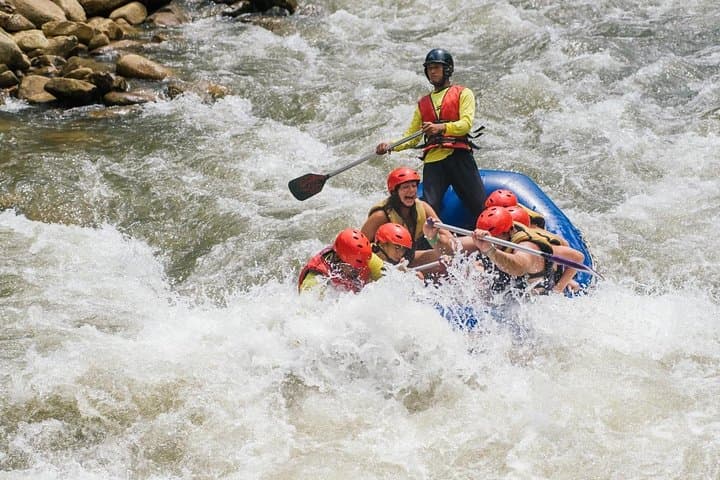
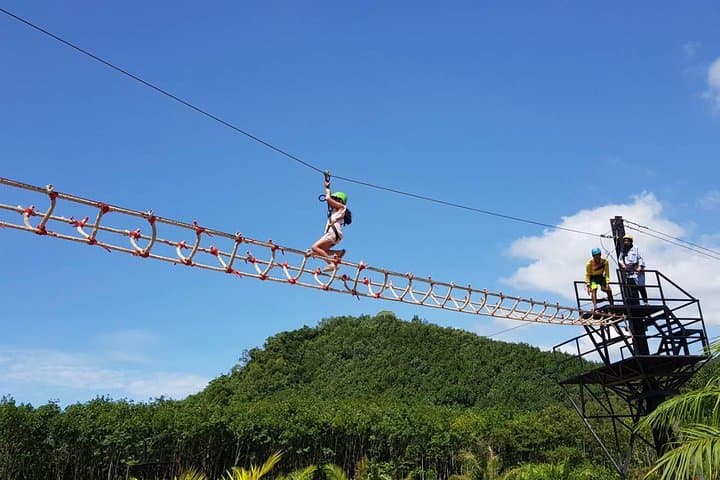
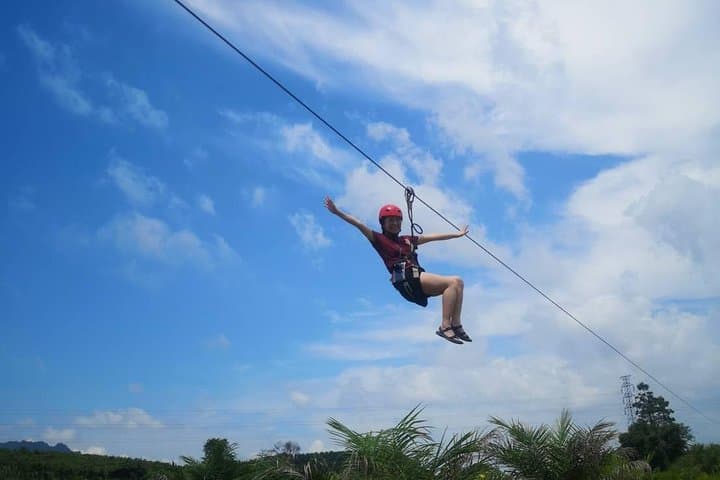
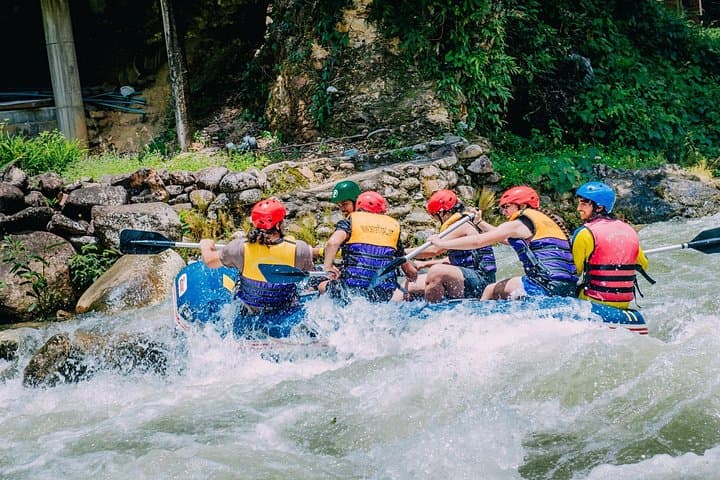
The trip flows in sections: a calm boat or short transfer to the rafting start, class II–III rapids that require teamwork and steady strokes, a mid-day zipline that launches you over canopy and river scarps, then a pool beneath a forest waterfall built for cooling off and reflection. Expect wet, slippery rock, sudden sunlight through the canopy, and the odd monkey stealing an unattended snack.
Practical guidance: book a morning departure from Khao Lak or Phuket to beat afternoon rains and traffic; confirm the pickup time (often 60 minutes before departure). Wear quick-dry clothes and water shoes with good grip;bring a dry bag for phones and a small amount of cash for photos or tips. Fitness needs are moderate—paddling is intermittent and guided; a basic level of mobility and the ability to follow safety instructions are essential. Pay attention to the 100kg zipline limit and medical exclusions (pregnancy, serious back or heart conditions). Operators provide life vests, helmets and lunch, but arriving rested, hydrated and sun-protected makes the day easier and more fun.
By dusk, the ride back is quieter. The river’s final eddies seem to push you toward the road, as if to remind you the jungle is still there, waiting for another visit.
moderate.
7 hours.
Suitable for people with average fitness; requires ability to follow instructions, paddle intermittently, and manage short hikes on slippery terrain.
The full experience is about 7 hours (420 minutes) including pickup and drop-off; operators provide a pickup time roughly 60 minutes before departure.
No prior experience is necessary; guides give safety briefings and lead the rapids. Basic mobility and listening to instructions are required.
Not recommended for pregnant travelers or people with serious back or heart issues; zipline and some platforms have a 100 kg weight limit—confirm at booking.
Yes—expect to get splashed and possibly soaked in rapids; life vests and helmets are provided.
Yes—hotel pickup and drop-off within the service area are included; confirm your exact pickup point when booking.
Children over ~6 years may join but must be accompanied by an adult; operators set final age/weight suitability at booking.
Phang Nga’s karst valleys formed from ancient seabed deposits; the coastal hinterland later supported a tin-trade economy that shaped local towns.
Operators aim to reduce single-use plastics and keep group sizes small to limit riverbank erosion; visitors should avoid feeding wildlife and pack out waste.
Best Rafting 4U operates guided outdoor trips and adventures with an emphasis on safety, stewardship, and memorable experiences.
You step off the minivan and the air immediately changes: cooler, spiked with forest humidity, and threaded with the sound of a river daring you forward. Guides unload paddles and bright helmets while macaques chatter at the temple entrance—an early warning that this day will move between human history and raw jungle energy. By the time the raft pushes away from shore the current has already decided the pace; you’re along for a seven-hour ride that stitches zipline platforms, limestone grottos and a waterfall-swim into one continuous pulse.
You step off the minivan and the air immediately changes: cooler, spiked with forest humidity, and threaded with the sound of a river daring you forward. Guides unload paddles and bright helmets while macaques chatter at the temple entrance—an early warning that this day will move between human history and raw jungle energy. By the time the raft pushes away from shore the current has already decided the pace; you’re along for a seven-hour ride that stitches zipline platforms, limestone grottos and a waterfall-swim into one continuous pulse.
Phang Nga’s landscape reads like a geology primer: fractured limestone karsts rising from emerald foliage, the product of millions of years of marine deposition and fresh-water erosion. Wat Suwan Khuha—often called the Monkey Temple—sits in a cave cleaved from one of those karsts and has been a spiritual waypoint for locals for generations. The valley below, drained by fast, seasonal rivers, was once part of a regional tin-trade corridor; today its motor for tourism is adventure travel and community-run camp operations.
Culturally the region is austere and practical—temple visits are quiet, and lunch is a shared, lively pause where grilled fish and Thai curries taste better after morning exertion. Guides usually come from nearby towns; many grew up on these rivers and read current, rock and weather the way others read maps. Conservation is visible in small practices: operators use reusable equipment, manage trash at camps, and route small groups to keep banks from eroding.
The trip flows in sections: a calm boat or short transfer to the rafting start, class II–III rapids that require teamwork and steady strokes, a mid-day zipline that launches you over canopy and river scarps, then a pool beneath a forest waterfall built for cooling off and reflection. Expect wet, slippery rock, sudden sunlight through the canopy, and the odd monkey stealing an unattended snack.
Practical guidance: book a morning departure from Khao Lak or Phuket to beat afternoon rains and traffic; confirm the pickup time (often 60 minutes before departure). Wear quick-dry clothes and water shoes with good grip;bring a dry bag for phones and a small amount of cash for photos or tips. Fitness needs are moderate—paddling is intermittent and guided; a basic level of mobility and the ability to follow safety instructions are essential. Pay attention to the 100kg zipline limit and medical exclusions (pregnancy, serious back or heart conditions). Operators provide life vests, helmets and lunch, but arriving rested, hydrated and sun-protected makes the day easier and more fun.
By dusk, the ride back is quieter. The river’s final eddies seem to push you toward the road, as if to remind you the jungle is still there, waiting for another visit.