THE ADVENTURE COLLECTIVE® · Independent discovery and booking for outdoor travel

Observe rescued elephants in a quiet, observation-only sanctuary near Khao Lak. Learn about rehabilitation, feeding routines, and ethical tourism in a short, educational visit that supports conservation.
Observe rescued elephants in a quiet, observation-only sanctuary near Khao Lak. Learn about rehabilitation, feeding routines, and ethical tourism in a short, educational visit that supports conservation.
You step off the shaded path into a clearing where trunks probe the air like slow, inquisitive hands. Sunlight patches the dust; birds chatter from low branches while elephants meander at their own pace, eating, dusting, and splashing in shallow pools. The experience is deliberately quiet—no rides, no performances—just time to watch these rescued animals express natural behaviors under the care of attentive handlers.
Verified experiences and guided adventures in the surrounding area.
Operated by Khaolak Elephant Sanctuary · Khao Lak, Phang Nga
You step off the shaded path into a clearing where trunks probe the air like slow, inquisitive hands. Sunlight patches the dust; birds chatter from low branches while elephants meander at their own pace, eating, dusting, and splashing in shallow pools. The experience is deliberately quiet—no rides, no performances—just time to watch these rescued animals express natural behaviors under the care of attentive handlers.
Khao Lak sits on the western flank of Thailand’s Phang Nga Province, a coastline of low limestone ridges and coastal forests shaped by monsoon rhythms. Elephants here are part of a longer history: working animals once used in logging and tourism, now increasingly protected by sanctuaries that prioritize rehabilitation. Guides weave conservation context through the visit, explaining individual stories, dietary needs, and the sanctuary’s role in shifting local tourism away from exploitative practices.
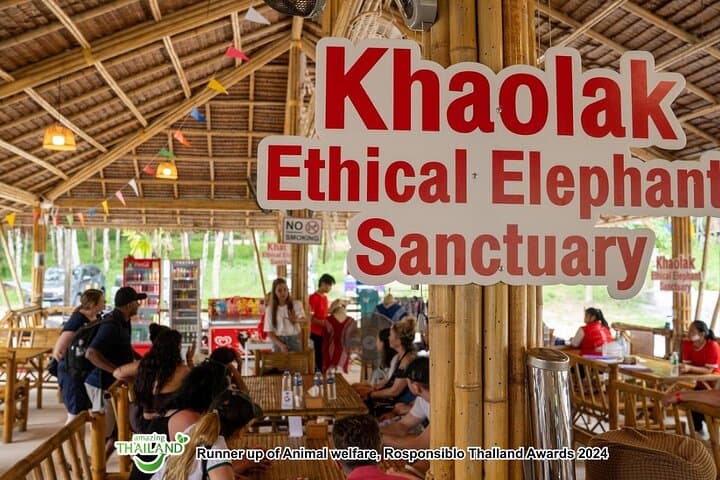
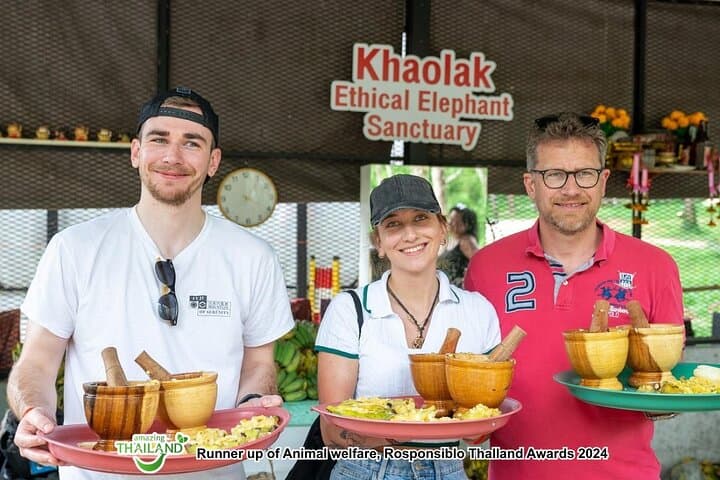
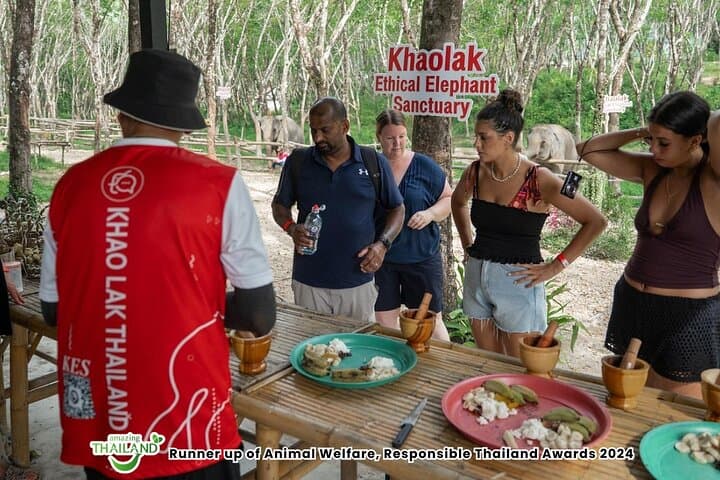
Expect close observation rather than interaction: caretakers prepare snack stations, explain feeding and medical routines, and answer questions about elephant social structure and local conservation policy. Terrain is flat and unpaved—comfortable shoes will do—and the short visit fits easily into a day spent exploring Khao Lak’s beaches and inland trails.
Practical tips: arrive in morning heat or late afternoon to avoid midday sun; carry water and mosquito repellent; bring a camera with a zoom lens to respect distance; follow staff instructions at all times to ensure animal welfare. This visit is best for travelers seeking ethical wildlife encounters and who want to support responsible, community-minded conservation.
easy.
30 minutes.
Suitable for all fitness levels; minimal walking on flat, unpaved paths.
No; this sanctuary is observation-only—touching, bathing, or riding elephants is not permitted to protect their welfare.
The standard experience is approximately 30 minutes focused on observation, feeding demonstrations, and a conservation briefing.
Yes; the visit is low-impact and suitable for all ages, but follow staff guidance and supervise children closely near animals.
Revenue supports rescue, veterinary care, tailored diets, and community education initiatives that promote ethical tourism alternatives.
Many elephants in southern Thailand were formerly used in logging and entertainment; sanctuaries like this reflect a regional shift toward rehabilitation and ethical tourism.
Visits fund animal care and education; follow-site rules and minimize single-use plastics to reduce your impact.
Khaolak Elephant Sanctuary operates guided outdoor trips and adventures with an emphasis on safety, stewardship, and memorable experiences.
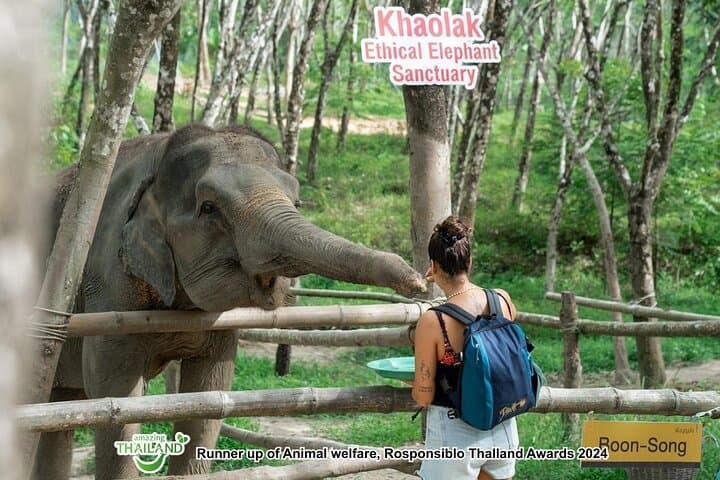
You step off the shaded path into a clearing where trunks probe the air like slow, inquisitive hands. Sunlight patches the dust; birds chatter from low branches while elephants meander at their own pace, eating, dusting, and splashing in shallow pools. The experience is deliberately quiet—no rides, no performances—just time to watch these rescued animals express natural behaviors under the care of attentive handlers.
You step off the shaded path into a clearing where trunks probe the air like slow, inquisitive hands. Sunlight patches the dust; birds chatter from low branches while elephants meander at their own pace, eating, dusting, and splashing in shallow pools. The experience is deliberately quiet—no rides, no performances—just time to watch these rescued animals express natural behaviors under the care of attentive handlers.
Khao Lak sits on the western flank of Thailand’s Phang Nga Province, a coastline of low limestone ridges and coastal forests shaped by monsoon rhythms. Elephants here are part of a longer history: working animals once used in logging and tourism, now increasingly protected by sanctuaries that prioritize rehabilitation. Guides weave conservation context through the visit, explaining individual stories, dietary needs, and the sanctuary’s role in shifting local tourism away from exploitative practices.
Expect close observation rather than interaction: caretakers prepare snack stations, explain feeding and medical routines, and answer questions about elephant social structure and local conservation policy. Terrain is flat and unpaved—comfortable shoes will do—and the short visit fits easily into a day spent exploring Khao Lak’s beaches and inland trails.
Practical tips: arrive in morning heat or late afternoon to avoid midday sun; carry water and mosquito repellent; bring a camera with a zoom lens to respect distance; follow staff instructions at all times to ensure animal welfare. This visit is best for travelers seeking ethical wildlife encounters and who want to support responsible, community-minded conservation.