THE ADVENTURE COLLECTIVE® · Independent discovery and booking for outdoor travel

Beat the crowds on a six-hour small-group tour to Keukenhof and the surrounding tulip fields. Wander paved garden paths among seven million bulbs, visit a working tulip barn, and climb a dune for coastal field views.
Beat the crowds on a six-hour small-group tour to Keukenhof and the surrounding tulip fields. Wander paved garden paths among seven million bulbs, visit a working tulip barn, and climb a dune for coastal field views.
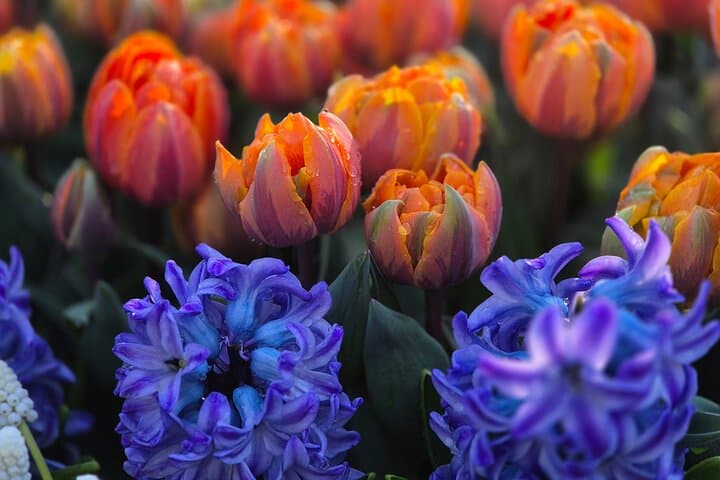
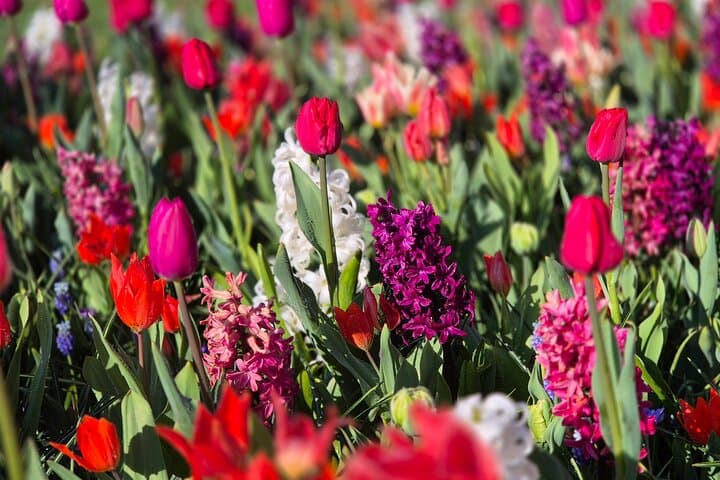
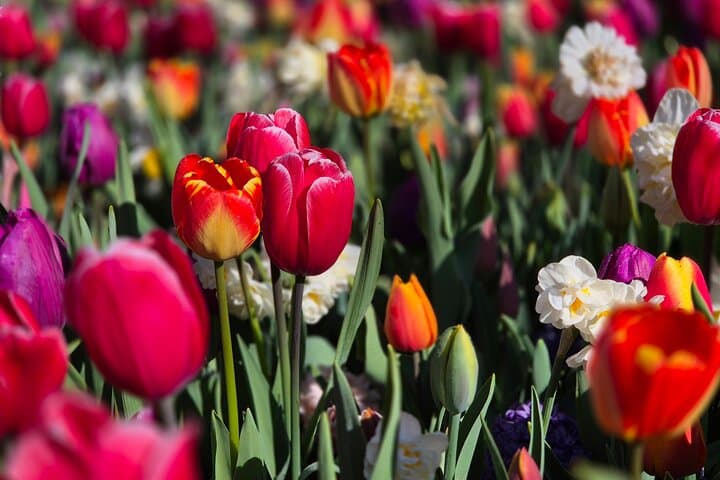
Morning light slices across precise ranks of tulips as your small group arrives before the main gates open. Keukenhof’s open lawns and carved garden rooms—about 32 hectares—unfurl seven million bulbs in a planned riot of color; daffodils and hyacinths thread their scents through the air while visitors move along paved paths and willow-lined canals.
Verified experiences and guided adventures in the surrounding area.
Operated by Dutch Tours · Lisse, South Holland
Morning light slices across precise ranks of tulips as your small group arrives before the main gates open. Keukenhof’s open lawns and carved garden rooms—about 32 hectares—unfurl seven million bulbs in a planned riot of color; daffodils and hyacinths thread their scents through the air while visitors move along paved paths and willow-lined canals.
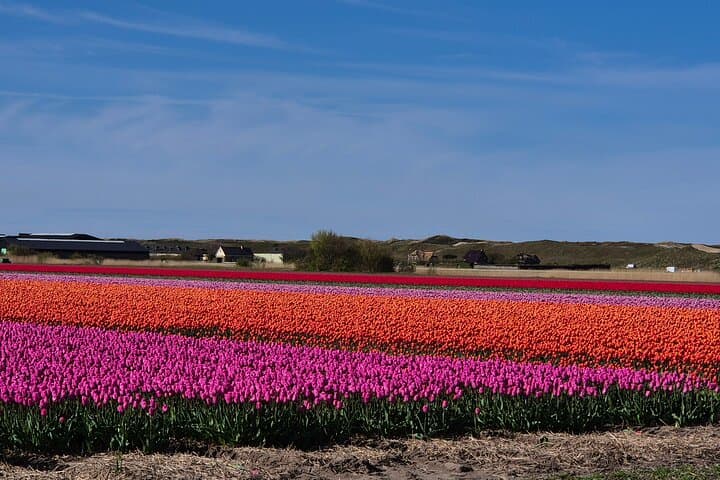
The modern Keukenhof garden dates to 1950, created to display the Netherlands’ bulb industry that rose from both horticultural innovation and the 17th-century tulip trade. Beyond the gates the region’s geology is relentlessly flat — reclaimed polders and low dunes form a working landscape where bulbs are planted and harvested on large commercial farms. You’ll visit a Tulip Barn where growers explain varieties and techniques, then drive north toward Anna Paulowna to see vast commercial fields and climb a nearby dune (roughly 20–30 m elevation) for a panoramic vantage.
Expect a full six-hour day with roughly three hours of transit between stops; the tour includes entrance and a pub lunch. The pace balances wandering in Keukenhof (up to 3–4 km on paved paths) with short walks through farm rows and a dune ascent.
Practical edge: go early to avoid peak crowds, pack a waterproof layer and sun protection, and bring a camera with a zoom for field shots. Many areas are wheelchair accessible, but working fields are uneven—stay on designated paths and respect the growers’ crops. With seasonal timing and basic footwear you’ll come away with vivid images and a grounded sense of why this flat country grows some of the world’s most photographed flowers.
easy.
6 hours.
Suitable for most fitness levels; requires comfortable walking for 2–4 km on paved surfaces plus short uneven farm walks and a dune climb.
Keukenhof is open late March through mid-May; peak bloom typically occurs in mid-April, though timing varies by year and weather.
This small-group tour includes Keukenhof entrance and guided transport between stops; check your booking confirmation for included lunch details.
Keukenhof has many paved, wheelchair-accessible routes and facilities, but commercial fields and some viewing spots are uneven—notify the tour operator of accessibility needs ahead of time.
Plan for 2–4 km of relatively easy walking inside the gardens plus short walks through farm areas and a dune ascent of about 20–30 m elevation.
Keukenhof opened in 1950 to showcase Dutch bulb varieties; the surrounding bulb region grew from centuries of horticulture and 17th-century tulip trade expansion.
Stay on paths to protect fragile bulb plantings; local growers use crop rotation and integrated pest management to reduce chemical use and protect soil health.
Dutch Tours operates guided outdoor trips and adventures with an emphasis on safety, stewardship, and memorable experiences.
Morning light slices across precise ranks of tulips as your small group arrives before the main gates open. Keukenhof’s open lawns and carved garden rooms—about 32 hectares—unfurl seven million bulbs in a planned riot of color; daffodils and hyacinths thread their scents through the air while visitors move along paved paths and willow-lined canals.
Morning light slices across precise ranks of tulips as your small group arrives before the main gates open. Keukenhof’s open lawns and carved garden rooms—about 32 hectares—unfurl seven million bulbs in a planned riot of color; daffodils and hyacinths thread their scents through the air while visitors move along paved paths and willow-lined canals.
The modern Keukenhof garden dates to 1950, created to display the Netherlands’ bulb industry that rose from both horticultural innovation and the 17th-century tulip trade. Beyond the gates the region’s geology is relentlessly flat — reclaimed polders and low dunes form a working landscape where bulbs are planted and harvested on large commercial farms. You’ll visit a Tulip Barn where growers explain varieties and techniques, then drive north toward Anna Paulowna to see vast commercial fields and climb a nearby dune (roughly 20–30 m elevation) for a panoramic vantage.
Expect a full six-hour day with roughly three hours of transit between stops; the tour includes entrance and a pub lunch. The pace balances wandering in Keukenhof (up to 3–4 km on paved paths) with short walks through farm rows and a dune ascent.
Practical edge: go early to avoid peak crowds, pack a waterproof layer and sun protection, and bring a camera with a zoom for field shots. Many areas are wheelchair accessible, but working fields are uneven—stay on designated paths and respect the growers’ crops. With seasonal timing and basic footwear you’ll come away with vivid images and a grounded sense of why this flat country grows some of the world’s most photographed flowers.