THE ADVENTURE COLLECTIVE® · Independent discovery and booking for outdoor travel

A 90-minute van tour from Ketchikan that stitches tidepools, salmon creeks and a visible roadside waterfall into a compact wildlife primer. Best mid-June through September for bears, eagles and spawning salmon.
A 90-minute van tour from Ketchikan that stitches tidepools, salmon creeks and a visible roadside waterfall into a compact wildlife primer. Best mid-June through September for bears, eagles and spawning salmon.
You step off the pier and the van doors open to a cold, saline breath — the Tongass seems to take you in. The drive out of Ketchikan threads between spruce and alder, the road dipping toward beaches where tidepools dare you to kneel down and look. At Rotary Beach, flat rocky shelves reveal starfish, small crabs and sculpins; the sea’s slow work writes new patterns into the shore.
Verified experiences and guided adventures in the surrounding area.
Operated by Average Alaskan Tours · Ketchikan, Alaska
You step off the pier and the van doors open to a cold, saline breath — the Tongass seems to take you in. The drive out of Ketchikan threads between spruce and alder, the road dipping toward beaches where tidepools dare you to kneel down and look. At Rotary Beach, flat rocky shelves reveal starfish, small crabs and sculpins; the sea’s slow work writes new patterns into the shore.
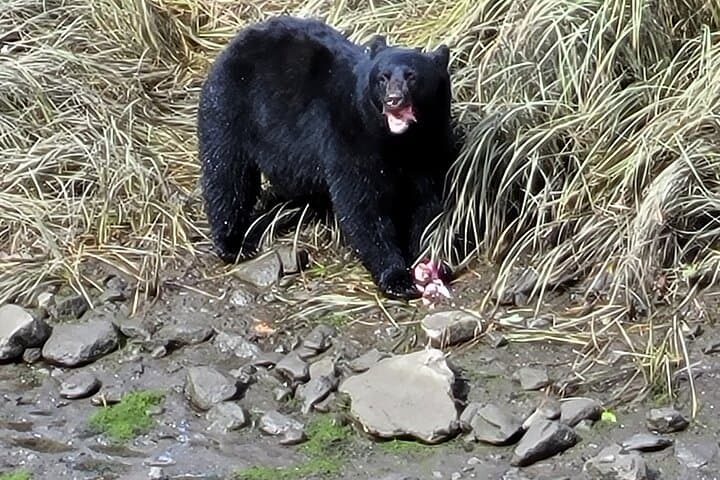
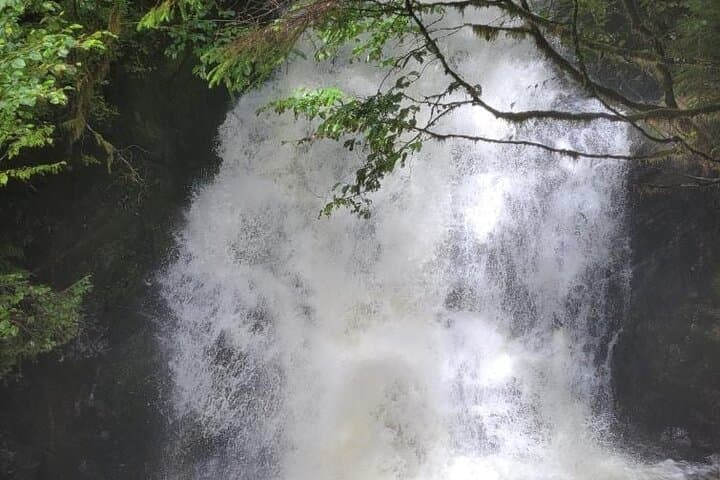
This short loop moves from intertidal life to the creek-fed forests of Herring Cove, where bald eagles quarter the canopy and black bears move quietly along salmon runs. The sound of the creek pushes you forward; at low tide the salmon run is a visible pulse in the landscape. Ten miles from town the south-end waterfall is visible from the van — after rain the spray reaches the road, and the forest air smells of moss and wet stone.
Geologically the area is coastal temperate rainforest on carved glacial bedrock and recent alluvium; culturally it's Tlingit land with a long relationship to salmon and the sea. Guides condense those threads into 90 minutes of stops and short walks.
Practical edge: wear grippy, closed shoes for rocky beaches, bring a waterproof layer and a camera with a wide lens. Wildlife is never guaranteed; mid-June through September increases your chances. The route is van-based with brief 20–30 minute explorations on foot — expect uneven, muddy ground and low inclines. Hydrate, keep a respectful distance from wildlife, and plan for sudden showers — Ketchikan’s weather can turn a calm morning into a wet, lively afternoon.
moderate.
1–1.5 hours.
Participants should be comfortable standing and walking on uneven, sometimes muddy terrain for short periods; a moderate fitness level is sufficient.
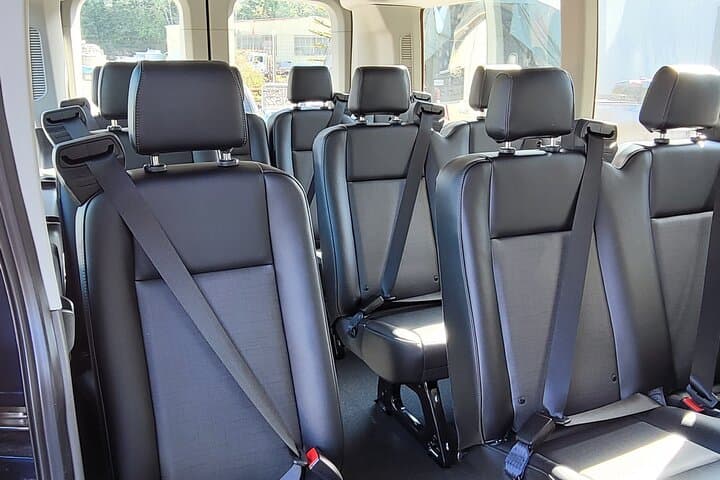
The tour runs about 90 minutes with three main stops: Rotary Beach, Herring Cove, and the south-end waterfall; each stop typically allows roughly 20–30 minutes.
Wildlife sightings can’t be guaranteed; mid-June through September offers the highest likelihood of seeing bears, eagles, harbor seals, and salmon.
Beaches are rocky and uneven; infants can ride in strollers but parents should be prepared to carry children over short inclines and rough surfaces.
Yes — pickups are available at Berth 2 in downtown Ketchikan and Ward Cove for Norwegian Cruise Line passengers (pickup timing differs; check booking instructions).
This coastline and its salmon runs have been central to Tlingit communities for centuries; modern stops sit along traditional travel and fishing routes.
Respect spawning salmon and shoreline habitats by staying on durable surfaces and avoiding creek banks; guides often brief groups on minimizing disturbance to wildlife.
Average Alaskan Tours operates guided outdoor trips and adventures with an emphasis on safety, stewardship, and memorable experiences.
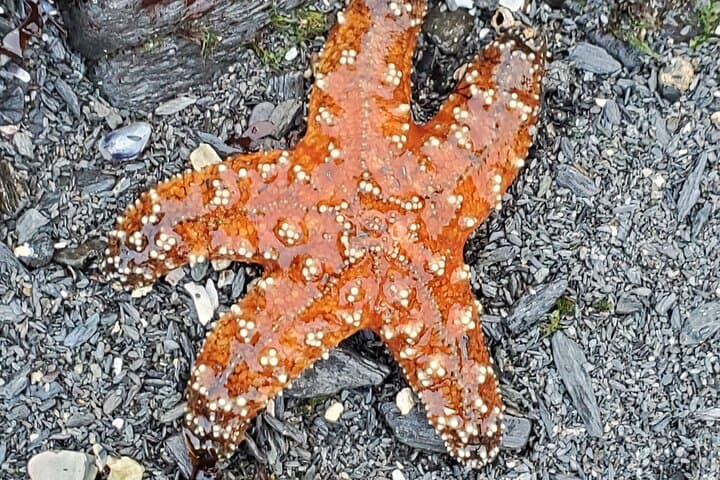
You step off the pier and the van doors open to a cold, saline breath — the Tongass seems to take you in. The drive out of Ketchikan threads between spruce and alder, the road dipping toward beaches where tidepools dare you to kneel down and look. At Rotary Beach, flat rocky shelves reveal starfish, small crabs and sculpins; the sea’s slow work writes new patterns into the shore.
You step off the pier and the van doors open to a cold, saline breath — the Tongass seems to take you in. The drive out of Ketchikan threads between spruce and alder, the road dipping toward beaches where tidepools dare you to kneel down and look. At Rotary Beach, flat rocky shelves reveal starfish, small crabs and sculpins; the sea’s slow work writes new patterns into the shore.
This short loop moves from intertidal life to the creek-fed forests of Herring Cove, where bald eagles quarter the canopy and black bears move quietly along salmon runs. The sound of the creek pushes you forward; at low tide the salmon run is a visible pulse in the landscape. Ten miles from town the south-end waterfall is visible from the van — after rain the spray reaches the road, and the forest air smells of moss and wet stone.
Geologically the area is coastal temperate rainforest on carved glacial bedrock and recent alluvium; culturally it's Tlingit land with a long relationship to salmon and the sea. Guides condense those threads into 90 minutes of stops and short walks.
Practical edge: wear grippy, closed shoes for rocky beaches, bring a waterproof layer and a camera with a wide lens. Wildlife is never guaranteed; mid-June through September increases your chances. The route is van-based with brief 20–30 minute explorations on foot — expect uneven, muddy ground and low inclines. Hydrate, keep a respectful distance from wildlife, and plan for sudden showers — Ketchikan’s weather can turn a calm morning into a wet, lively afternoon.