THE ADVENTURE COLLECTIVE® · Independent discovery and booking for outdoor travel

Spend a focused 2.5-hour walk into the Tongass with a local naturalist guide—spot bears, eagles, and spawning salmon while learning the cultural and ecological context of Ketchikan’s rainforest. Small groups keep the experience intimate and wildlife-focused.
Spend a focused 2.5-hour walk into the Tongass with a local naturalist guide—spot bears, eagles, and spawning salmon while learning the cultural and ecological context of Ketchikan’s rainforest. Small groups keep the experience intimate and wildlife-focused.
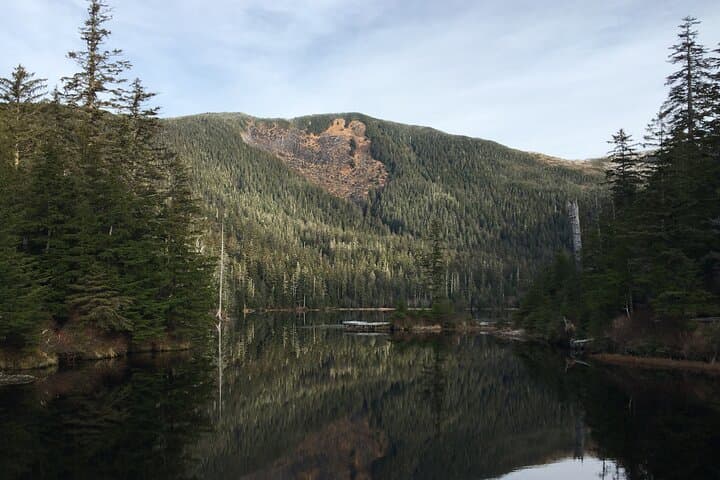
A low swell breathes salt through cedar and spruce as the guide leads a compact group beneath dripping limbs. The forest floor smells of loam and old rain; gulls cry from the cove and a creek gurgles like a restless companion daring you deeper into the Tongass.
Verified experiences and guided adventures in the surrounding area.
Operated by Discover Ketchikan · Ketchikan, Alaska
A low swell breathes salt through cedar and spruce as the guide leads a compact group beneath dripping limbs. The forest floor smells of loam and old rain; gulls cry from the cove and a creek gurgles like a restless companion daring you deeper into the Tongass.
This short, guided walk focuses on Ketchikan’s living systems: ancient Sitka spruce and western hemlock that survived glacial scours, streams that funnel spawning salmon, and the cultural presence of Tlingit and Haida people visible in nearby totems and Creek Street’s history as a once-thriving waterfront. Geologically the archipelago is young — carved by ice and uplift — which explains the steep ravines, moss-draped trunks, and plentiful waterfalls that punctuate the slopes.
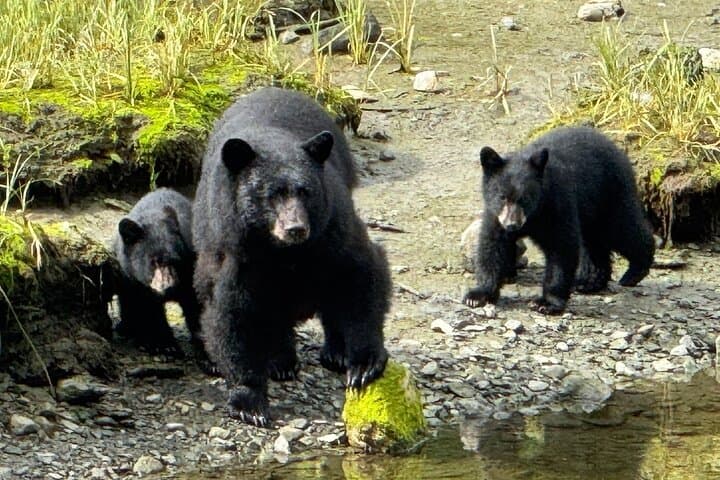
Expect interpretive stops at creekside salmon pools and ocean-facing viewpoints where bald eagles hunt and, with luck, black bears forage near tidal flats. Guides emphasize seasonal rhythms — salmon spawn in late summer, while spring brings migratory birds.
Practical notes: the tour lasts roughly 2.5 hours over mostly flat, sometimes muddy trails with short sections of boardwalk and rocky shorelines. Wear a waterproof jacket and sturdy shoes; bring binoculars and a camera with a zoom lens for wildlife from a distance. Tours run rain or shine and cap at 12 people for quieter wildlife viewing. Keep a respectful distance from animals, follow your guide’s instructions, and favor quiet observation to increase sightings. For visitors short on time, this compact outing delivers a concentrated encounter with Tongass ecology and local cultural touchpoints without long hikes or advanced skills.
easy.
2–3 hours.
Suitable for most fitness levels; involves walking on uneven, sometimes muddy trails for up to 2.5 hours
Guides maintain legal and safe viewing distances; sightings are often from shorelines or short boardwalk viewpoints rather than close approaches.
Yes — the operator notes stroller accessibility and the tour is family-friendly, though some sections may be uneven; infants must sit on laps.
Layered clothing with a waterproof outer layer is recommended year-round; summer is milder but wet, while winter requires warmer base layers and waterproof boots.
Yes — tours are designed for port calls and include port-call texting and options for Creek Street drop-off at the end.
Ketchikan sits within the traditional territories of Tlingit and Haida communities; totem carving and coastal salmon economies have shaped local culture for centuries.
The Tongass is a temperate rainforest with sensitive salmon streams and bear foraging areas — stay on trails, pack out waste, and avoid disrupting spawning grounds to minimize impact.
Discover Ketchikan operates guided outdoor trips and adventures with an emphasis on safety, stewardship, and memorable experiences.


A low swell breathes salt through cedar and spruce as the guide leads a compact group beneath dripping limbs. The forest floor smells of loam and old rain; gulls cry from the cove and a creek gurgles like a restless companion daring you deeper into the Tongass.
A low swell breathes salt through cedar and spruce as the guide leads a compact group beneath dripping limbs. The forest floor smells of loam and old rain; gulls cry from the cove and a creek gurgles like a restless companion daring you deeper into the Tongass.
This short, guided walk focuses on Ketchikan’s living systems: ancient Sitka spruce and western hemlock that survived glacial scours, streams that funnel spawning salmon, and the cultural presence of Tlingit and Haida people visible in nearby totems and Creek Street’s history as a once-thriving waterfront. Geologically the archipelago is young — carved by ice and uplift — which explains the steep ravines, moss-draped trunks, and plentiful waterfalls that punctuate the slopes.
Expect interpretive stops at creekside salmon pools and ocean-facing viewpoints where bald eagles hunt and, with luck, black bears forage near tidal flats. Guides emphasize seasonal rhythms — salmon spawn in late summer, while spring brings migratory birds.
Practical notes: the tour lasts roughly 2.5 hours over mostly flat, sometimes muddy trails with short sections of boardwalk and rocky shorelines. Wear a waterproof jacket and sturdy shoes; bring binoculars and a camera with a zoom lens for wildlife from a distance. Tours run rain or shine and cap at 12 people for quieter wildlife viewing. Keep a respectful distance from animals, follow your guide’s instructions, and favor quiet observation to increase sightings. For visitors short on time, this compact outing delivers a concentrated encounter with Tongass ecology and local cultural touchpoints without long hikes or advanced skills.