THE ADVENTURE COLLECTIVE® · Independent discovery and booking for outdoor travel

Launch from cedar platforms 45 feet high and zip across seven lines — one over water — on a 3-hour shore excursion from Ketchikan. Expect moderate hiking, strict weight/height rules, and a rain-ready itinerary through ancient temperate rainforest.
Launch from cedar platforms 45 feet high and zip across seven lines — one over water — on a 3-hour shore excursion from Ketchikan. Expect moderate hiking, strict weight/height rules, and a rain-ready itinerary through ancient temperate rainforest.
The first step off the gangway and into Ketchikan’s humid air feels like walking into a living room of giants. Towering western red cedars and hemlock crowd the trail, their trunks rubbed smooth by coastal winds, while guides clip guests into harnesses beneath a leafy ceiling. You climb to platforms roughly 45 feet above the forest floor, traverse eight canopy ropes and launch down seven ziplines — one that swoops over a tidal channel and stops on a platform that seemingly hangs over the water.
Verified experiences and guided adventures in the surrounding area.
Operated by Southeast Exposure Zipline & Kayaks · Ketchikan, Alaska
The first step off the gangway and into Ketchikan’s humid air feels like walking into a living room of giants. Towering western red cedars and hemlock crowd the trail, their trunks rubbed smooth by coastal winds, while guides clip guests into harnesses beneath a leafy ceiling. You climb to platforms roughly 45 feet above the forest floor, traverse eight canopy ropes and launch down seven ziplines — one that swoops over a tidal channel and stops on a platform that seemingly hangs over the water.
This stretch of Tongass National Forest sits on ancient glacial soils; some of the cedars here are estimated at 650 years old. The terrain is coastal temperate rainforest — moss-draped, steep-sided gullies carved by rain and tides over millennia. Ketchikan’s Tlingit and Haida heritage is visible locally in totem carving and place names; today the zipline experience is framed as both adrenaline and interpretation, with guides often pointing out traditional uses of cedar and salmon runs below.
Practically, the shore excursion runs about 3–3.5 hours including port pickup and safety briefings. The course requires a moderate fitness level, the ability to hike short uneven trails and to stand confidently on narrow platforms. Gear and port transfers are usually provided; expect strict height/weight minimums and limits for safety. Weather in Southeast Alaska changes fast — rain gear and layered clothing are smart. Arrive hydrated, with closed-toe shoes and a sense of calm readiness: the ropes and ziplines demand focus, but reward you with a rare, treetop view of Ketchikan’s coastal rainforest and the tidal channels threading the harbor.
moderate.
3–3.5 hours.
Be able to hike short, uneven forest sections, climb stairs to platforms, and tolerate heights; basic cardiovascular fitness recommended.
The full experience including pickup, safety briefing, and course time is about 3–3.5 hours; allow extra time for unexpected delays.
Yes — minimum height is 4 feet 6 inches (121 cm), minimum weight 70 lb (30 kg), maximum weight 280 lb (127 kg); children must meet the height requirement.
No — guides provide instruction and safety gear; moderate fitness and comfort with heights are the main requirements.
Trips can be canceled for safety in heavy rain, high winds, or unsafe conditions; check cancellation policy and bring a waterproof jacket.
This coastline is part of the Tongass National Forest and lies within traditional Tlingit territory; cedar has long been central to local crafts and architecture.
Operators follow strict safety and minimal-impact practices to protect ancient trees and understory; visitors are encouraged to stay on trails and avoid disturbing wildlife.
Southeast Exposure Zipline & Kayaks operates guided outdoor trips and adventures with an emphasis on safety, stewardship, and memorable experiences.
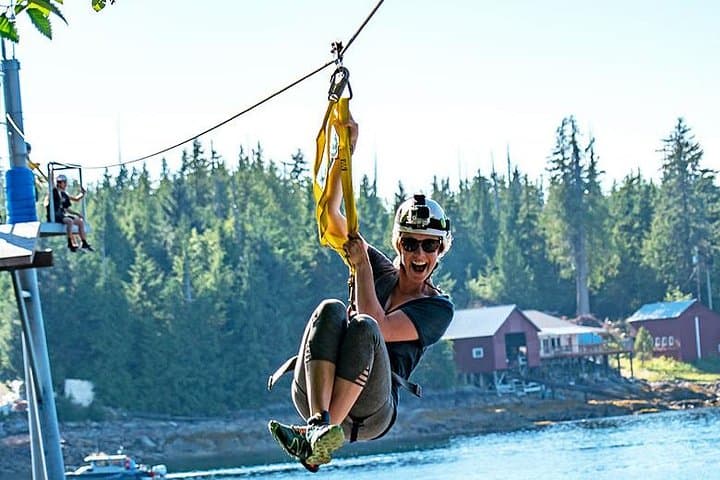
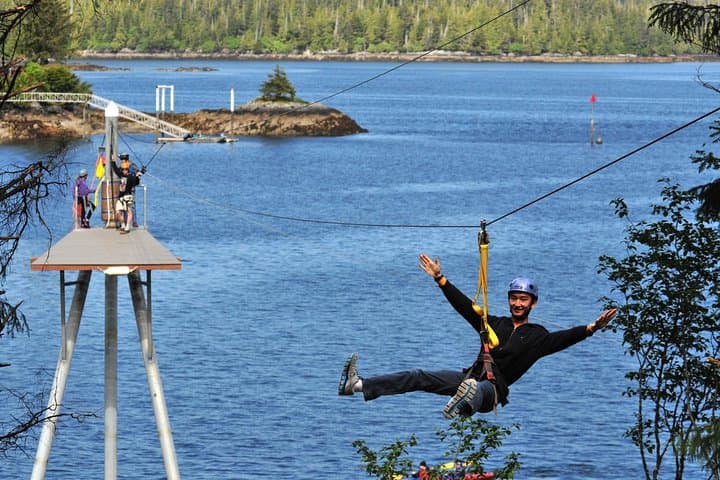
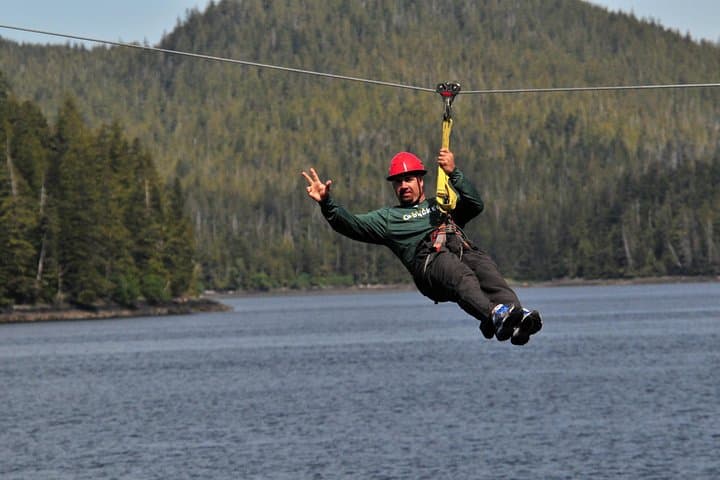
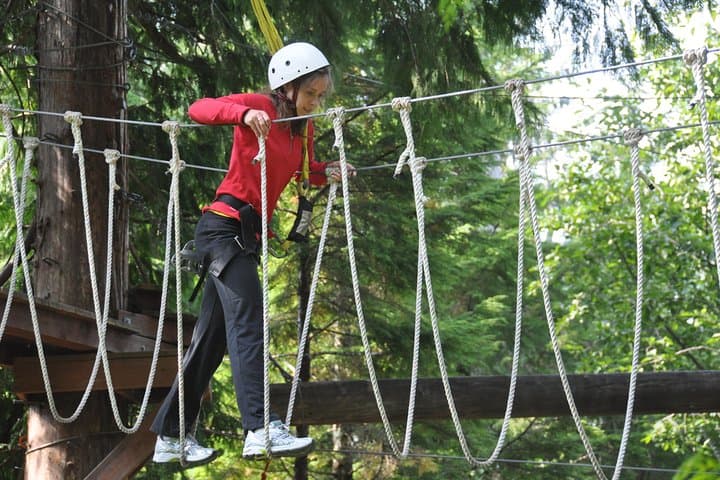
The first step off the gangway and into Ketchikan’s humid air feels like walking into a living room of giants. Towering western red cedars and hemlock crowd the trail, their trunks rubbed smooth by coastal winds, while guides clip guests into harnesses beneath a leafy ceiling. You climb to platforms roughly 45 feet above the forest floor, traverse eight canopy ropes and launch down seven ziplines — one that swoops over a tidal channel and stops on a platform that seemingly hangs over the water.
The first step off the gangway and into Ketchikan’s humid air feels like walking into a living room of giants. Towering western red cedars and hemlock crowd the trail, their trunks rubbed smooth by coastal winds, while guides clip guests into harnesses beneath a leafy ceiling. You climb to platforms roughly 45 feet above the forest floor, traverse eight canopy ropes and launch down seven ziplines — one that swoops over a tidal channel and stops on a platform that seemingly hangs over the water.
This stretch of Tongass National Forest sits on ancient glacial soils; some of the cedars here are estimated at 650 years old. The terrain is coastal temperate rainforest — moss-draped, steep-sided gullies carved by rain and tides over millennia. Ketchikan’s Tlingit and Haida heritage is visible locally in totem carving and place names; today the zipline experience is framed as both adrenaline and interpretation, with guides often pointing out traditional uses of cedar and salmon runs below.
Practically, the shore excursion runs about 3–3.5 hours including port pickup and safety briefings. The course requires a moderate fitness level, the ability to hike short uneven trails and to stand confidently on narrow platforms. Gear and port transfers are usually provided; expect strict height/weight minimums and limits for safety. Weather in Southeast Alaska changes fast — rain gear and layered clothing are smart. Arrive hydrated, with closed-toe shoes and a sense of calm readiness: the ropes and ziplines demand focus, but reward you with a rare, treetop view of Ketchikan’s coastal rainforest and the tidal channels threading the harbor.