THE ADVENTURE COLLECTIVE® · Independent discovery and booking for outdoor travel

Avoid the crowds at the Tidal Basin and stroll beneath Kenwood’s residential canopy of cherry trees. This half-day escape pairs gentle walking, local history, and peak-bloom photography in a peaceful suburban setting.
Avoid the crowds at the Tidal Basin and stroll beneath Kenwood’s residential canopy of cherry trees. This half-day escape pairs gentle walking, local history, and peak-bloom photography in a peaceful suburban setting.
Step off the city grid and into a hush of pink—residential Kenwood, just outside Washington, D.C., offers a rare, low-key view of spring’s most photogenic moment. Streets narrow and slow; mature cherry trees arch overhead and spill petals on lawns and sidewalks, turning a suburban block into a short-lived corridor of color. The guide lets the group drift, pauses for photos, and points out architectural details that speak to the neighborhood’s era of development.
Verified experiences and guided adventures in the surrounding area.
Operated by Jupiter Legend Corporation · Washington, DC
Step off the city grid and into a hush of pink—residential Kenwood, just outside Washington, D.C., offers a rare, low-key view of spring’s most photogenic moment. Streets narrow and slow; mature cherry trees arch overhead and spill petals on lawns and sidewalks, turning a suburban block into a short-lived corridor of color. The guide lets the group drift, pauses for photos, and points out architectural details that speak to the neighborhood’s era of development.
The U.S. cherry blossom tradition has national roots in the 1912 gift of trees from Tokyo to Washington, but communities like Kenwood built their own local tradition by planting varieties that bloom slightly earlier or later than the Tidal Basin. Geologically, this suburban pocket sits on the gentle rise east of the Potomac—well-drained soils that favor shallow-rooted ornamentals. Culturally, the tour emphasizes quiet, residential etiquette: you’re visiting people’s homes as much as you are viewing a natural event.
Practical guidance is straightforward. The half-day format (about two hours) pairs a short, flat walk with a comfortable round-trip from the city. Peak bloom usually falls in late March to early April; check the National Park Service bloom forecasts but expect microclimates to shift timing by a few days. Wear comfortable walking shoes, bring a light layer for spring breezes, and carry water and cash for small purchases. Parking at the meeting point is limited—use public transit or confirm pick-up options. Respect private property, stay on sidewalks, and keep group sizes manageable to preserve the neighborhood’s calm. This is a deliberate, photo-friendly alternative to crowded tourist plazas—an easy, restorative way to experience cherry season without the crush.
easy.
2 hours.
Suitable for most fitness levels; involves short, flat neighborhood walks and standing for photos.
Peak bloom varies yearly but typically falls in late March to early April; microclimates can shift timing by several days, so check recent forecasts before you go.
Yes—this is a gentle, stroller-accessible walk through residential streets, but parents should supervise near roads and respect private property.
Pickup locations are offered in Washington, D.C.; parking at the meeting point is limited, so public transit or arranged pickup is recommended.
The tour includes bottled water and a snack; guides can suggest nearby cafes or markets for additional purchases requiring cash.
The cherry blossom tradition in the region grew from the 1912 diplomatic tree gift; suburban plantings like Kenwood’s followed, reflecting mid-20th-century neighborhood landscaping trends.
Respecting private property and staying on public ways reduces trampling and root compaction; small-group, guided visits help limit impact during delicate peak-bloom days.
Jupiter Legend Corporation operates guided outdoor trips and adventures with an emphasis on safety, stewardship, and memorable experiences.
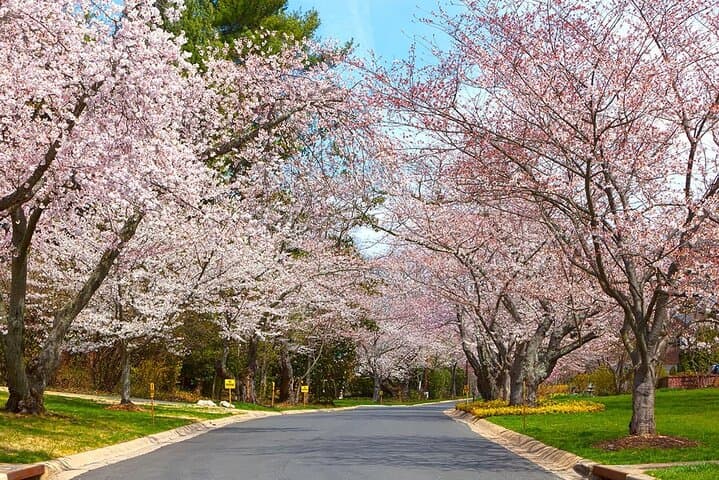
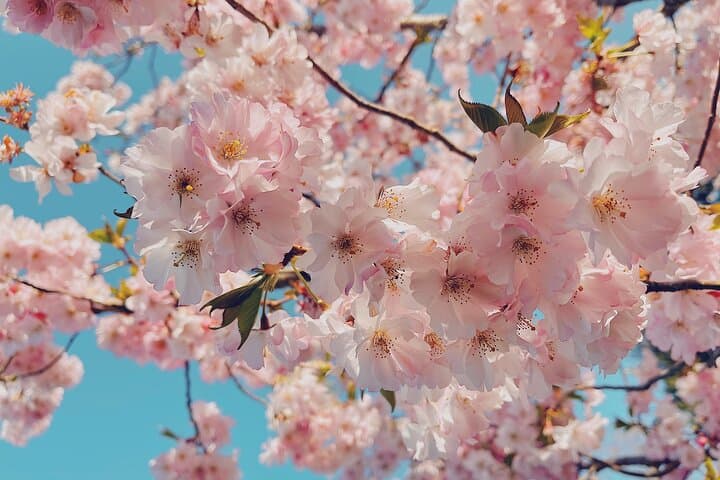
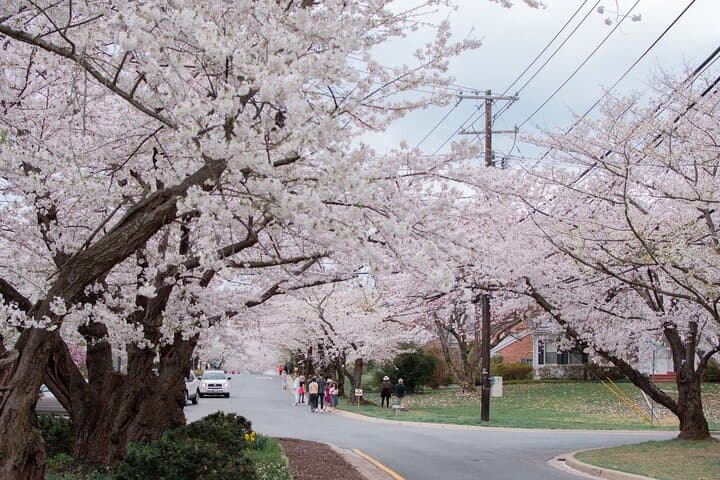
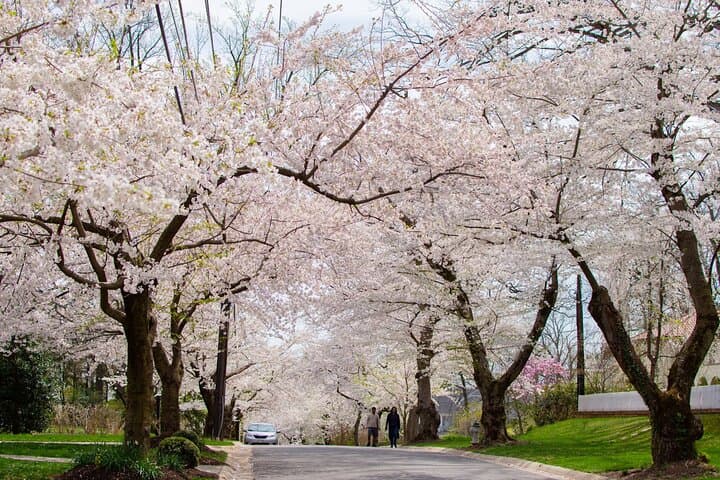
Step off the city grid and into a hush of pink—residential Kenwood, just outside Washington, D.C., offers a rare, low-key view of spring’s most photogenic moment. Streets narrow and slow; mature cherry trees arch overhead and spill petals on lawns and sidewalks, turning a suburban block into a short-lived corridor of color. The guide lets the group drift, pauses for photos, and points out architectural details that speak to the neighborhood’s era of development.
Step off the city grid and into a hush of pink—residential Kenwood, just outside Washington, D.C., offers a rare, low-key view of spring’s most photogenic moment. Streets narrow and slow; mature cherry trees arch overhead and spill petals on lawns and sidewalks, turning a suburban block into a short-lived corridor of color. The guide lets the group drift, pauses for photos, and points out architectural details that speak to the neighborhood’s era of development.
The U.S. cherry blossom tradition has national roots in the 1912 gift of trees from Tokyo to Washington, but communities like Kenwood built their own local tradition by planting varieties that bloom slightly earlier or later than the Tidal Basin. Geologically, this suburban pocket sits on the gentle rise east of the Potomac—well-drained soils that favor shallow-rooted ornamentals. Culturally, the tour emphasizes quiet, residential etiquette: you’re visiting people’s homes as much as you are viewing a natural event.
Practical guidance is straightforward. The half-day format (about two hours) pairs a short, flat walk with a comfortable round-trip from the city. Peak bloom usually falls in late March to early April; check the National Park Service bloom forecasts but expect microclimates to shift timing by a few days. Wear comfortable walking shoes, bring a light layer for spring breezes, and carry water and cash for small purchases. Parking at the meeting point is limited—use public transit or confirm pick-up options. Respect private property, stay on sidewalks, and keep group sizes manageable to preserve the neighborhood’s calm. This is a deliberate, photo-friendly alternative to crowded tourist plazas—an easy, restorative way to experience cherry season without the crush.