THE ADVENTURE COLLECTIVE® · Independent discovery and booking for outdoor travel

Board a short ride from Kemi or Tornio to dark coastal clearings where guides scan KP-index and clouds to find aurora activity. This three-hour guided chase focuses on photography coaching and maximizing sighting chances while keeping comfort and safety front and center.
Board a short ride from Kemi or Tornio to dark coastal clearings where guides scan KP-index and clouds to find aurora activity. This three-hour guided chase focuses on photography coaching and maximizing sighting chances while keeping comfort and safety front and center.
You step out of the van into a glass-cold night where the sea and sky meet as a wide, dark stage. Headlamps click off; breath fogs and the horizon loosens into stars. Guide and group spread across a shoreline clearing while the sky tests you—first a pale green ribbon, then curtains that shuffle and stretch.
Verified experiences and guided adventures in the surrounding area.
Operated by Marko Vapa · Kemi, Lapland
You step out of the van into a glass-cold night where the sea and sky meet as a wide, dark stage. Headlamps click off; breath fogs and the horizon loosens into stars. Guide and group spread across a shoreline clearing while the sky tests you—first a pale green ribbon, then curtains that shuffle and stretch.
This stretch of the Gulf of Bothnia has long acted as a northern gateway for sailors and traders; the flat coastal plain and archived sea-ice patterns shape where light and darkness settle. Geologically, the area sits near the Scandinavian Shield: low relief, exposed rocks and peat bogs that hold heat differently, so cloud and fog pockets can form quickly. Culturally, Lapland’s Sámi heritage and winter fishing traditions still influence local rhythms—nights are tuned to weather, wind and sky.
Practically: the three-hour tour includes pickup from Kemi or Tornio and a 15–30 minute drive to chosen viewing spots, where guides monitor KP index, cloud cover and moon phase. Expect minimal hiking—this is an observational hunt—so good boots and insulated outer layers matter more than endurance. Photography coaching and optional aurora portraits are offered when lights appear. Keep a charged camera or phone, use a sturdy tripod, and allow 20 minutes for eyes to adjust to darkness.
Best odds come between late autumn and early spring during clear, moon-light-lean nights; sightings are common but never guaranteed. Guides prioritize safety and warmth, moving vehicles between vantage points to chase clearer skies. Dress in layers, plan for short exposure to sub-zero temperatures, and be ready for sudden, breathtaking shifts when the aurora decides to perform.
easy.
3 hours.
Suitable for all fitness levels; minimal walking required but expect cold exposure and some uneven ground
Prime months are late September through March when nights are longest and skies are darkest; clear, moon-lean nights offer the best visibility.
Yes—pickups are offered from hotels and stations in Kemi and Tornio/Haparanda, with drive times to viewing sites typically 15–30 minutes.
No—the guides provide basic night photography instruction and can assist with camera settings; a tripod and spare batteries are highly recommended.
Yes—the operator notes the activity is accessible for infants and wheelchair users, though some viewing spots may require short, manageable walks.
Kemi and Tornio were historic winter ports and trading posts on the Gulf of Bothnia; seasonal ice and trade routes shaped settlement and local livelihoods.
Respect dark-sky practices by avoiding unnecessary lights and keeping to established access points to protect fragile tundra and bird habitats.
Marko Vapa operates guided outdoor trips and adventures with an emphasis on safety, stewardship, and memorable experiences.
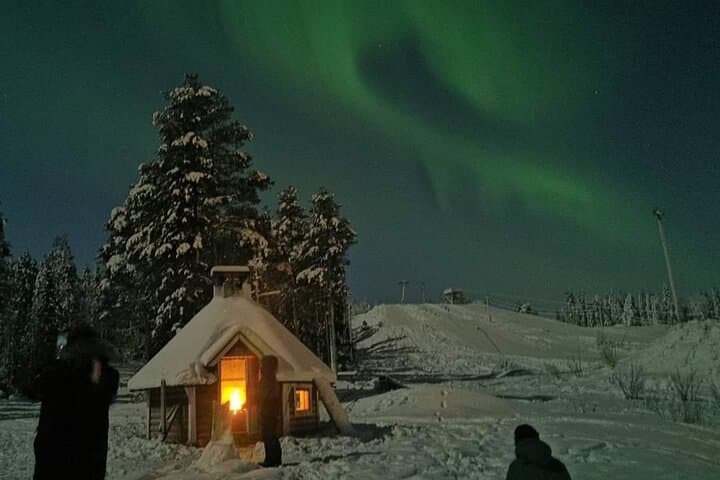


You step out of the van into a glass-cold night where the sea and sky meet as a wide, dark stage. Headlamps click off; breath fogs and the horizon loosens into stars. Guide and group spread across a shoreline clearing while the sky tests you—first a pale green ribbon, then curtains that shuffle and stretch.
You step out of the van into a glass-cold night where the sea and sky meet as a wide, dark stage. Headlamps click off; breath fogs and the horizon loosens into stars. Guide and group spread across a shoreline clearing while the sky tests you—first a pale green ribbon, then curtains that shuffle and stretch.
This stretch of the Gulf of Bothnia has long acted as a northern gateway for sailors and traders; the flat coastal plain and archived sea-ice patterns shape where light and darkness settle. Geologically, the area sits near the Scandinavian Shield: low relief, exposed rocks and peat bogs that hold heat differently, so cloud and fog pockets can form quickly. Culturally, Lapland’s Sámi heritage and winter fishing traditions still influence local rhythms—nights are tuned to weather, wind and sky.
Practically: the three-hour tour includes pickup from Kemi or Tornio and a 15–30 minute drive to chosen viewing spots, where guides monitor KP index, cloud cover and moon phase. Expect minimal hiking—this is an observational hunt—so good boots and insulated outer layers matter more than endurance. Photography coaching and optional aurora portraits are offered when lights appear. Keep a charged camera or phone, use a sturdy tripod, and allow 20 minutes for eyes to adjust to darkness.
Best odds come between late autumn and early spring during clear, moon-light-lean nights; sightings are common but never guaranteed. Guides prioritize safety and warmth, moving vehicles between vantage points to chase clearer skies. Dress in layers, plan for short exposure to sub-zero temperatures, and be ready for sudden, breathtaking shifts when the aurora decides to perform.