THE ADVENTURE COLLECTIVE® · Independent discovery and booking for outdoor travel

Trade the boardwalk for real peatland underfoot: this guided half-day excursion into Ķemeri National Park uses bog shoes to walk across floating vegetation. Expect close-up wetland ecology, local cranberry spots, and a hands-on guide-led route off the beaten path.
Trade the boardwalk for real peatland underfoot: this guided half-day excursion into Ķemeri National Park uses bog shoes to walk across floating vegetation. Expect close-up wetland ecology, local cranberry spots, and a hands-on guide-led route off the beaten path.
A low, brackish wind moves across the bog and the wooden parking lot gives way to a softer world — sphagnum hummocks, peat ridges and small tea-colored lakes. Here your guide fits you into oversized bog shoes and hands you directions: step wide, trust the mat of vegetation, feel the ground give underfoot but hold you up. The experience is immediate: each step is a negotiation with water, peat, and living moss.
Verified experiences and guided adventures in the surrounding area.
Operated by Baltic Nature Adventures · Ķemeri (Jūrmala), Kurzeme
A low, brackish wind moves across the bog and the wooden parking lot gives way to a softer world — sphagnum hummocks, peat ridges and small tea-colored lakes. Here your guide fits you into oversized bog shoes and hands you directions: step wide, trust the mat of vegetation, feel the ground give underfoot but hold you up. The experience is immediate: each step is a negotiation with water, peat, and living moss.
Ķemeri’s raised bogs formed over millennia as sphagnum built upward, isolating acidic pools and preserving peat layers that record post-glacial changes in the region. The area has been valued locally for cranberries and peat harvests; today conservation and eco-tourism balance access and protection. Guides on these trips combine natural history with practical local lore — where people still gather berries and which lakes are safe for a quick dip on warm days.
Practically, expect roughly 3–4 hours of guided walking across about 4–6 km of bog terrain using bog shoes and waterproof boots, plus transfer time from Riga or Jūrmala to make a half-day out of it. Wear layers, waterproof footwear, and bring snacks, insect repellent and a dry bag for electronics. Listen to your guide for route choices — they read the bog the way a mountaineer reads a ridge. The payoff is solitude, odd geography and the quiet that only wetlands can hold: water that dares you forward and peat that remembers each footfall.
moderate.
4–5 hours (including transfers).
Moderate fitness: able to walk 4–6 km over uneven, swampy terrain and manage occasional short wades.
No formal experience required, but you should be comfortable walking on uneven, wet ground for several kilometers; guides demonstrate technique and lead the route.
Bog shoes are provided and included in the tour price; you should bring or request rental waterproof boots in advance to wear underneath.
The guided walking time in the bog is typically 3–4 hours (around 4–6 km); roundtrip transfers from Riga or Jūrmala are usually included in the 5-hour total tour time.
Serious sinking is rare when following a trained guide and using bog shoes; guides choose routes to avoid dangerous soft spots and provide safety briefings.
Ķemeri’s bogs grew after the last Ice Age and were historically used for peat extraction and medicinal spas in nearby Ķemeri town; the landscape shaped local livelihoods.
Ķemeri National Park restricts off-trail travel in sensitive areas; guided bog shoe tours concentrate impact on durable routes and support local conservation awareness.
Baltic Nature Adventures operates guided outdoor trips and adventures with an emphasis on safety, stewardship, and memorable experiences.
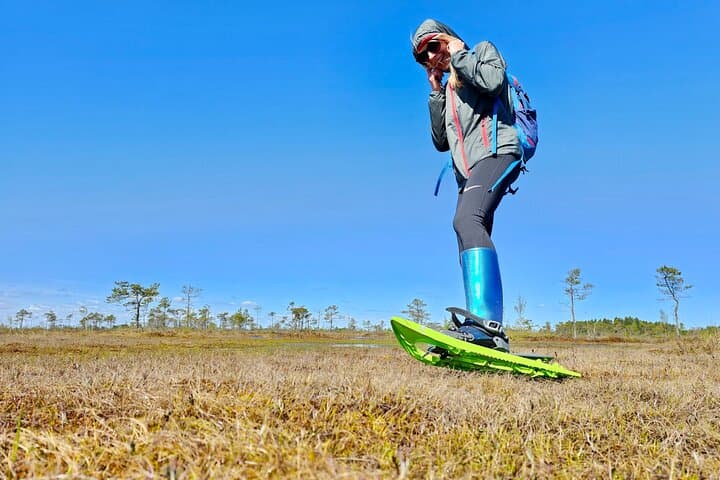
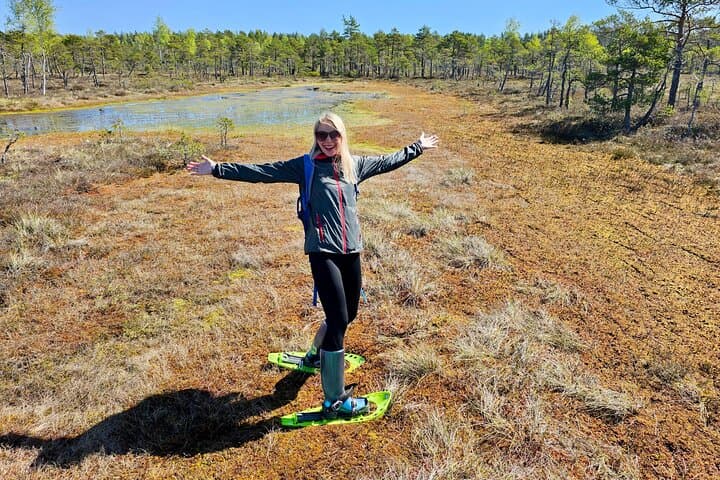
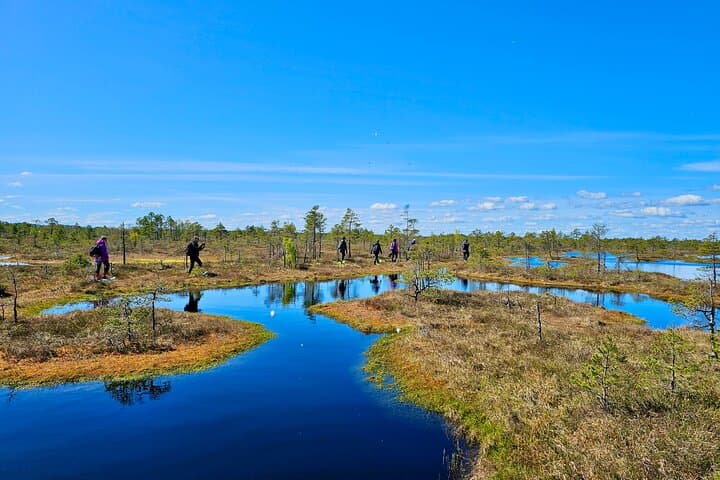
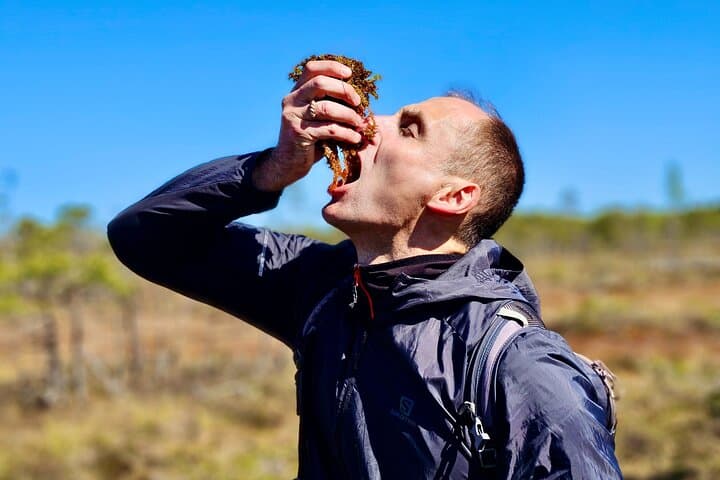
A low, brackish wind moves across the bog and the wooden parking lot gives way to a softer world — sphagnum hummocks, peat ridges and small tea-colored lakes. Here your guide fits you into oversized bog shoes and hands you directions: step wide, trust the mat of vegetation, feel the ground give underfoot but hold you up. The experience is immediate: each step is a negotiation with water, peat, and living moss.
A low, brackish wind moves across the bog and the wooden parking lot gives way to a softer world — sphagnum hummocks, peat ridges and small tea-colored lakes. Here your guide fits you into oversized bog shoes and hands you directions: step wide, trust the mat of vegetation, feel the ground give underfoot but hold you up. The experience is immediate: each step is a negotiation with water, peat, and living moss.
Ķemeri’s raised bogs formed over millennia as sphagnum built upward, isolating acidic pools and preserving peat layers that record post-glacial changes in the region. The area has been valued locally for cranberries and peat harvests; today conservation and eco-tourism balance access and protection. Guides on these trips combine natural history with practical local lore — where people still gather berries and which lakes are safe for a quick dip on warm days.
Practically, expect roughly 3–4 hours of guided walking across about 4–6 km of bog terrain using bog shoes and waterproof boots, plus transfer time from Riga or Jūrmala to make a half-day out of it. Wear layers, waterproof footwear, and bring snacks, insect repellent and a dry bag for electronics. Listen to your guide for route choices — they read the bog the way a mountaineer reads a ridge. The payoff is solitude, odd geography and the quiet that only wetlands can hold: water that dares you forward and peat that remembers each footfall.