THE ADVENTURE COLLECTIVE® · Independent discovery and booking for outdoor travel

Walk elevated planks across a living bog with a biologist guide, spot sundews and sandpipers, then sip natural mineral water in Kemeri Park before a short Jurmala stop. This private half‑day tour pairs focused nature interpretation with local spa history.
Walk elevated planks across a living bog with a biologist guide, spot sundews and sandpipers, then sip natural mineral water in Kemeri Park before a short Jurmala stop. This private half‑day tour pairs focused nature interpretation with local spa history.
Dawn slices through a low, cool mist and the boardwalk begins like a narrow invitation: planks over peat, dwarf pines tilting as if listening. The ground hums with the slow work of sphagnum moss holding water and history; tiny sundews glitter where insects meet a carnivorous patience. Walkers follow a botanist-guide who points out mineral springs that once drew health‑seekers and the distant calls of cranes hiding in reed beds.
Verified experiences and guided adventures in the surrounding area.
Operated by Armands Latvia Guide · Kemeri, Jurmala
Dawn slices through a low, cool mist and the boardwalk begins like a narrow invitation: planks over peat, dwarf pines tilting as if listening. The ground hums with the slow work of sphagnum moss holding water and history; tiny sundews glitter where insects meet a carnivorous patience. Walkers follow a botanist-guide who points out mineral springs that once drew health‑seekers and the distant calls of cranes hiding in reed beds.
Kemeri’s bog formed over millennia—peat accumulating in shallow basins left by glacial melt and river shifts—creating acidic, low-nutrient soils where specialized flora thrive. The nearby Kemeri Resort Park, planned in the 19th century and expanded after the 1936 hotel, adds a human chapter: mineral-water taps, formal alleys, and paths leading to the Lielupe and the broad Jurmala coastline.
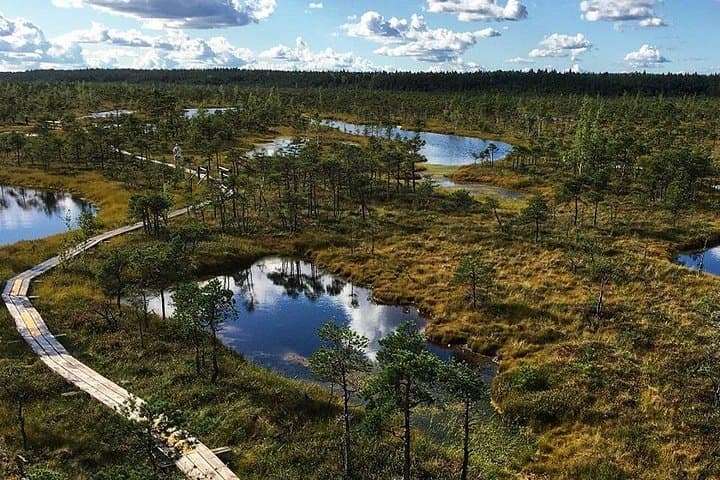
Expect flat, exposed boardwalks with short arcs: a small loop of ~1.4 km for a compact experience or the great arc of ~3.4 km to reach an observation platform that reads the bog from above. Birdwatching is prime here—wood sandpipers, wagtails and tree pipits are common—and the air often carries a resinous pine scent from the surrounding forest.
Practical guidance: wear waterproof footwear and layers for wind off the bog, bring insect repellent in warm months, and plan around sunrise or late afternoon for the best light and bird activity. The private, four-hour tour usually includes a stop at Kemeri Park and a short visit to Jurmala’s sea resort, making it a focused half‑day that pairs natural history with local spa-culture highlights.
easy.
3–4 hours.
Basic walking fitness—flat, low‑impact routes but expect some standing and slow hiking on exposed boardwalks
The private tour runs about four hours total, with 1–2 hours on the boardwalk depending on the loop you choose and time at Kemeri Park and Jurmala.
Yes—the boardwalk is flat and the route is suitable for all fitness levels, though those with serious mobility issues should check specific access features beforehand.
Yes—there are historically used natural mineral water sources in the park; taste is optional and the guide can point them out.
Expect passerines like white wagtails and tree pipits, shorebirds such as wood sandpipers, and distant crane calls; seasonal migrants are common in spring and autumn.
Kemeri’s spa tradition dates from the 19th century when mineral springs and park design established it as a health destination; the 1936 hotel era added formal alleys and parterres.
The bog is a sensitive peatland—staying on boardwalks prevents peat compaction and preserves carbon stores; guided visits reduce visitor impact while supporting local conservation awareness.
Armands Latvia Guide operates guided outdoor trips and adventures with an emphasis on safety, stewardship, and memorable experiences.
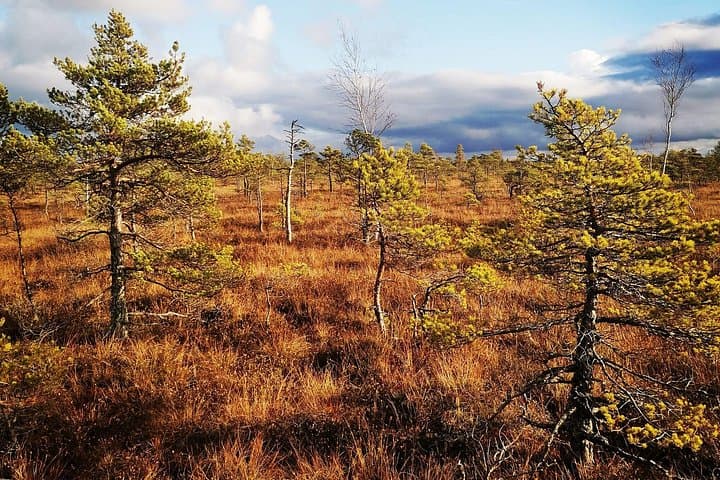
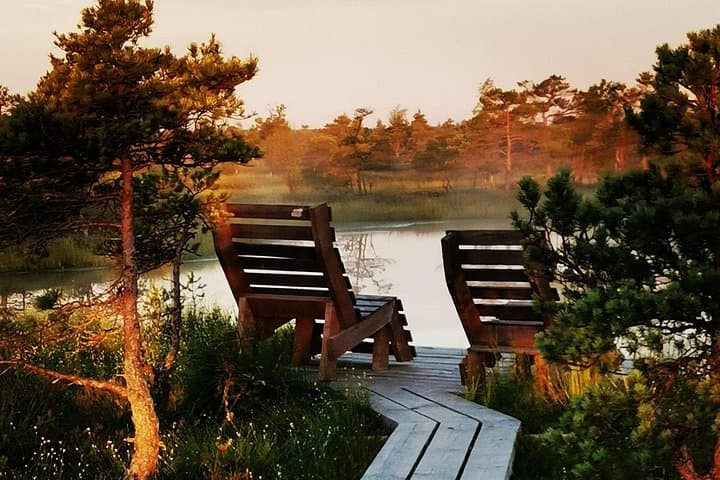
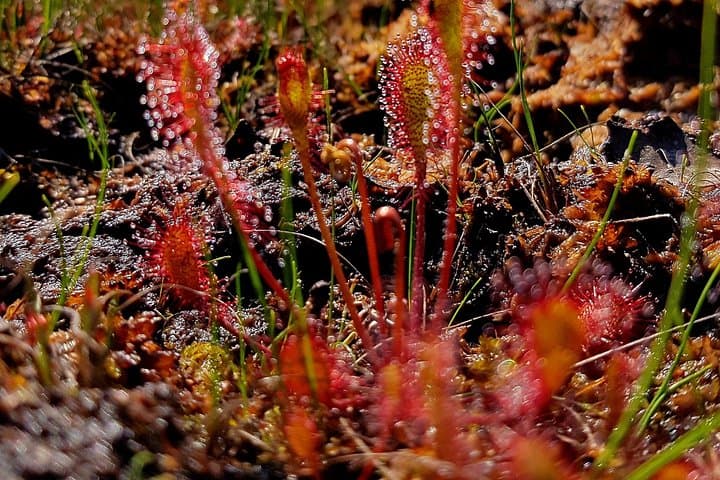
Dawn slices through a low, cool mist and the boardwalk begins like a narrow invitation: planks over peat, dwarf pines tilting as if listening. The ground hums with the slow work of sphagnum moss holding water and history; tiny sundews glitter where insects meet a carnivorous patience. Walkers follow a botanist-guide who points out mineral springs that once drew health‑seekers and the distant calls of cranes hiding in reed beds.
Dawn slices through a low, cool mist and the boardwalk begins like a narrow invitation: planks over peat, dwarf pines tilting as if listening. The ground hums with the slow work of sphagnum moss holding water and history; tiny sundews glitter where insects meet a carnivorous patience. Walkers follow a botanist-guide who points out mineral springs that once drew health‑seekers and the distant calls of cranes hiding in reed beds.
Kemeri’s bog formed over millennia—peat accumulating in shallow basins left by glacial melt and river shifts—creating acidic, low-nutrient soils where specialized flora thrive. The nearby Kemeri Resort Park, planned in the 19th century and expanded after the 1936 hotel, adds a human chapter: mineral-water taps, formal alleys, and paths leading to the Lielupe and the broad Jurmala coastline.
Expect flat, exposed boardwalks with short arcs: a small loop of ~1.4 km for a compact experience or the great arc of ~3.4 km to reach an observation platform that reads the bog from above. Birdwatching is prime here—wood sandpipers, wagtails and tree pipits are common—and the air often carries a resinous pine scent from the surrounding forest.
Practical guidance: wear waterproof footwear and layers for wind off the bog, bring insect repellent in warm months, and plan around sunrise or late afternoon for the best light and bird activity. The private, four-hour tour usually includes a stop at Kemeri Park and a short visit to Jurmala’s sea resort, making it a focused half‑day that pairs natural history with local spa-culture highlights.