THE ADVENTURE COLLECTIVE® · Independent discovery and booking for outdoor travel

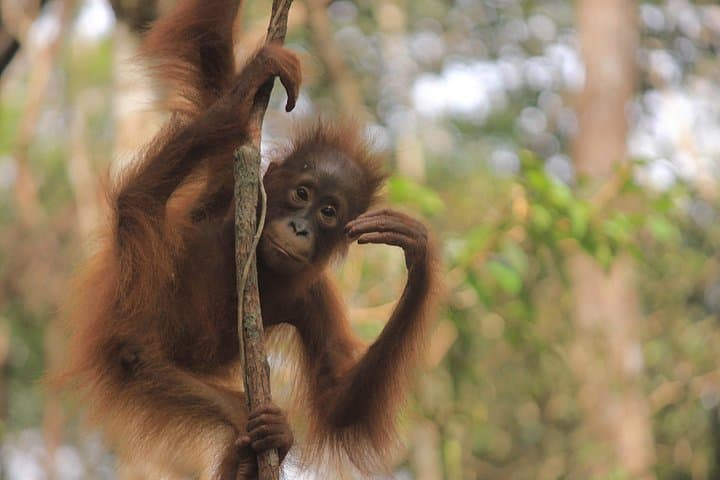
Board a traditional kelotok and glide into the peat-swamp rivers of Tanjung Puting, where scheduled feedings at Tanjung Harapan and Camp Leakey put you face-to-face with orangutans and riverine primates. This 2–3 day river cruise combines hands-on natural history with simple overnight life aboard a floating homestay.
Board a traditional kelotok and glide into the peat-swamp rivers of Tanjung Puting, where scheduled feedings at Tanjung Harapan and Camp Leakey put you face-to-face with orangutans and riverine primates. This 2–3 day river cruise combines hands-on natural history with simple overnight life aboard a floating homestay.
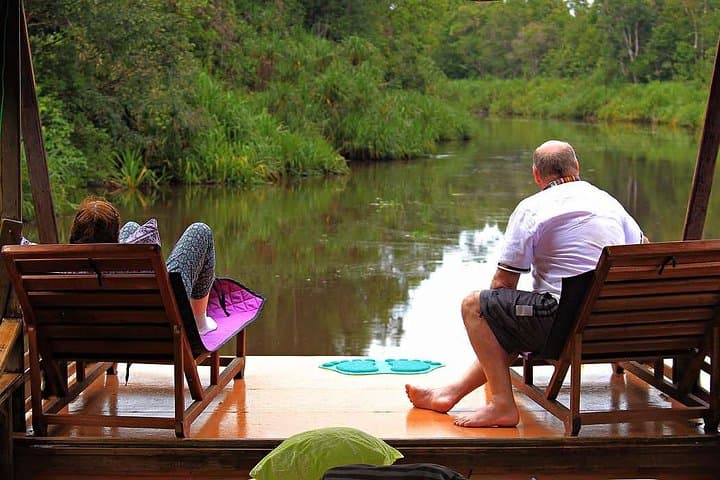
A kelotok slips from Kumai at first light, the river a ribbon of black water that pushes the boat forward as mangrove roots lean in like curious onlookers. Morning fog lifts off the Sekonyer and Simpang Kanan rivers, and the forest answers with calls — proboscis monkeys chattering, hornbills cutting across the canopy, and distant branches that housing solitary orangutans sway in slow motion.
Verified experiences and guided adventures in the surrounding area.
Operated by Borneo Primate Tours · Pangkalan Bun, Central Kalimantan
A kelotok slips from Kumai at first light, the river a ribbon of black water that pushes the boat forward as mangrove roots lean in like curious onlookers. Morning fog lifts off the Sekonyer and Simpang Kanan rivers, and the forest answers with calls — proboscis monkeys chattering, hornbills cutting across the canopy, and distant branches that housing solitary orangutans sway in slow motion.
Tanjung Puting National Park rose to prominence through the fieldwork of Dr. Biruté Galdikas; Camp Leakey remains one of the world’s earliest long-term orangutan research posts. Geologically the rivers wind through peat swamp and lowland dipterocarp forest, soils that stain waterways tea-colored and sustain a high density of endemic primates and specialized flora such as slipper orchids and moss-laden trunks.
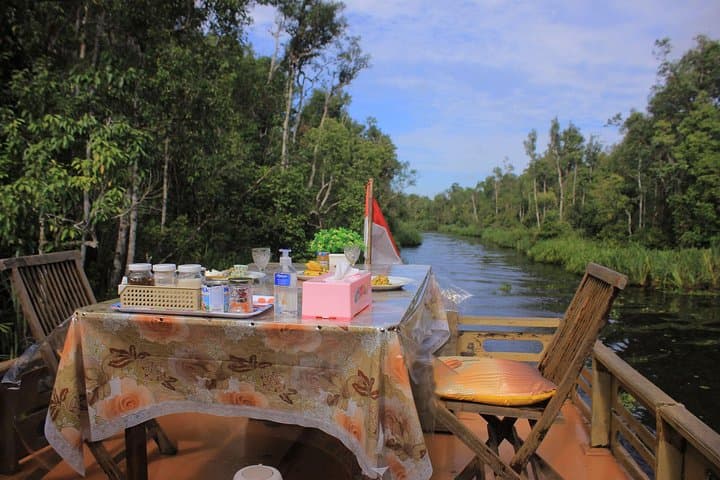
Villages along the river still rely on small-boat commerce and fishing — you’ll see riverfront life unfold from the kelotok’s shaded deck. Wildlife viewing centers on scheduled feeding times at Tanjung Harapan and Camp Leakey, where guides and rangers manage approachable viewing while protecting the animals’ routines.
Practically: expect basic onboard accommodation — sleeping berths under mosquito nets, shared facilities and simple meals included. Bring a waterproof daypack, binoculars, and insect protection; mornings and late afternoons are best for sightings. Night walks may be offered for nocturnal species, but trails are short and uneven. Respect all ranger instructions at feeding stations: do not attempt to touch or feed wildlife and keep noise low. This trip balances slow river travel with close, managed encounters — an attainable, immersive way to see Borneo’s great apes and river-edge ecosystems over 2–3 days.
easy.
2–3 days.
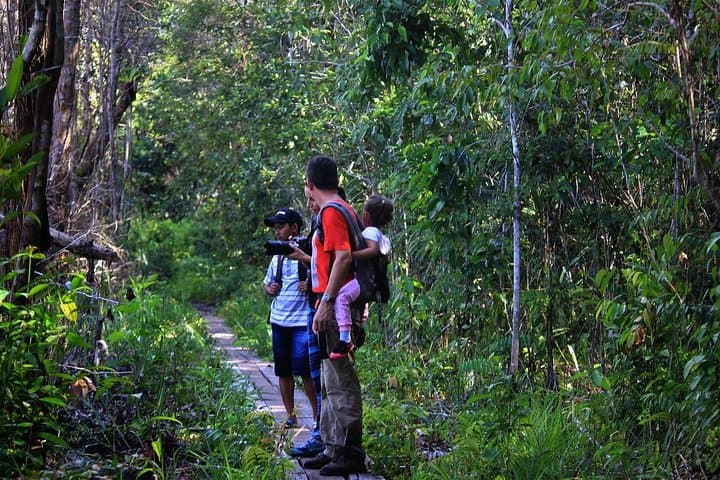
Lightly active — able to climb short, sometimes muddy trails and board small boats; suitable for most fitness levels
Viewing is from designated riverbanks and feeding platforms; rangers keep a safe distance and regulate group behavior to minimize disturbance.
Kelotoks offer basic onboard facilities; expect simple toilets and freshwater for washing—bring biodegradable toiletries and hand sanitizer.
Yes — the tour is family-friendly but children must be supervised; check age policies for sharing beds and feeding station rules.
The dry season (roughly June–September) generally offers easier river travel and more consistent wildlife activity, though sightings occur year-round.
Tanjung Puting became globally known through Dr. Biruté Galdikas’ long-term orangutan research starting in the 1970s; Camp Leakey remains a research and rehabilitation center.
Tanjung Puting faces pressures from logging, palm oil and peatland drainage; responsible tourism and ranger-supported feeding stations help fund conservation and reduce human-wildlife conflict.
Borneo Primate Tours operates guided outdoor trips and adventures with an emphasis on safety, stewardship, and memorable experiences.
A kelotok slips from Kumai at first light, the river a ribbon of black water that pushes the boat forward as mangrove roots lean in like curious onlookers. Morning fog lifts off the Sekonyer and Simpang Kanan rivers, and the forest answers with calls — proboscis monkeys chattering, hornbills cutting across the canopy, and distant branches that housing solitary orangutans sway in slow motion.
A kelotok slips from Kumai at first light, the river a ribbon of black water that pushes the boat forward as mangrove roots lean in like curious onlookers. Morning fog lifts off the Sekonyer and Simpang Kanan rivers, and the forest answers with calls — proboscis monkeys chattering, hornbills cutting across the canopy, and distant branches that housing solitary orangutans sway in slow motion.
Tanjung Puting National Park rose to prominence through the fieldwork of Dr. Biruté Galdikas; Camp Leakey remains one of the world’s earliest long-term orangutan research posts. Geologically the rivers wind through peat swamp and lowland dipterocarp forest, soils that stain waterways tea-colored and sustain a high density of endemic primates and specialized flora such as slipper orchids and moss-laden trunks.
Villages along the river still rely on small-boat commerce and fishing — you’ll see riverfront life unfold from the kelotok’s shaded deck. Wildlife viewing centers on scheduled feeding times at Tanjung Harapan and Camp Leakey, where guides and rangers manage approachable viewing while protecting the animals’ routines.
Practically: expect basic onboard accommodation — sleeping berths under mosquito nets, shared facilities and simple meals included. Bring a waterproof daypack, binoculars, and insect protection; mornings and late afternoons are best for sightings. Night walks may be offered for nocturnal species, but trails are short and uneven. Respect all ranger instructions at feeding stations: do not attempt to touch or feed wildlife and keep noise low. This trip balances slow river travel with close, managed encounters — an attainable, immersive way to see Borneo’s great apes and river-edge ecosystems over 2–3 days.