THE ADVENTURE COLLECTIVE® · Independent discovery and booking for outdoor travel

Charge upriver from Bentota to Kitulgala for an accessible day of white-water on the Kelani. Expect busy rapids, rainforest banks, and a route steeped in cinematic lore — all on a well-run, private-day tour.
Charge upriver from Bentota to Kitulgala for an accessible day of white-water on the Kelani. Expect busy rapids, rainforest banks, and a route steeped in cinematic lore — all on a well-run, private-day tour.
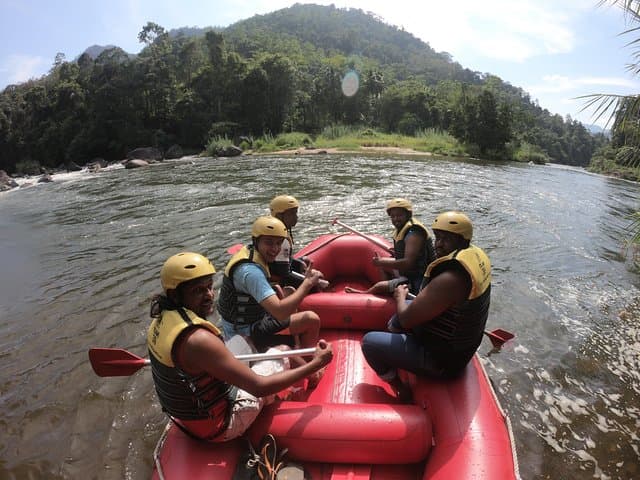
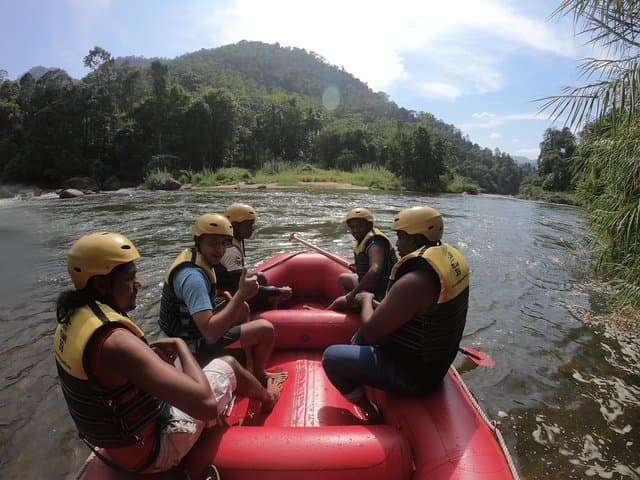
The Kelani River pushes and sighs as your raft threads a corridor cut through rainforest and rubber estates. Early light slides across the current, turning the water a greenish burnish; birds flicker through the canopy and the distant staccato of a village radio mixes with the river’s voice. By the time the van from Bentota has finished the coastal run and climbs into the wet-zone hills, the air has thickened with humidity and expectation — this is where Sri Lanka’s monsoon-fed waterways strain themselves into ridable whitewater.
Verified experiences and guided adventures in the surrounding area.
Operated by daytoursrilanka · Kitulgala, Western Province
The Kelani River pushes and sighs as your raft threads a corridor cut through rainforest and rubber estates. Early light slides across the current, turning the water a greenish burnish; birds flicker through the canopy and the distant staccato of a village radio mixes with the river’s voice. By the time the van from Bentota has finished the coastal run and climbs into the wet-zone hills, the air has thickened with humidity and expectation — this is where Sri Lanka’s monsoon-fed waterways strain themselves into ridable whitewater.
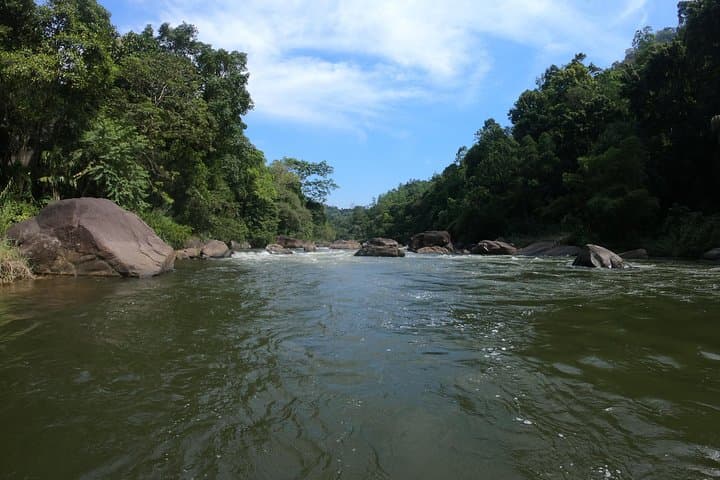
Rafting at Kitulgala sits at the intersection of natural force and cinematic history. The concrete bridge foundations along the Kelani are the last obvious relic of the location used for the film The Bridge on the River Kwai; local lore also points to submerged railcars further downstream. Geologically, the river has carved fast channels and boulder-strewn drops across low-elevation metamorphic rocks, producing a succession of Class II–III rapids ideal for guided day trips. Culturally, the route threads past small paddy plains and tidy rubber plantations — agricultural patterns shaped by the wet-zone climate that brings two monsoons a year.
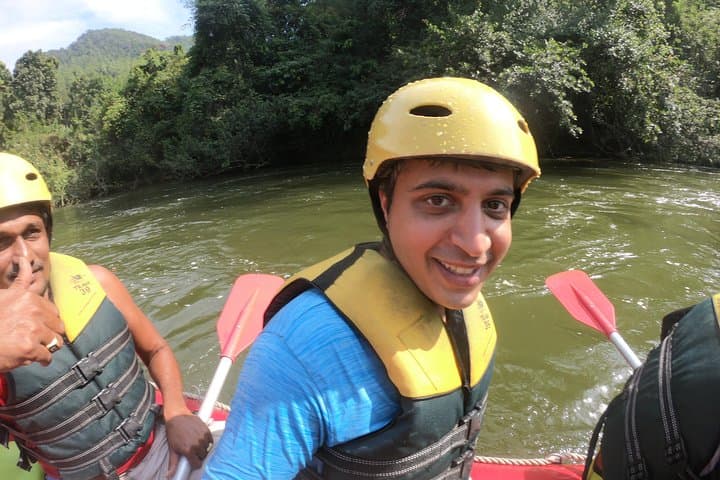
The experience is straightforward: pickup from Bentota, Aluthgama or nearby hotels, a scenic drive inland, safety briefing, and a rafting stretch that runs a few kilometers of moving water with intermittent rapids and calmer pools for swimming. Local guides handle paddles and commands; novices quickly find a rhythm in the boat’s motion as the river alternates between playful surges and louder, teeth-showing drops.
Practical planning matters. February is the driest and most predictable month for calmer, clearer runs; the broader rafting season runs through the first quarter when flows are manageable and visibility is best. Bring quick-dry clothing, secure footwear you don’t mind getting wet, and a waterproof camera if you want river-action shots. The operator provides bottled water, safety gear and private transport, but lunch is typically arranged separately in Kitulgala village or on the return route.
Safety and sustainability are part of the trip: guides check flows and will cancel in heavy rains, and they emphasize minimal-impact behavior on riverbanks. Expect a full-day outing — roughly six to eight hours including transfers — and basic physical readiness: you should be comfortable following instructions, getting in and out of the raft, and treading water if needed.
For travelers looking for an active inland day from Sri Lanka’s southern coast, Kelani River rafting at Kitulgala balances adrenaline with access: lively rapids that demand attention, rainforest that quietly watches the action, and a local landscape that rewards curiosity on the drive back with views of rubber yields, paddy fields and village life.
moderate.
6–8 hours.
Suitable for people with basic fitness: able to follow paddling commands, enter/exit a raft, and comfortable in moving water.
The guided rafting section covers a few kilometers of moving water with several rapids; the full outing, including transfers and briefings, runs about 6–8 hours.
No prior rafting experience is necessary; the route is typically Class II–III and guided, but you should be comfortable following instructions and able to swim.
Lunch is not included in the basic package — bottled water and safety gear are provided; lunch can be arranged in Kitulgala or on return to the coast.
January through March is generally driest and most predictable for rafting; operators will cancel trips in heavy monsoon conditions for safety.
Yes — pickup is offered from Bentota, Aluthgama, Beruwala, Kosgoda, Ahungalla, Kalutara and nearby hotels as listed in the booking details.
Not recommended for pregnant travelers; children may participate depending on age and operator policy — check requirements for infant seats and age bands when booking.
Kitulgala’s Kelani River briefly entered global attention when a section was used as a filming location for The Bridge on the River Kwai; fragments of concrete foundations remain near the river.
The wet-zone rainforest here is sensitive to erosion; guides emphasize staying on trails and minimizing plastic use — bring reusable bottles and dispose of waste with your guide.
daytoursrilanka operates guided outdoor trips and adventures with an emphasis on safety, stewardship, and memorable experiences.
The Kelani River pushes and sighs as your raft threads a corridor cut through rainforest and rubber estates. Early light slides across the current, turning the water a greenish burnish; birds flicker through the canopy and the distant staccato of a village radio mixes with the river’s voice. By the time the van from Bentota has finished the coastal run and climbs into the wet-zone hills, the air has thickened with humidity and expectation — this is where Sri Lanka’s monsoon-fed waterways strain themselves into ridable whitewater.
The Kelani River pushes and sighs as your raft threads a corridor cut through rainforest and rubber estates. Early light slides across the current, turning the water a greenish burnish; birds flicker through the canopy and the distant staccato of a village radio mixes with the river’s voice. By the time the van from Bentota has finished the coastal run and climbs into the wet-zone hills, the air has thickened with humidity and expectation — this is where Sri Lanka’s monsoon-fed waterways strain themselves into ridable whitewater.
Rafting at Kitulgala sits at the intersection of natural force and cinematic history. The concrete bridge foundations along the Kelani are the last obvious relic of the location used for the film The Bridge on the River Kwai; local lore also points to submerged railcars further downstream. Geologically, the river has carved fast channels and boulder-strewn drops across low-elevation metamorphic rocks, producing a succession of Class II–III rapids ideal for guided day trips. Culturally, the route threads past small paddy plains and tidy rubber plantations — agricultural patterns shaped by the wet-zone climate that brings two monsoons a year.
The experience is straightforward: pickup from Bentota, Aluthgama or nearby hotels, a scenic drive inland, safety briefing, and a rafting stretch that runs a few kilometers of moving water with intermittent rapids and calmer pools for swimming. Local guides handle paddles and commands; novices quickly find a rhythm in the boat’s motion as the river alternates between playful surges and louder, teeth-showing drops.
Practical planning matters. February is the driest and most predictable month for calmer, clearer runs; the broader rafting season runs through the first quarter when flows are manageable and visibility is best. Bring quick-dry clothing, secure footwear you don’t mind getting wet, and a waterproof camera if you want river-action shots. The operator provides bottled water, safety gear and private transport, but lunch is typically arranged separately in Kitulgala village or on the return route.
Safety and sustainability are part of the trip: guides check flows and will cancel in heavy rains, and they emphasize minimal-impact behavior on riverbanks. Expect a full-day outing — roughly six to eight hours including transfers — and basic physical readiness: you should be comfortable following instructions, getting in and out of the raft, and treading water if needed.
For travelers looking for an active inland day from Sri Lanka’s southern coast, Kelani River rafting at Kitulgala balances adrenaline with access: lively rapids that demand attention, rainforest that quietly watches the action, and a local landscape that rewards curiosity on the drive back with views of rubber yields, paddy fields and village life.