THE ADVENTURE COLLECTIVE® · Independent discovery and booking for outdoor travel

Walk through fragrant rose fields and rugged Dades Valley panoramas on a short, accessible cultural hike from Kelaat M'Gouna. Learn about Berber village life, rose distillation and the geology that cuts the landscape while enjoying a gentle, two-hour route.
Walk through fragrant rose fields and rugged Dades Valley panoramas on a short, accessible cultural hike from Kelaat M'Gouna. Learn about Berber village life, rose distillation and the geology that cuts the landscape while enjoying a gentle, two-hour route.
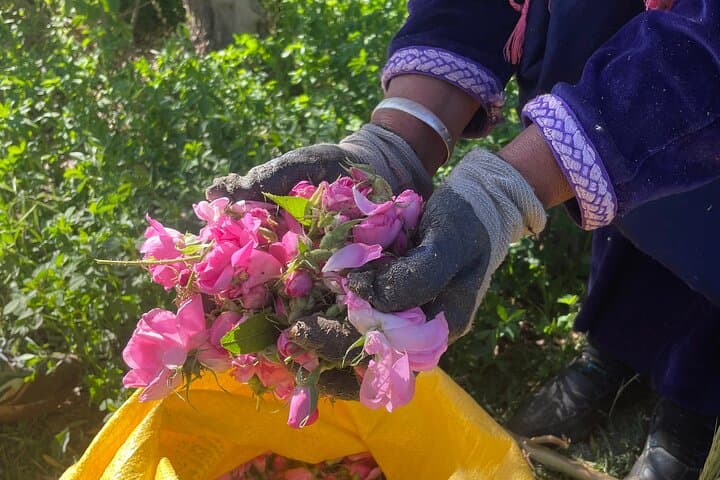
You step off the main road into a lane threaded with dust and petals; the air is a sharp, floral note as rose bushes press close to stone walls and the High Atlas rises like a gray promise behind them.
Verified experiences and guided adventures in the surrounding area.
Operated by Maroc Des Merveilles · Kelaat M'Gouna, Drâa-Tafilalet
You step off the main road into a lane threaded with dust and petals; the air is a sharp, floral note as rose bushes press close to stone walls and the High Atlas rises like a gray promise behind them.
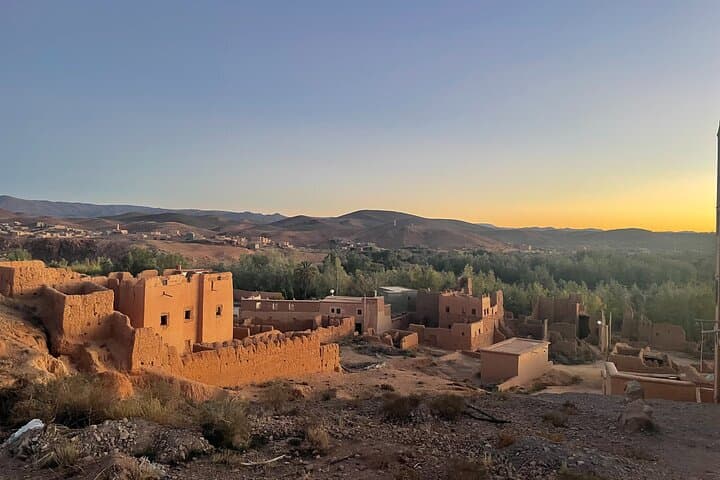
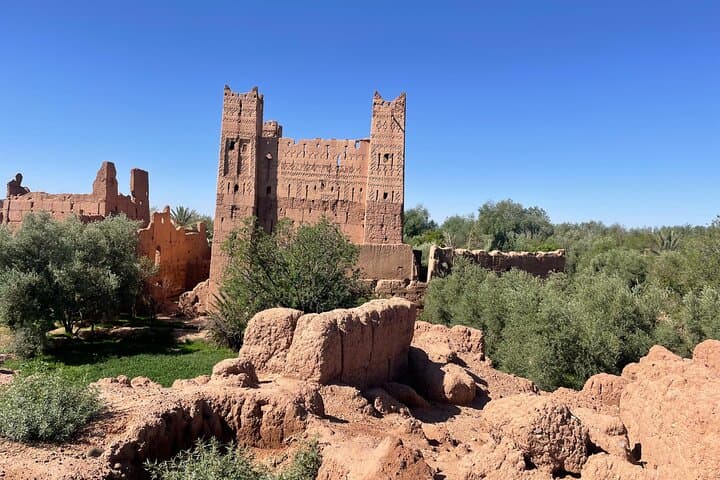
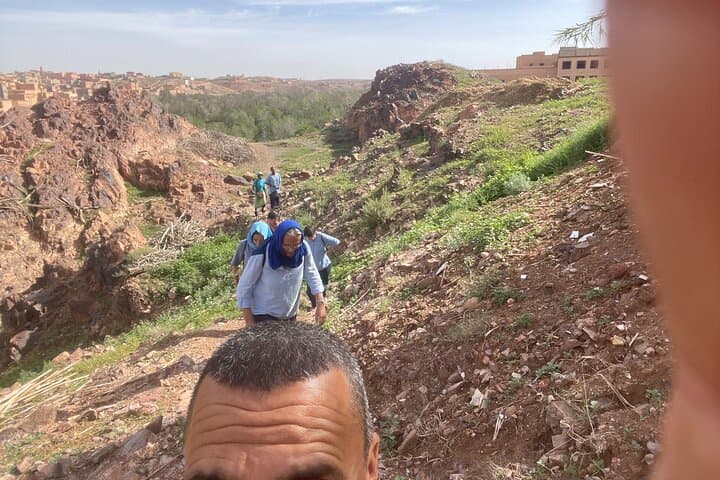
This two-hour walk around Kelaat M'Gouna moves between cultivated gardens and the raw ribs of the Dadès Valley. The route follows village lanes and short dirt tracks used by shepherds and donkeys, offering open views where the Mgoun massif frames red earth and folded gorges. Geologically the area is a meeting of fluvial terraces and smashed-up sedimentary layers that the Dades River has carved into dramatic cliffs; culturally, it’s a living Berber landscape shaped by irrigation fingers, kasbahs, and seasonal rose distillation.
Kelaat M'Gouna earned the title “City of Roses” from a century of commercial cultivation and an annual Rose Festival that celebrates harvest, music and local craft. Guides link what you see—irrigation channels, small distilleries, and terraced plots—to that work, and introduce village life, from woven carpets to shared mint tea.
Practically, the route is low-elevation and accessible for most walkers: expect uneven cobbles and short inclines rather than steep climbs. Wear closed-toe shoes, carry water and sun protection, and plan morning or late-afternoon departures to avoid midday heat. Support local distilleries and vendors rather than picking flowers. By the end of the loop you’ll have walked a landscape where human labor and mountain geology shape scent, color and routine—straightforward, sensory, and quietly memorable.
easy.
2 hours.
Suitable for most fitness levels; requires steady walking on uneven village lanes and short slopes.
The guided portion is roughly two hours and covers village lanes, gardens and short dirt tracks—expect gentle slopes rather than sustained climbs.
Yes; the itinerary is rated easy and accessible for most ages, though uneven ground can be challenging for those with mobility issues.
In season (spring) local distilleries are active and guides often arrange short demonstrations or visits to family-run facilities.
Local guides typically offer multilingual commentary—Arabic and Tamazight are common, and many guides speak French or English depending on the operator.
Kelaat M'Gouna developed around rose cultivation in the 20th century; the town’s Rose Festival celebrates the harvest and local crafts.
Rose cultivation and tourism strain limited water resources; stick to trails, avoid picking flowers, and support small distilleries and local artisans to keep economic benefits local.
Maroc Des Merveilles operates guided outdoor trips and adventures with an emphasis on safety, stewardship, and memorable experiences.
You step off the main road into a lane threaded with dust and petals; the air is a sharp, floral note as rose bushes press close to stone walls and the High Atlas rises like a gray promise behind them.
You step off the main road into a lane threaded with dust and petals; the air is a sharp, floral note as rose bushes press close to stone walls and the High Atlas rises like a gray promise behind them.
This two-hour walk around Kelaat M'Gouna moves between cultivated gardens and the raw ribs of the Dadès Valley. The route follows village lanes and short dirt tracks used by shepherds and donkeys, offering open views where the Mgoun massif frames red earth and folded gorges. Geologically the area is a meeting of fluvial terraces and smashed-up sedimentary layers that the Dades River has carved into dramatic cliffs; culturally, it’s a living Berber landscape shaped by irrigation fingers, kasbahs, and seasonal rose distillation.
Kelaat M'Gouna earned the title “City of Roses” from a century of commercial cultivation and an annual Rose Festival that celebrates harvest, music and local craft. Guides link what you see—irrigation channels, small distilleries, and terraced plots—to that work, and introduce village life, from woven carpets to shared mint tea.
Practically, the route is low-elevation and accessible for most walkers: expect uneven cobbles and short inclines rather than steep climbs. Wear closed-toe shoes, carry water and sun protection, and plan morning or late-afternoon departures to avoid midday heat. Support local distilleries and vendors rather than picking flowers. By the end of the loop you’ll have walked a landscape where human labor and mountain geology shape scent, color and routine—straightforward, sensory, and quietly memorable.