THE ADVENTURE COLLECTIVE® · Independent discovery and booking for outdoor travel

This five-day circuit pairs Song-Kul’s rolling, high-altitude pastures with the remote turquoise bowl of Kel-Suu. Expect high passes, pastoral culture, short hikes and multi-day drives across the Tien Shan.
This five-day circuit pairs Song-Kul’s rolling, high-altitude pastures with the remote turquoise bowl of Kel-Suu. Expect high passes, pastoral culture, short hikes and multi-day drives across the Tien Shan.
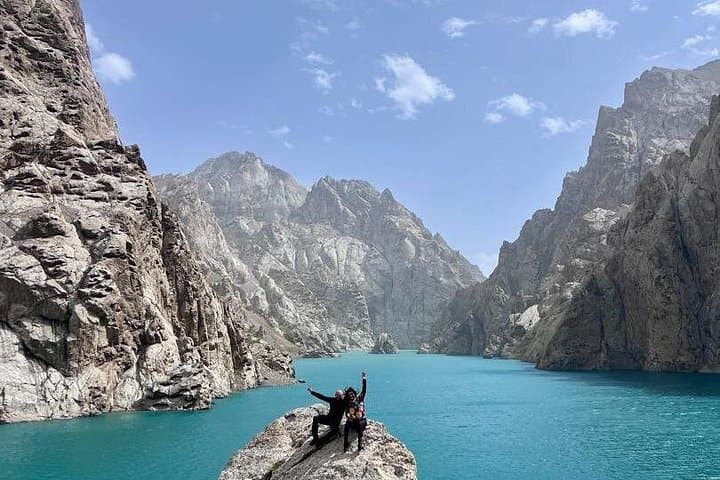
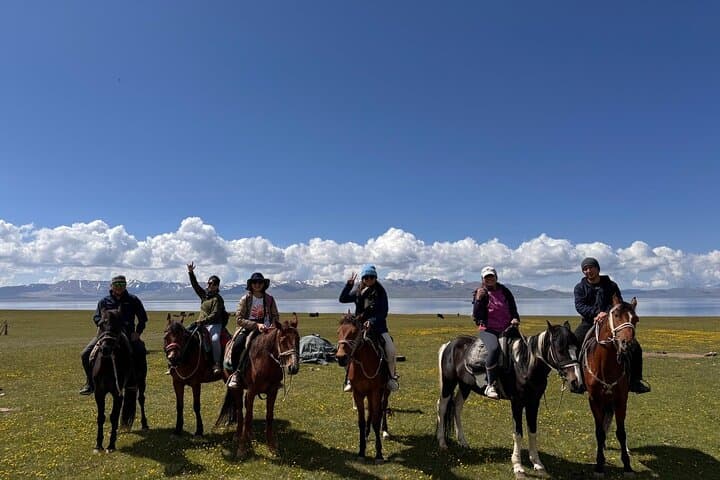
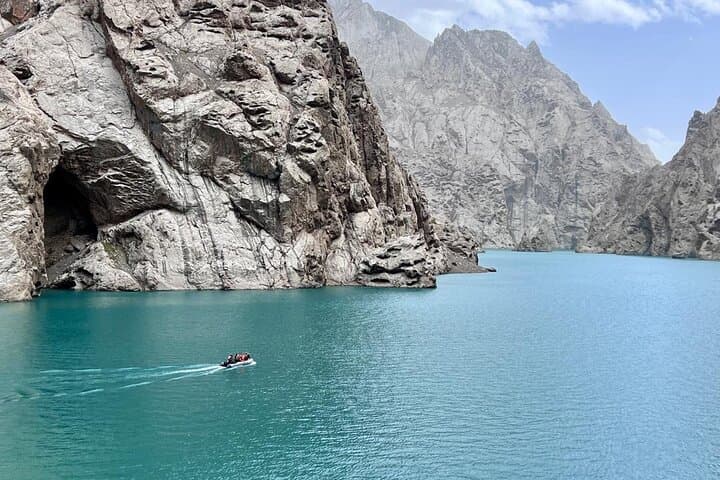
A cold wind pushes across Song-Kul’s high pastures and the grass answers, rippling toward distant yurts. On day one the road climbs from Bishkek through Boom Gorge and over Kalmak-Ashuu (≈3,446 m), opening like a curtain to the broad saddle where grazing horses mark the horizon. The tour stitches two very different alpine scenes: Song-Kul’s vast, grazing meadows and Kel-Suu’s turquoise basin tucked inside a narrow, glacial-cut canyon.
Verified experiences and guided adventures in the surrounding area.
Operated by Atlas.kg · Naryn, Naryn Region
A cold wind pushes across Song-Kul’s high pastures and the grass answers, rippling toward distant yurts. On day one the road climbs from Bishkek through Boom Gorge and over Kalmak-Ashuu (≈3,446 m), opening like a curtain to the broad saddle where grazing horses mark the horizon. The tour stitches two very different alpine scenes: Song-Kul’s vast, grazing meadows and Kel-Suu’s turquoise basin tucked inside a narrow, glacial-cut canyon.
Song-Kul sits above 3,000 m and has been a summer home for nomads for centuries — a working landscape of kumis, felt, and horse tack. Geologically the lakes occupy tectonic basins and glacial valleys carved by past ice and active rivers; Kel-Suu owes its dramatic color to mineral-rich runoff and steep canyon walls that channel meltwater into a deep lake bowl. Cultural exchanges with Silk Road routes and Russian imperial maps left a patchwork of place names and pastoral practices visible at market towns like Kochkor and Naryn.
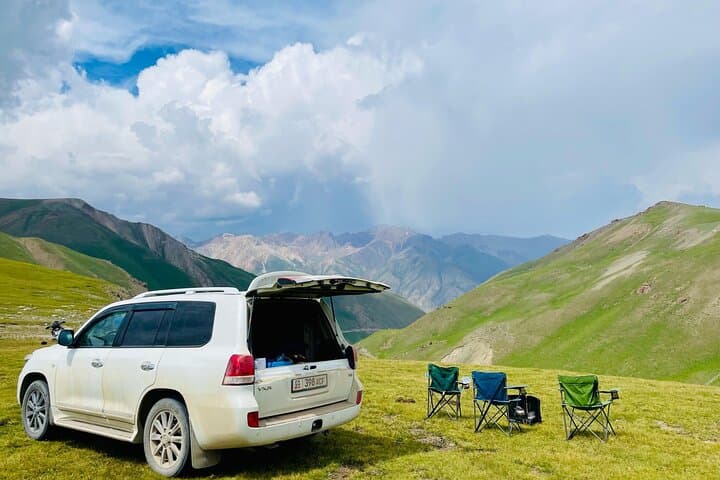
Practically: expect long drive segments (roughly 300 km to Song-Kul from Bishkek, additional 170–220 km to reach Kel-Suu approaches), high passes, basic yurt or cabin lodging, and short valley hikes to shorelines. Weather shifts quickly—sun, hail and wind can all arrive in an hour—so layer and carry waterproofs. Cash and a patient timetable will make the logistics feel simpler; local guides handle grazing routes, horse options and camp logistics so you can focus on the landscape and culture.
moderate.
5 days.
Moderate fitness; comfortable with long vehicle transfers, short hikes of 3–6 km at high altitude.
Late June through September offers the most stable weather, open pastures at Song-Kul, and accessible high passes; early summer can be wet and late fall brings snow.
Yes—expect yurt stays at Song-Kul and simple guesthouses or cabins near Kel-Suu; private overnight options are included on the itinerary.
The itinerary notes a horse guide and optional riding in the Song-Kul area; ability levels vary, so check with the operator if you need lessons or saddle guarantees.
Travel insurance that covers evacuation and high-altitude activities is recommended; no special permits are usually required for these public lakes, but border-area regulations near Kel-Suu can be sensitive—follow your guide’s directions.
The high pastures have been seasonal summer quarters for Kyrgyz nomads for centuries; Soviet-era road and reservoir projects altered traditional transhumance routes but pastoral culture persists.
These high-alpine ecosystems are fragile; stick to established trails, avoid disturbing grazing herds, and minimize plastic waste — local operators increasingly favor low-impact camping and waste removal.
Atlas.kg operates guided outdoor trips and adventures with an emphasis on safety, stewardship, and memorable experiences.
A cold wind pushes across Song-Kul’s high pastures and the grass answers, rippling toward distant yurts. On day one the road climbs from Bishkek through Boom Gorge and over Kalmak-Ashuu (≈3,446 m), opening like a curtain to the broad saddle where grazing horses mark the horizon. The tour stitches two very different alpine scenes: Song-Kul’s vast, grazing meadows and Kel-Suu’s turquoise basin tucked inside a narrow, glacial-cut canyon.
A cold wind pushes across Song-Kul’s high pastures and the grass answers, rippling toward distant yurts. On day one the road climbs from Bishkek through Boom Gorge and over Kalmak-Ashuu (≈3,446 m), opening like a curtain to the broad saddle where grazing horses mark the horizon. The tour stitches two very different alpine scenes: Song-Kul’s vast, grazing meadows and Kel-Suu’s turquoise basin tucked inside a narrow, glacial-cut canyon.
Song-Kul sits above 3,000 m and has been a summer home for nomads for centuries — a working landscape of kumis, felt, and horse tack. Geologically the lakes occupy tectonic basins and glacial valleys carved by past ice and active rivers; Kel-Suu owes its dramatic color to mineral-rich runoff and steep canyon walls that channel meltwater into a deep lake bowl. Cultural exchanges with Silk Road routes and Russian imperial maps left a patchwork of place names and pastoral practices visible at market towns like Kochkor and Naryn.
Practically: expect long drive segments (roughly 300 km to Song-Kul from Bishkek, additional 170–220 km to reach Kel-Suu approaches), high passes, basic yurt or cabin lodging, and short valley hikes to shorelines. Weather shifts quickly—sun, hail and wind can all arrive in an hour—so layer and carry waterproofs. Cash and a patient timetable will make the logistics feel simpler; local guides handle grazing routes, horse options and camp logistics so you can focus on the landscape and culture.