THE ADVENTURE COLLECTIVE® · Independent discovery and booking for outdoor travel

Keiservarden's flat summit offers sweeping views of Bodø, the Norwegian Sea and the Lofoten silhouette. This accessible 366 m hike is a local favorite for Midnight Sun evenings and Northern Lights outings.
Keiservarden's flat summit offers sweeping views of Bodø, the Norwegian Sea and the Lofoten silhouette. This accessible 366 m hike is a local favorite for Midnight Sun evenings and Northern Lights outings.
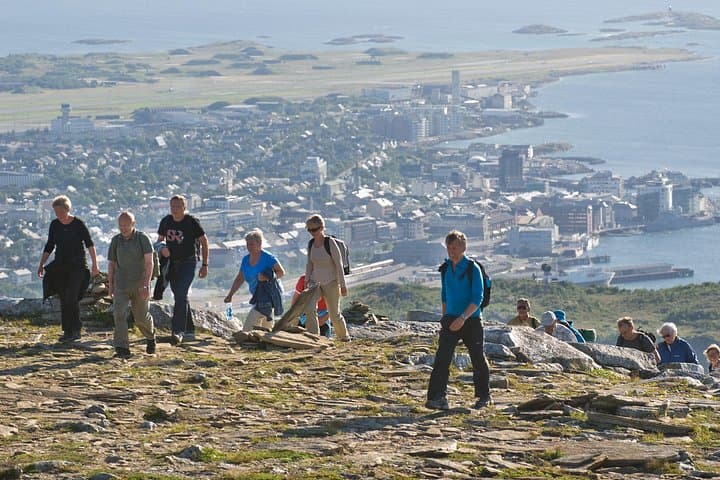
You step out of Scandic Havet into the sharparctic light and the town falls away beneath the slope; within an hour the city’s grid becomes a patchwork seen from a shallow bowl, the sea daring you to look farther. Keiservarden’s flat summit sits at 366 m and opens like a natural terrace — the Lofoten silhouette sometimes edges the horizon while the fjord threads toward the islands of Værøy and Røst.
Verified experiences and guided adventures in the surrounding area.
Operated by Nordland Turselskap - Nordland Adventures · Bodø, Nordland
You step out of Scandic Havet into the sharparctic light and the town falls away beneath the slope; within an hour the city’s grid becomes a patchwork seen from a shallow bowl, the sea daring you to look farther. Keiservarden’s flat summit sits at 366 m and opens like a natural terrace — the Lofoten silhouette sometimes edges the horizon while the fjord threads toward the islands of Værøy and Røst.
The hill earned its name when Kaiser Wilhelm II visited in 1891; a small plaque at the top records that moment. Geologically the rise is part of coastal bedrock sculpted by ice and sea, with a hard, exposed surface that channels runoff and concentrates foot traffic. In 2016 Sherpa-built stone stairs stabilized the main route and reduced erosion, making the ascent straightforward and protecting the slopes locals cross year-round.
Expect a social trail: Bodø residents use Keiservarden for sunrise runs, midnight-sun picnics and winter aurora watches. Wildlife is subtle — seabirds wheel offshore and foxes patrol lower ridges — while the air often carries a salt edge from the Norwegian Sea.
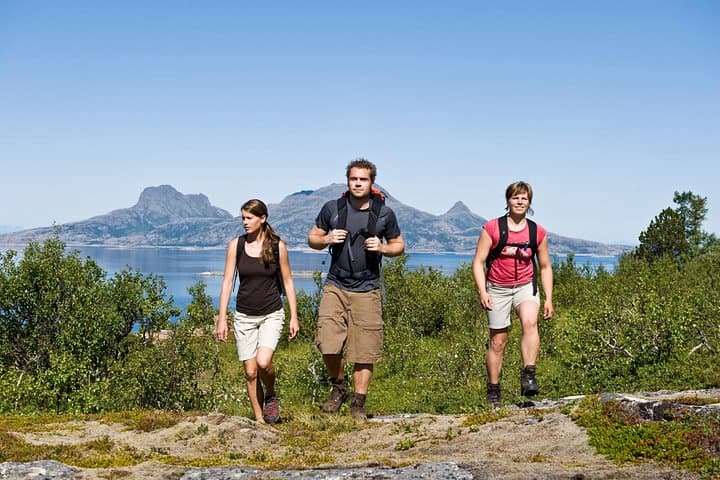
Practical guidance: plan 3–4 hours for the guided outing including transport, wear sturdy boots and layered clothing (weather shifts fast), and bring water and a compact windproof shell. If you aim for Midnight Sun, start late evening to catch the long light; for Northern Lights, check the aurora forecast and pick a clear night. Respect the marked path and the stone stairs — they’re there to keep the views for future visitors.
moderate.
3–4 hours.
Moderate fitness — comfortable with sustained uphill walking and uneven terrain
The ascent to 366 m is moderate: well-constructed stone steps and short steep sections mean most people with basic fitness can manage the route.
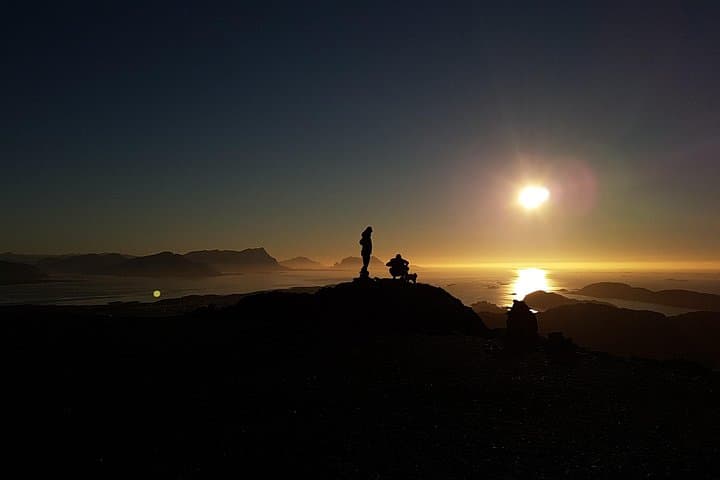
Midnight Sun is visible in late May–July; the Northern Lights are most likely in clear nights from September–April — check local forecasts and pick clear, dark conditions for aurora.
Yes for many families and older walkers if they move at a steady, unhurried pace; the stairs help, but take rests and avoid icy conditions in winter without proper gear.
The tour meets in the lobby of Scandic Havet Hotel in Bodø and transportation is provided as part of the guided outing.
Keiservarden is named after German Emperor Wilhelm II, who climbed the hill in 1891; a plaque on the summit commemorates his visit.
Stone steps built by Sherpas in 2016 significantly reduced erosion; visitors are asked to stay on marked paths and pack out waste to protect fragile alpine vegetation.
Nordland Turselskap - Nordland Adventures operates guided outdoor trips and adventures with an emphasis on safety, stewardship, and memorable experiences.
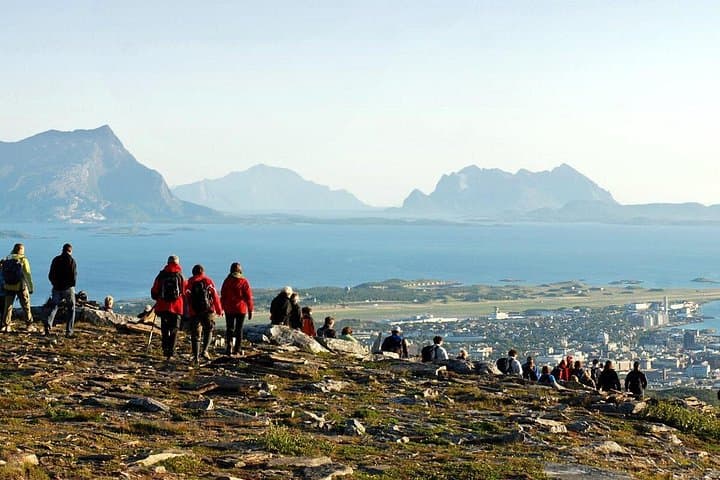
You step out of Scandic Havet into the sharparctic light and the town falls away beneath the slope; within an hour the city’s grid becomes a patchwork seen from a shallow bowl, the sea daring you to look farther. Keiservarden’s flat summit sits at 366 m and opens like a natural terrace — the Lofoten silhouette sometimes edges the horizon while the fjord threads toward the islands of Værøy and Røst.
You step out of Scandic Havet into the sharparctic light and the town falls away beneath the slope; within an hour the city’s grid becomes a patchwork seen from a shallow bowl, the sea daring you to look farther. Keiservarden’s flat summit sits at 366 m and opens like a natural terrace — the Lofoten silhouette sometimes edges the horizon while the fjord threads toward the islands of Værøy and Røst.
The hill earned its name when Kaiser Wilhelm II visited in 1891; a small plaque at the top records that moment. Geologically the rise is part of coastal bedrock sculpted by ice and sea, with a hard, exposed surface that channels runoff and concentrates foot traffic. In 2016 Sherpa-built stone stairs stabilized the main route and reduced erosion, making the ascent straightforward and protecting the slopes locals cross year-round.
Expect a social trail: Bodø residents use Keiservarden for sunrise runs, midnight-sun picnics and winter aurora watches. Wildlife is subtle — seabirds wheel offshore and foxes patrol lower ridges — while the air often carries a salt edge from the Norwegian Sea.
Practical guidance: plan 3–4 hours for the guided outing including transport, wear sturdy boots and layered clothing (weather shifts fast), and bring water and a compact windproof shell. If you aim for Midnight Sun, start late evening to catch the long light; for Northern Lights, check the aurora forecast and pick a clear night. Respect the marked path and the stone stairs — they’re there to keep the views for future visitors.