THE ADVENTURE COLLECTIVE® · Independent discovery and booking for outdoor travel

Drive Historic Route 66 into Crozier Canyon for a 75–90 minute guided safari at Keepers of the Wild, where more than 130 rescued animals—including big cats and regional carnivores—are viewed from an air-conditioned vehicle. Learn about rescue histories, local geology, and practical viewing tips for this family-friendly half-day excursion.
Drive Historic Route 66 into Crozier Canyon for a 75–90 minute guided safari at Keepers of the Wild, where more than 130 rescued animals—including big cats and regional carnivores—are viewed from an air-conditioned vehicle. Learn about rescue histories, local geology, and practical viewing tips for this family-friendly half-day excursion.
Dust and sun meet on Historic Route 66 before the road drops into Crozier Canyon, where scrub-brush slopes and red-rock cuttings frame a 175-acre sanctuary. Visitors board an air-conditioned vehicle and ride a narrow canyon road as Keepers guide the convoy past enclosures and natural habitats, the animals close enough to study details of fur, paw, and gaze without leaving the seat.
Verified experiences and guided adventures in the surrounding area.
Operated by Desert Wonder Tours · Valentine, Arizona
Dust and sun meet on Historic Route 66 before the road drops into Crozier Canyon, where scrub-brush slopes and red-rock cuttings frame a 175-acre sanctuary. Visitors board an air-conditioned vehicle and ride a narrow canyon road as Keepers guide the convoy past enclosures and natural habitats, the animals close enough to study details of fur, paw, and gaze without leaving the seat.
The site began as a private rescue and evolved into a public sanctuary that showcases both exotic big cats and Southwestern fauna. Geologically the canyon is part of the transition between Mojave desert scrub and the higher volcanic and sedimentary formations of northwestern Arizona; you'll see basalt outcrops, alluvial fans, and desert washlines that feed seasonal growth. Culturally, this stretch of Route 66 carries the layered history of early automobile travel, mining camps and small desert communities that supported wayfarers along the old highway.
On the 75–90 minute guided drive through the park expect narrated stops, photo opportunities and keeper stories about rehabilitation and animal histories. Practicalities: the on-site portion is largely vehicle-based and family-friendly, but the full trip from pickup points can be a half-day excursion. Bring sun protection and a charged camera, respect barriers, and follow keeper instructions—animals’ behavior is unpredictable and enclosures are designed for their safety. The experience balances close wildlife viewing with education and conservation, giving a realistic look at rescue work in an arid, rugged landscape.
easy.
4–5 hours.
Suitable for most fitness levels since viewing is vehicle-based; participants should be able to board and exit a van.
The guided drive through the sanctuary lasts about 75–90 minutes; full round-trip tours from pickup points are typically 4–5 hours.
There are designated stops where guests can disembark under keeper supervision for photos; always follow staff directions and remain behind barriers.
Yes—strollers are allowed and the tour is family-friendly, but children must remain seated and supervised during vehicle movement.
Feeding or touching animals is not allowed; keepers may demonstrate feeding as part of education, but interactions are controlled and for staff only.
The sanctuary grew from private rescue work into a public educational park along a stretch of Route 66 that supported mining and road travel in the early 20th century.
The park focuses on rescue, rehabilitation and non-releasable care; visitors should avoid disturbing animals and support sanctuaries that prioritize welfare over entertainment.
Desert Wonder Tours operates guided outdoor trips and adventures with an emphasis on safety, stewardship, and memorable experiences.
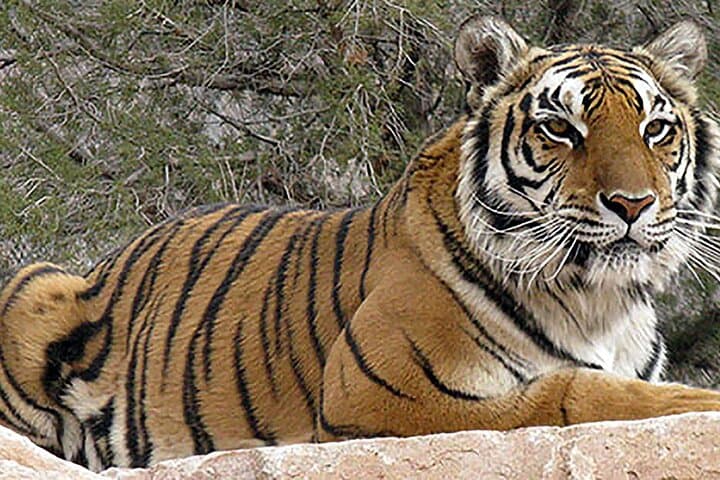
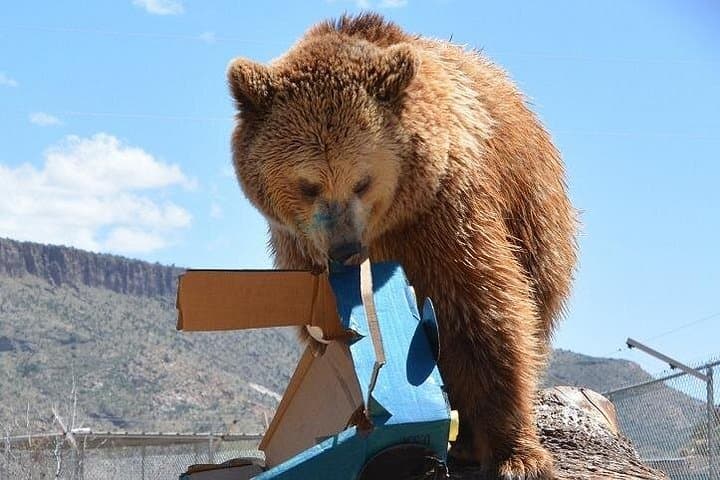
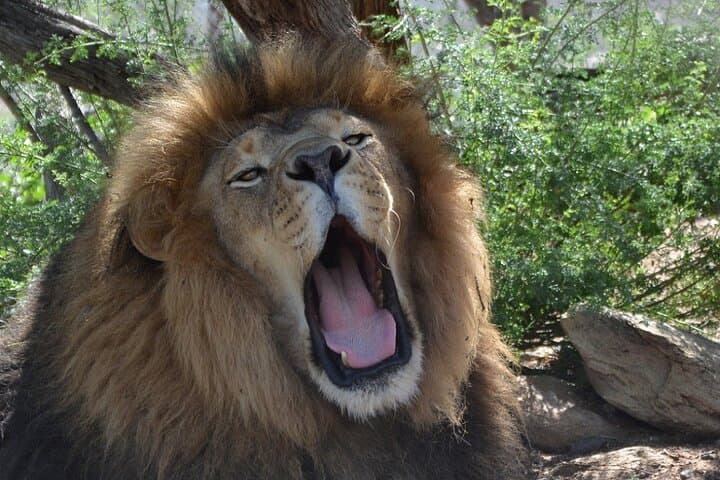
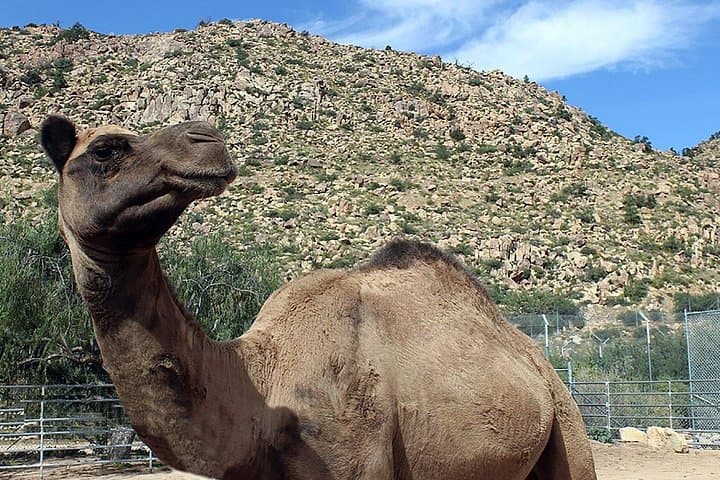
Dust and sun meet on Historic Route 66 before the road drops into Crozier Canyon, where scrub-brush slopes and red-rock cuttings frame a 175-acre sanctuary. Visitors board an air-conditioned vehicle and ride a narrow canyon road as Keepers guide the convoy past enclosures and natural habitats, the animals close enough to study details of fur, paw, and gaze without leaving the seat.
Dust and sun meet on Historic Route 66 before the road drops into Crozier Canyon, where scrub-brush slopes and red-rock cuttings frame a 175-acre sanctuary. Visitors board an air-conditioned vehicle and ride a narrow canyon road as Keepers guide the convoy past enclosures and natural habitats, the animals close enough to study details of fur, paw, and gaze without leaving the seat.
The site began as a private rescue and evolved into a public sanctuary that showcases both exotic big cats and Southwestern fauna. Geologically the canyon is part of the transition between Mojave desert scrub and the higher volcanic and sedimentary formations of northwestern Arizona; you'll see basalt outcrops, alluvial fans, and desert washlines that feed seasonal growth. Culturally, this stretch of Route 66 carries the layered history of early automobile travel, mining camps and small desert communities that supported wayfarers along the old highway.
On the 75–90 minute guided drive through the park expect narrated stops, photo opportunities and keeper stories about rehabilitation and animal histories. Practicalities: the on-site portion is largely vehicle-based and family-friendly, but the full trip from pickup points can be a half-day excursion. Bring sun protection and a charged camera, respect barriers, and follow keeper instructions—animals’ behavior is unpredictable and enclosures are designed for their safety. The experience balances close wildlife viewing with education and conservation, giving a realistic look at rescue work in an arid, rugged landscape.