THE ADVENTURE COLLECTIVE® · Independent discovery and booking for outdoor travel

Short, accessible and alpine: the Kedarkantha Trek rises from Sankri into Govind Wildlife Sanctuary, offering beginner-friendly trails, winter snowfields and panoramic summit views. Plan 4–5 days, layer for nights below freezing, and expect forested approaches that open into broad meadows.
Short, accessible and alpine: the Kedarkantha Trek rises from Sankri into Govind Wildlife Sanctuary, offering beginner-friendly trails, winter snowfields and panoramic summit views. Plan 4–5 days, layer for nights below freezing, and expect forested approaches that open into broad meadows.
A cold wind slips between pine trunks as you push above the last campsite and the trail opens onto a wide snowfield. At 3,810 m the Kedarkantha summit rewards the short, persistent climb with a 360-degree sweep of Himalayan giants—fingers of granite and snow that make each step feel like negotiation with the range itself.
Verified experiences and guided adventures in the surrounding area.
Operated by Yeti Outdoors · Sankri, Uttarakhand
A cold wind slips between pine trunks as you push above the last campsite and the trail opens onto a wide snowfield. At 3,810 m the Kedarkantha summit rewards the short, persistent climb with a 360-degree sweep of Himalayan giants—fingers of granite and snow that make each step feel like negotiation with the range itself.
The trek sits inside Govind Wildlife Sanctuary, an area shaped by ancient tectonics and glacial carving; moraines and cirque-like basins give way to alpine meadows that bloom in summer. Historically this region has been a seasonal grazing ground for local Garhwali shepherds and a corridor for mountain fauna. Sankri, the roadhead, is reached via a hill-road that threads river valleys and small market towns—places where local culture is as present in roadside tea shops as in simple guesthouses.
On trail you’ll move through dense deodar and pine, cross open meadows, and navigate snow fields in winter. The total trek is roughly 20 km round-trip with daily uphill sections, short technical difficulties, and the highest overnight near base of summit. Wildlife sightings—Himalayan monal and musk deer—are possible at dawn.
Practical guidance: allow 4–5 days for acclimatization, carry layered insulation for nights below freezing, and use trekking poles for steeper snow-covered pitches. Permits for Govind Wildlife Sanctuary are handled locally and are typically included with guided trips. Start early to avoid afternoon cloud build-up and plan for limited mobile signal; caches of warm water and group cooking make camps manageable. This is a classic beginner-friendly Himalayan trek that rewards modest effort with expansive summit views.
moderate.
5 days.
Good cardiovascular fitness for daily uphill sections and multi-day carrying; beginners with conditioning can manage.
Typical itineraries run 4–5 days covering around 20 km round-trip; the summit reaches approximately 3,810 m (12,500 ft).
Yes—park permits are required and most guided operators include them; independent trekkers must obtain permits locally at the sanctuary office or through authorized agents.
September–November and February–June are considered best: post-monsoon clarity in fall and stable winter snow through spring for snow-covered scenery.
Yes—Kedarkantha is rated easy–moderate with short daily hikes; novices should still prepare with multi-day conditioning and follow altitude precautions.
The trails connect traditional grazing routes used by Garhwali shepherds and pass through regions historically used for seasonal transhumance.
Govind Wildlife Sanctuary protects high-altitude habitats and species; stick to campsites, pack out waste, and avoid disturbing wildlife to reduce impact.
Yeti Outdoors operates guided outdoor trips and adventures with an emphasis on safety, stewardship, and memorable experiences.
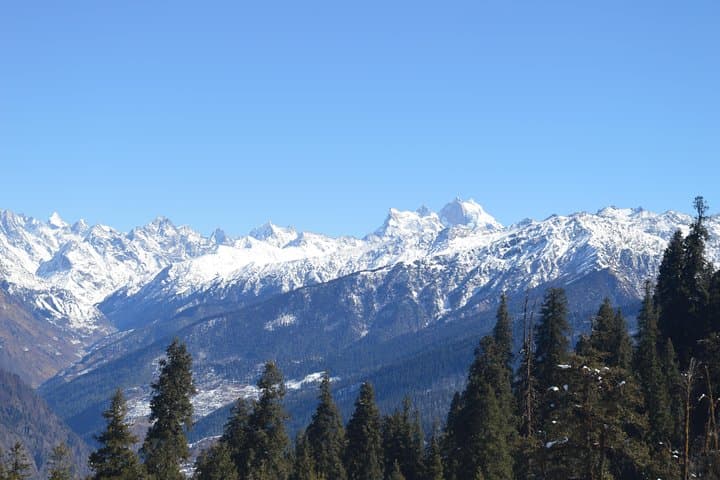
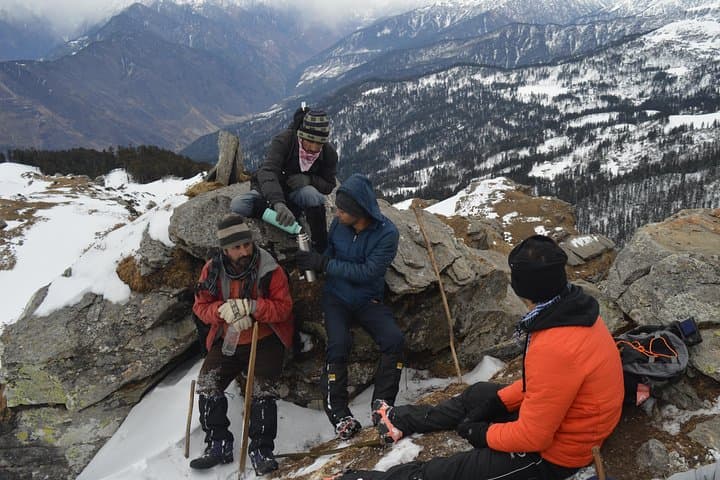
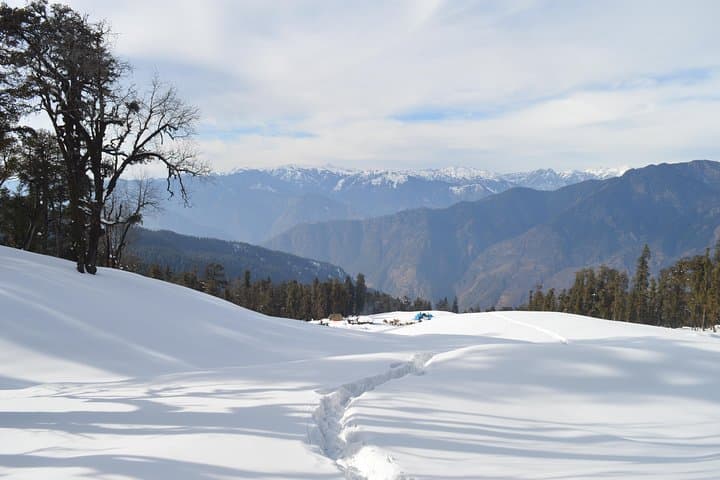
A cold wind slips between pine trunks as you push above the last campsite and the trail opens onto a wide snowfield. At 3,810 m the Kedarkantha summit rewards the short, persistent climb with a 360-degree sweep of Himalayan giants—fingers of granite and snow that make each step feel like negotiation with the range itself.
A cold wind slips between pine trunks as you push above the last campsite and the trail opens onto a wide snowfield. At 3,810 m the Kedarkantha summit rewards the short, persistent climb with a 360-degree sweep of Himalayan giants—fingers of granite and snow that make each step feel like negotiation with the range itself.
The trek sits inside Govind Wildlife Sanctuary, an area shaped by ancient tectonics and glacial carving; moraines and cirque-like basins give way to alpine meadows that bloom in summer. Historically this region has been a seasonal grazing ground for local Garhwali shepherds and a corridor for mountain fauna. Sankri, the roadhead, is reached via a hill-road that threads river valleys and small market towns—places where local culture is as present in roadside tea shops as in simple guesthouses.
On trail you’ll move through dense deodar and pine, cross open meadows, and navigate snow fields in winter. The total trek is roughly 20 km round-trip with daily uphill sections, short technical difficulties, and the highest overnight near base of summit. Wildlife sightings—Himalayan monal and musk deer—are possible at dawn.
Practical guidance: allow 4–5 days for acclimatization, carry layered insulation for nights below freezing, and use trekking poles for steeper snow-covered pitches. Permits for Govind Wildlife Sanctuary are handled locally and are typically included with guided trips. Start early to avoid afternoon cloud build-up and plan for limited mobile signal; caches of warm water and group cooking make camps manageable. This is a classic beginner-friendly Himalayan trek that rewards modest effort with expansive summit views.