THE ADVENTURE COLLECTIVE® · Independent discovery and booking for outdoor travel

Experience the hypnotic Kecak Ramayana and fire dance in Ubud, a sunset performance where the monkey chant, torchlight and Balinese costumes bring the Ramayana to life. Arrive early, dress respectfully, and be prepared for a powerful one-hour cultural show.
Experience the hypnotic Kecak Ramayana and fire dance in Ubud, a sunset performance where the monkey chant, torchlight and Balinese costumes bring the Ramayana to life. Arrive early, dress respectfully, and be prepared for a powerful one-hour cultural show.
The air near the temple cools as the sun slips behind the palm-fringed ridge; dozens of male performers form concentric rings and begin the percussive chant that drives the night. The sound—an urgent, layered ‘‘cak’’—pushes the story forward while torches flare, casting the dancers’ painted faces into hard relief. You watch Rama, Sita and Hanuman move through the Ramayana under an open sky, the flames answering the rhythm.
Verified experiences and guided adventures in the surrounding area.
Operated by Ayurvana Bali Tour · Ubud, Bali
The air near the temple cools as the sun slips behind the palm-fringed ridge; dozens of male performers form concentric rings and begin the percussive chant that drives the night. The sound—an urgent, layered ‘‘cak’’—pushes the story forward while torches flare, casting the dancers’ painted faces into hard relief. You watch Rama, Sita and Hanuman move through the Ramayana under an open sky, the flames answering the rhythm.
Kecak is a theatrical evolution of older trance and ritual forms, modernized in the 1930s by Balinese artists and introduced to international audiences thereafter. The performance stages scenes from the Hindu epic Ramayana: heroics, deception and rescue, punctuated by the evocative chorus that gives Kecak its nickname, the "monkey chant." In Ubud the show often takes place on temple grounds or open-air stages timed to sunset, blending ritual architecture, local costumes and elemental fire.
Practical details: shows run roughly 60 minutes and are timed for sunset lighting—arrive early to get seats. Modest dress is appropriate for temple settings; avoid stepping on offerings and follow staff direction. Photography and brief meet-and-greets are commonly allowed, but flash and intrusive lighting can disrupt performers and sacred space. People with heart problems or sensitivity to loud chanting and flames should take caution; infants are typically required to sit on laps. Bring a light layer for seaside breezes or evening chill and expect brief pauses for ceremonial moments.
This is a cultural evening that rewards attention: watch the chorus more than the spectacle, and you’ll catch the layers of story and community that make Kecak a living Balinese art form.
easy.
1 hour.
Suitable for most visitors; no physical exertion required beyond short walks and stairs
The performance is approximately 60 minutes, generally scheduled at sunset to make the most of natural light.
Yes—photography and brief video are usually allowed, but avoid flash and respect any performer or temple restrictions.
Families are welcome; infants typically must sit on an adult's lap. Note that flames, loud chanting and crowded seating may be unsettling for very young children.
Many venues have uneven ground and steps; contact the organizer ahead of time for specific accessibility needs and seating arrangements.
Kecak developed into its modern staged form in the early 20th century, combining trance-derived chants and theatrical storytelling of the Hindu Ramayana.
Support local performers by buying tickets from authorized sellers, avoid flash and litter, and respect temple spaces and offerings to minimize cultural and environmental impact.
Ayurvana Bali Tour operates guided outdoor trips and adventures with an emphasis on safety, stewardship, and memorable experiences.
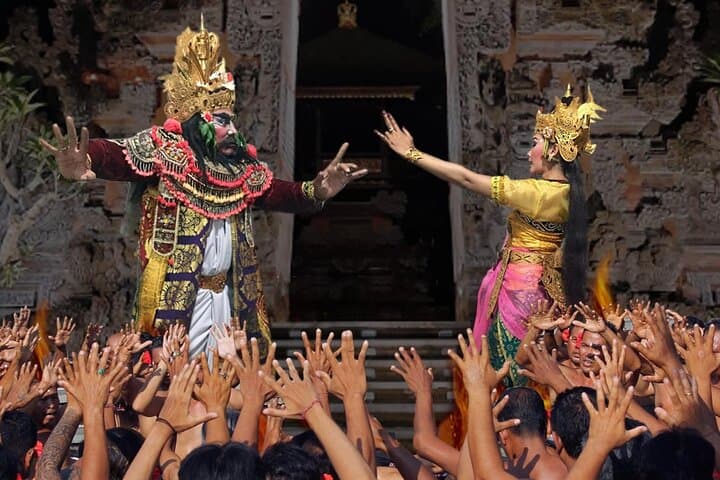
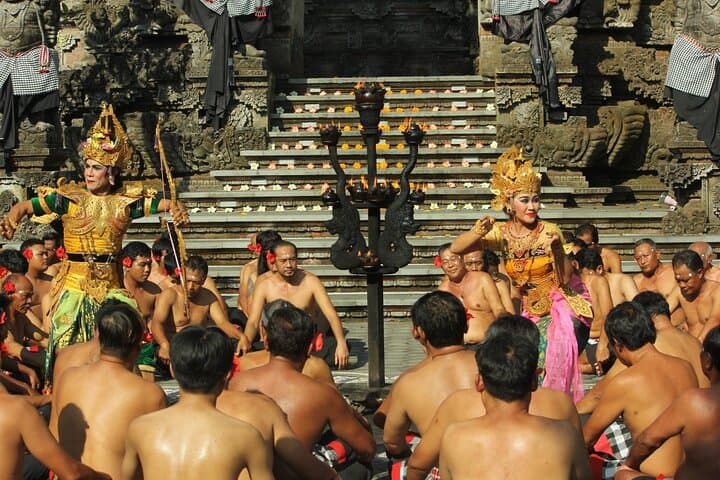
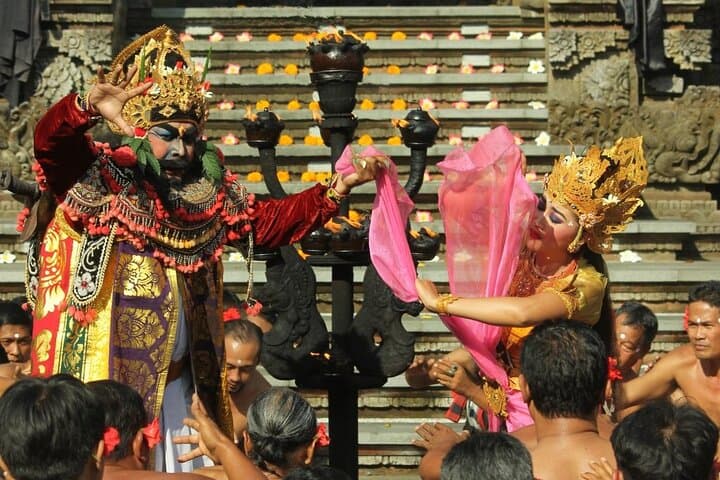
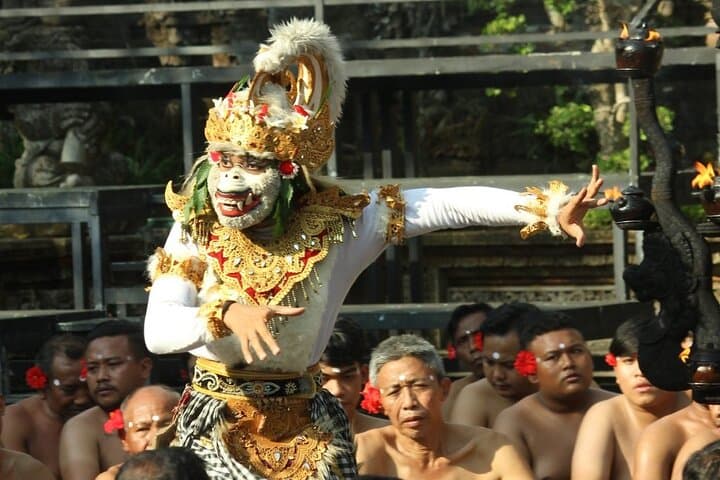
The air near the temple cools as the sun slips behind the palm-fringed ridge; dozens of male performers form concentric rings and begin the percussive chant that drives the night. The sound—an urgent, layered ‘‘cak’’—pushes the story forward while torches flare, casting the dancers’ painted faces into hard relief. You watch Rama, Sita and Hanuman move through the Ramayana under an open sky, the flames answering the rhythm.
The air near the temple cools as the sun slips behind the palm-fringed ridge; dozens of male performers form concentric rings and begin the percussive chant that drives the night. The sound—an urgent, layered ‘‘cak’’—pushes the story forward while torches flare, casting the dancers’ painted faces into hard relief. You watch Rama, Sita and Hanuman move through the Ramayana under an open sky, the flames answering the rhythm.
Kecak is a theatrical evolution of older trance and ritual forms, modernized in the 1930s by Balinese artists and introduced to international audiences thereafter. The performance stages scenes from the Hindu epic Ramayana: heroics, deception and rescue, punctuated by the evocative chorus that gives Kecak its nickname, the "monkey chant." In Ubud the show often takes place on temple grounds or open-air stages timed to sunset, blending ritual architecture, local costumes and elemental fire.
Practical details: shows run roughly 60 minutes and are timed for sunset lighting—arrive early to get seats. Modest dress is appropriate for temple settings; avoid stepping on offerings and follow staff direction. Photography and brief meet-and-greets are commonly allowed, but flash and intrusive lighting can disrupt performers and sacred space. People with heart problems or sensitivity to loud chanting and flames should take caution; infants are typically required to sit on laps. Bring a light layer for seaside breezes or evening chill and expect brief pauses for ceremonial moments.
This is a cultural evening that rewards attention: watch the chorus more than the spectacle, and you’ll catch the layers of story and community that make Kecak a living Balinese art form.