THE ADVENTURE COLLECTIVE® · Independent discovery and booking for outdoor travel

Follow a shaded jungle trail to Kbal Spean’s carved riverbed, then move to Banteay Srei’s pink sandstone reliefs on this private day tour from Siem Reap. Expect short climbs, temple stairs, and up-close Khmer sculpture paired with practical guide-led interpretation.
Follow a shaded jungle trail to Kbal Spean’s carved riverbed, then move to Banteay Srei’s pink sandstone reliefs on this private day tour from Siem Reap. Expect short climbs, temple stairs, and up-close Khmer sculpture paired with practical guide-led interpretation.
A morning transfer from Siem Reap unfolds across rice plains until the road narrows and the jungle climbs toward Phnom Kulen; humidity gathers like a presence that pulls at your sleeves. The trail to Kbal Spean begins as a steady, shaded climb—roots and rocks testing footing—then opens to a shallow limestone riverbed where hundreds of lingas and carved deities glint where the current once polished stone. Water still whispers here, daring you to follow the carvings downstream toward the Tonlé Sap.
Verified experiences and guided adventures in the surrounding area.
Operated by Global Travel & Tours Asia · Siem Reap, Siem Reap Province
A morning transfer from Siem Reap unfolds across rice plains until the road narrows and the jungle climbs toward Phnom Kulen; humidity gathers like a presence that pulls at your sleeves. The trail to Kbal Spean begins as a steady, shaded climb—roots and rocks testing footing—then opens to a shallow limestone riverbed where hundreds of lingas and carved deities glint where the current once polished stone. Water still whispers here, daring you to follow the carvings downstream toward the Tonlé Sap.
The site is a physical note from the Khmer Empire: engineers routed holy water that fed ancient irrigation networks and ritualized the landscape. Rediscovered in 1969, Kbal Spean pairs natural limestone geology with religious iconography carved directly into the river floor. Later in the day Banteay Srei presents a contrast—small, carved in pink sandstone with some of the finest bas-relief in Angkorian art, traditionally dated to the 10th century. The tour commonly finishes at Banteay Samre, restored with anastylosis that highlights middle-period Angkor proportions.
Practically, expect uneven jungle trails, short stair sections at temples, and strong midday heat. The private guide included with the tour explains inscriptions and architectural detail while managing the single-day Angkor ticket logistics. Bring a refillable water bottle, sturdy shoes, sun protection and modest clothing for temple entrances. Start early to avoid the heat and crowd peaks; pace yourself on the climb and allow time to absorb the carvings—these sites reward patient observation as much as speed.
moderate.
7–9 hours.
Moderate fitness — comfortable walking on uneven trails and short climbs; able to handle stairs and humid conditions.
The walk from the parking area to the river carvings is typically 40–60 minutes each way on a steady, shaded trail with some uneven sections.
Yes—the tour includes the required Angkor Archaeological Park single-day ticket fee in the price stated by the operator.
Kbal Spean involves a moderate jungle walk and is not wheelchair accessible; families with young children or mobility concerns should discuss alternatives with the operator beforehand.
Photography is allowed at the sites, but avoid touching the stonework and follow your guide’s directions on restricted areas to help preserve the carvings.
Kbal Spean’s riverbed carvings were created during the Angkor period to sanctify irrigation waters, while Banteay Srei—dated to the 10th century—is famed for its intricate pink sandstone reliefs attributed to a Brahman patron.
The Angkor park faces erosion and visitor-impact pressures; stay on marked paths, avoid touching stone carvings, and follow guide instructions to reduce wear on fragile surfaces.
Global Travel & Tours Asia operates guided outdoor trips and adventures with an emphasis on safety, stewardship, and memorable experiences.
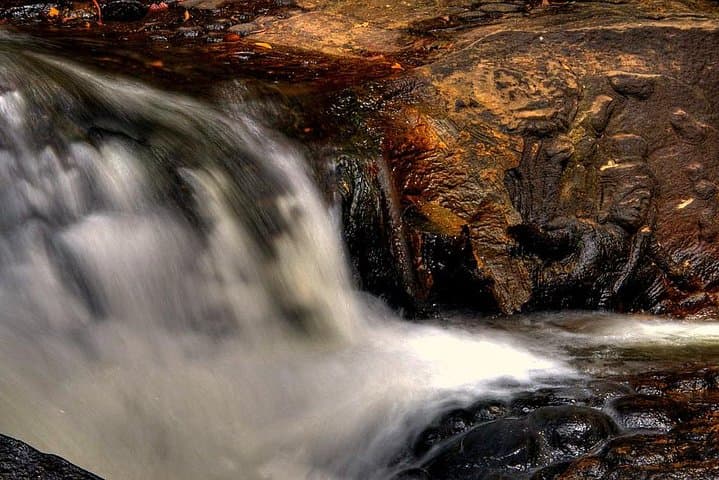
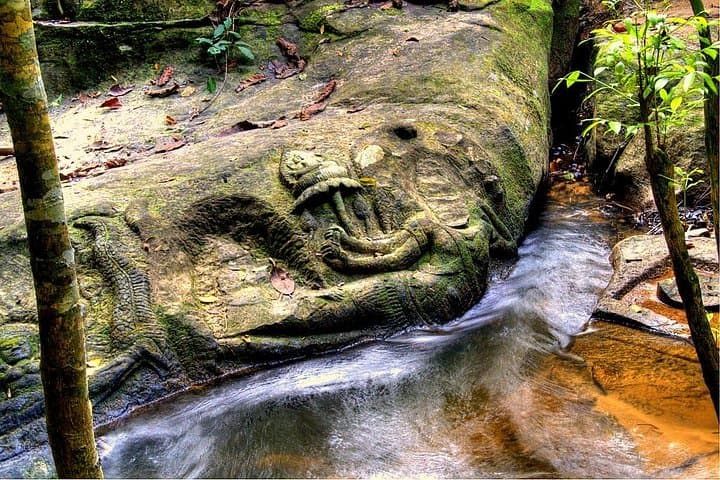
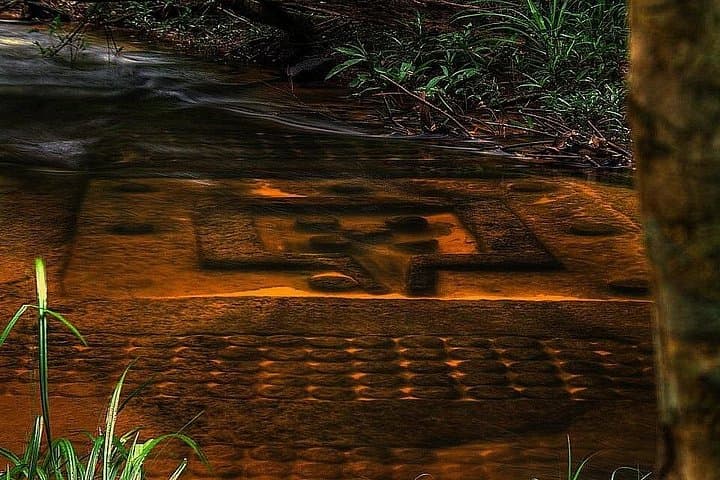
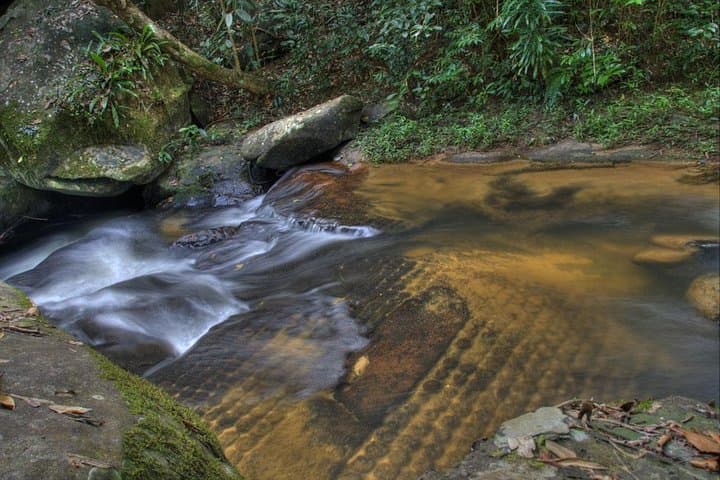
A morning transfer from Siem Reap unfolds across rice plains until the road narrows and the jungle climbs toward Phnom Kulen; humidity gathers like a presence that pulls at your sleeves. The trail to Kbal Spean begins as a steady, shaded climb—roots and rocks testing footing—then opens to a shallow limestone riverbed where hundreds of lingas and carved deities glint where the current once polished stone. Water still whispers here, daring you to follow the carvings downstream toward the Tonlé Sap.
A morning transfer from Siem Reap unfolds across rice plains until the road narrows and the jungle climbs toward Phnom Kulen; humidity gathers like a presence that pulls at your sleeves. The trail to Kbal Spean begins as a steady, shaded climb—roots and rocks testing footing—then opens to a shallow limestone riverbed where hundreds of lingas and carved deities glint where the current once polished stone. Water still whispers here, daring you to follow the carvings downstream toward the Tonlé Sap.
The site is a physical note from the Khmer Empire: engineers routed holy water that fed ancient irrigation networks and ritualized the landscape. Rediscovered in 1969, Kbal Spean pairs natural limestone geology with religious iconography carved directly into the river floor. Later in the day Banteay Srei presents a contrast—small, carved in pink sandstone with some of the finest bas-relief in Angkorian art, traditionally dated to the 10th century. The tour commonly finishes at Banteay Samre, restored with anastylosis that highlights middle-period Angkor proportions.
Practically, expect uneven jungle trails, short stair sections at temples, and strong midday heat. The private guide included with the tour explains inscriptions and architectural detail while managing the single-day Angkor ticket logistics. Bring a refillable water bottle, sturdy shoes, sun protection and modest clothing for temple entrances. Start early to avoid the heat and crowd peaks; pace yourself on the climb and allow time to absorb the carvings—these sites reward patient observation as much as speed.