THE ADVENTURE COLLECTIVE® · Independent discovery and booking for outdoor travel

A full-day private trek from Siem Reap visiting Kbal Spean’s river of lingams and the pink-carved galleries of Banteay Srei. Expect jungle trails, waterfalls, and quiet temple chambers away from the busiest Angkor circuits.
A full-day private trek from Siem Reap visiting Kbal Spean’s river of lingams and the pink-carved galleries of Banteay Srei. Expect jungle trails, waterfalls, and quiet temple chambers away from the busiest Angkor circuits.
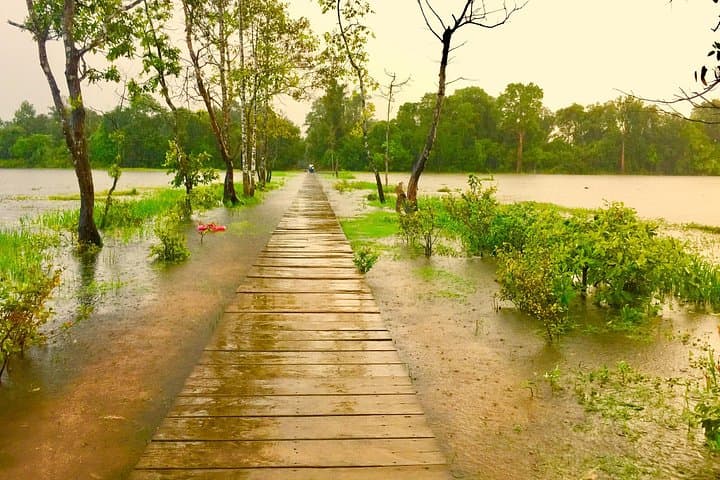
Morning humidity lifts as the minibus eases out of Siem Reap and the jungle leans in, vines like curious hands along the road. The trail to Kbal Spean opens with a carved riverbed: a thousand lingams cut into sandstone, water daring you across shallow channels, mossed reliefs catching the sun. The path climbs—rough, root-strewn and often damp—then drops toward a clear waterfall where guides point out the most intact carvings and a cool place to pause.
Verified experiences and guided adventures in the surrounding area.
Operated by Siem Reap Biking Tour · Siem Reap, Siem Reap Province
Morning humidity lifts as the minibus eases out of Siem Reap and the jungle leans in, vines like curious hands along the road. The trail to Kbal Spean opens with a carved riverbed: a thousand lingams cut into sandstone, water daring you across shallow channels, mossed reliefs catching the sun. The path climbs—rough, root-strewn and often damp—then drops toward a clear waterfall where guides point out the most intact carvings and a cool place to pause.
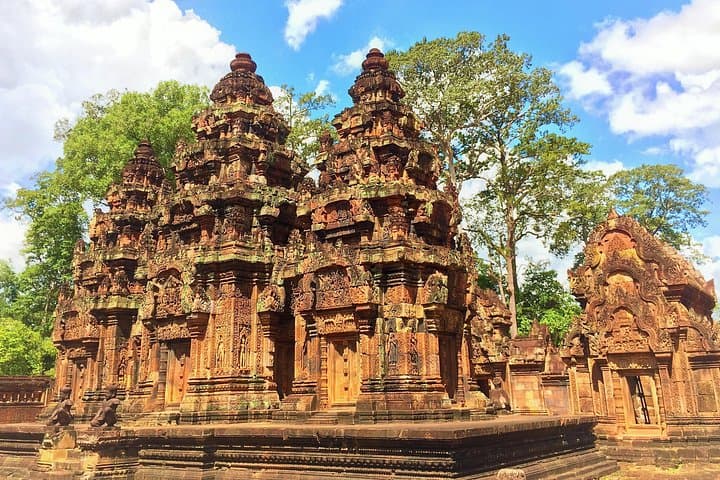
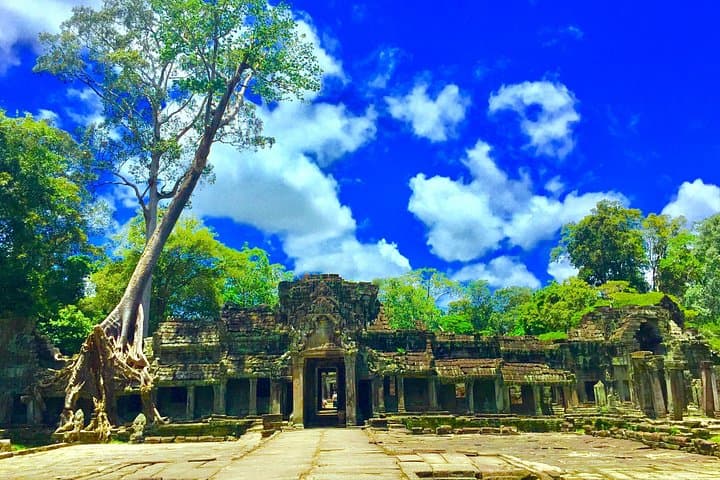
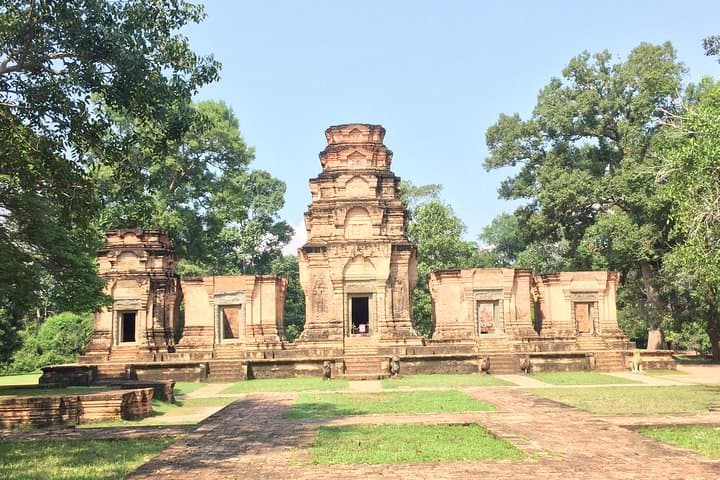
The route threads through different chapters of Khmer history. Banteay Srei’s pink sandstone preserves some of the most delicate lintel work from the 10th century, relatively small but fiercely detailed. Nearby Preah Khan and Ta Som show 12th-century Jayavarman-era scale and the slow reclamation of stone by fig and banyan roots; the jungle doesn’t simply cover these sites, it argues its claim. Geologically, the pink and red sandstones weather into crisp reliefs that hold carved narratives of Hindu lore.
Practicalities are straightforward: this is a full-day, moderate trek (expect up to 1.5 km of steep up-and-down sections and about 6–8 hours total with transfers). Dress respectfully—shoulders and knees covered—carry 2–3 liters of water, mosquito protection and grippy shoes for wet rock. Guides typically provide cold water, towels and hotel pickup. Start early to avoid midday heat and larger tour groups, and leave no trace—these carvings sit in fragile sandstone and a humid ecosystem that needs careful visitation.
moderate.
6–8 hours.
Suitable for travelers with average fitness; expect uneven trails, short steep sections, and riverbed scrambling.
Yes—access to the Angkor Archaeological Park and many associated sites requires a valid Angkor pass; your operator typically arranges time for the ticket office before starting.
The riverbed involves short stretches of walking over carved rock and shallow water—surfaces can be slippery, but no technical climbing is required; proper footwear is important.
Children are allowed; under-12s may not need a separate Angkor pass in some cases but bringing a passport copy and confirming operator policy is required.
Start early (before mid-morning) to avoid heat and peak crowds—morning light also highlights the carvings and waterfall pools best.
These sites span centuries of Khmer art: Kbal Spean’s river carvings and Banteay Srei’s 10th-century pink sandstone both reflect Hindu ritual and royal patronage predating Angkor Wat’s 12th-century monuments.
The sandstone carvings and river ecosystems are sensitive to foot traffic and humidity; follow marked paths, avoid touching reliefs, and let guides coordinate access times to reduce erosion.
Siem Reap Biking Tour operates guided outdoor trips and adventures with an emphasis on safety, stewardship, and memorable experiences.
Morning humidity lifts as the minibus eases out of Siem Reap and the jungle leans in, vines like curious hands along the road. The trail to Kbal Spean opens with a carved riverbed: a thousand lingams cut into sandstone, water daring you across shallow channels, mossed reliefs catching the sun. The path climbs—rough, root-strewn and often damp—then drops toward a clear waterfall where guides point out the most intact carvings and a cool place to pause.
Morning humidity lifts as the minibus eases out of Siem Reap and the jungle leans in, vines like curious hands along the road. The trail to Kbal Spean opens with a carved riverbed: a thousand lingams cut into sandstone, water daring you across shallow channels, mossed reliefs catching the sun. The path climbs—rough, root-strewn and often damp—then drops toward a clear waterfall where guides point out the most intact carvings and a cool place to pause.
The route threads through different chapters of Khmer history. Banteay Srei’s pink sandstone preserves some of the most delicate lintel work from the 10th century, relatively small but fiercely detailed. Nearby Preah Khan and Ta Som show 12th-century Jayavarman-era scale and the slow reclamation of stone by fig and banyan roots; the jungle doesn’t simply cover these sites, it argues its claim. Geologically, the pink and red sandstones weather into crisp reliefs that hold carved narratives of Hindu lore.
Practicalities are straightforward: this is a full-day, moderate trek (expect up to 1.5 km of steep up-and-down sections and about 6–8 hours total with transfers). Dress respectfully—shoulders and knees covered—carry 2–3 liters of water, mosquito protection and grippy shoes for wet rock. Guides typically provide cold water, towels and hotel pickup. Start early to avoid midday heat and larger tour groups, and leave no trace—these carvings sit in fragile sandstone and a humid ecosystem that needs careful visitation.