THE ADVENTURE COLLECTIVE® · Independent discovery and booking for outdoor travel

Paddle through Mechrey’s floating houses and mangrove channels on Tonle Sap Lake, learning how communities live with seasonal floods. This six‑hour tour combines powered-boat transfers with guided kayaking and a sunset photo stop.
Paddle through Mechrey’s floating houses and mangrove channels on Tonle Sap Lake, learning how communities live with seasonal floods. This six‑hour tour combines powered-boat transfers with guided kayaking and a sunset photo stop.
The morning air above Tonle Sap feels alive — humid, reed-scented, and full of bird calls. You step onto a long, powered canoe and cut through narrow, vine-choked channels until the open expanse of the lake opens like a wet plain. Wooden houses float on stilts and pontoons; fishermen mend nets and children wave from decks as you slide into a fiberglass kayak.
Verified experiences and guided adventures in the surrounding area.
Operated by Cambodia Adventure Tours · Siem Reap, Siem Reap Province
The morning air above Tonle Sap feels alive — humid, reed-scented, and full of bird calls. You step onto a long, powered canoe and cut through narrow, vine-choked channels until the open expanse of the lake opens like a wet plain. Wooden houses float on stilts and pontoons; fishermen mend nets and children wave from decks as you slide into a fiberglass kayak.
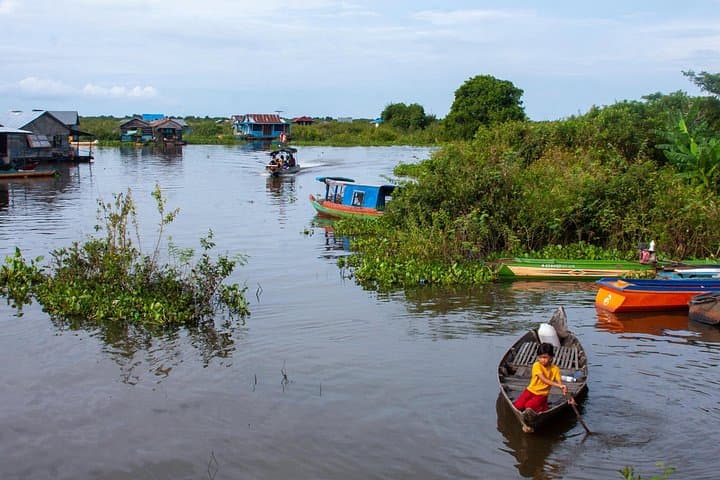
Tonle Sap is Southeast Asia’s largest freshwater lake, its shoreline changing dramatically with the monsoon cycle. The villages around Mechrey grew in response to that ebb and flow: homes and marketplaces built to rise with the water. Geologically the lake is fed by the Tonle Sap River, which reverses flow seasonally, swelling the lake and creating rich wetlands prized by waterbirds and fishers.
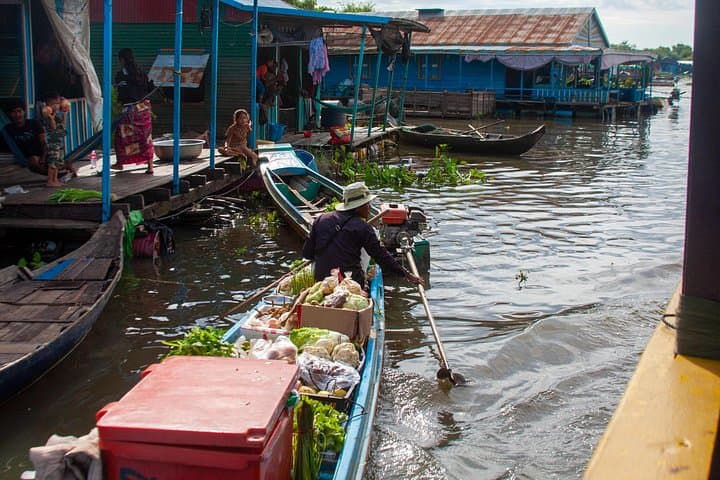
Culturally, this is a working landscape. Guides explain how families harvest fish, trade on floating markets, and adapt houses with ladders and raised platforms. In low-water months (roughly March–June) kayaks push into open flats and roosting birds; at high water, the mangrove channels swallow the horizon and give great cover for kingfishers and herons.
Practical guidance: expect a full six-hour outing with boat transfers, short walks on floating platforms, and several kayak legs that are easy paddling but require basic balance. Bring sun protection, waterproof storage for your phone, and shoes that can get wet. Timing matters — late afternoon light is best for photography and calmer winds. Guides provide safety gear and local context, letting you move through this mutable landscape with curiosity and respect.
easy.
6 hours.
Suitable for most fitness levels; requires basic balance and the ability to sit and paddle for 1–2 hour chunks with short breaks.
The tour runs about six hours and includes hotel pickup, powered-boat transfers, kayak time, safety gear, an English-speaking guide, and snacks.
No — paddling sections are gentle and guides brief novices; a basic sense of balance and the ability to sit for up to an hour is sufficient.
Swimming is not recommended around floating villages due to boat traffic, submerged debris, and strong currents in some areas; follow your guide’s guidance.
Yes — the operator lists the activity as suitable for a range of ages, but participants with heart or mobility issues and pregnant travelers are advised not to join.
Tonle Sap’s floodplain has supported rice cultivation and inland fisheries for centuries; floating communities adapted to seasonal reversal of the Tonle Sap River.
Rising tourism pressures and seasonal overfishing challenge local ecology; choose operators that follow no-litter policies and support local communities to minimize impact.
Cambodia Adventure Tours operates guided outdoor trips and adventures with an emphasis on safety, stewardship, and memorable experiences.
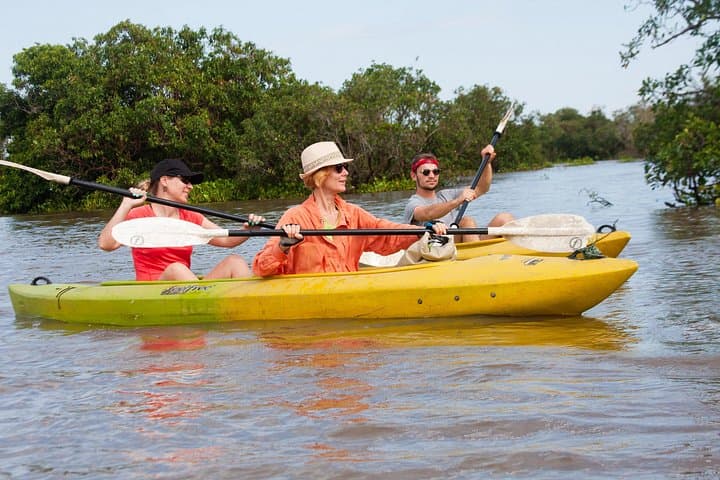
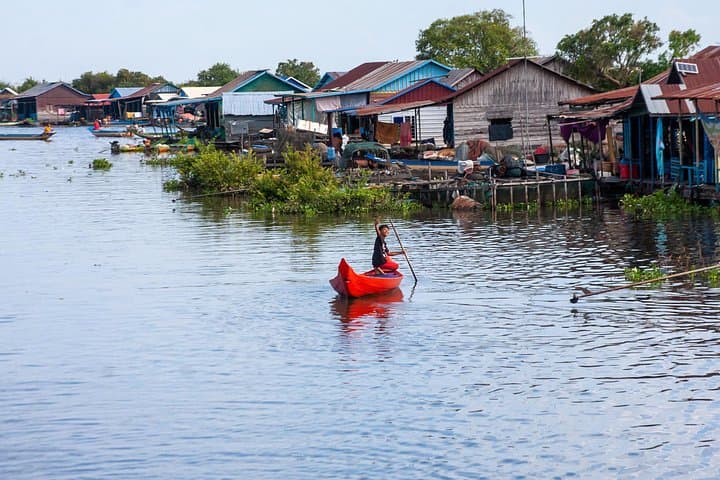
The morning air above Tonle Sap feels alive — humid, reed-scented, and full of bird calls. You step onto a long, powered canoe and cut through narrow, vine-choked channels until the open expanse of the lake opens like a wet plain. Wooden houses float on stilts and pontoons; fishermen mend nets and children wave from decks as you slide into a fiberglass kayak.
The morning air above Tonle Sap feels alive — humid, reed-scented, and full of bird calls. You step onto a long, powered canoe and cut through narrow, vine-choked channels until the open expanse of the lake opens like a wet plain. Wooden houses float on stilts and pontoons; fishermen mend nets and children wave from decks as you slide into a fiberglass kayak.
Tonle Sap is Southeast Asia’s largest freshwater lake, its shoreline changing dramatically with the monsoon cycle. The villages around Mechrey grew in response to that ebb and flow: homes and marketplaces built to rise with the water. Geologically the lake is fed by the Tonle Sap River, which reverses flow seasonally, swelling the lake and creating rich wetlands prized by waterbirds and fishers.
Culturally, this is a working landscape. Guides explain how families harvest fish, trade on floating markets, and adapt houses with ladders and raised platforms. In low-water months (roughly March–June) kayaks push into open flats and roosting birds; at high water, the mangrove channels swallow the horizon and give great cover for kingfishers and herons.
Practical guidance: expect a full six-hour outing with boat transfers, short walks on floating platforms, and several kayak legs that are easy paddling but require basic balance. Bring sun protection, waterproof storage for your phone, and shoes that can get wet. Timing matters — late afternoon light is best for photography and calmer winds. Guides provide safety gear and local context, letting you move through this mutable landscape with curiosity and respect.