THE ADVENTURE COLLECTIVE® · Independent discovery and booking for outdoor travel

Float quiet channels, scan mangrove edges for herons and ospreys, and watch dolphins weave through the Indian River Lagoon on this two-hour guided kayak eco-tour. Perfect for first-time paddlers who want close wildlife encounters with a low-impact approach.
Float quiet channels, scan mangrove edges for herons and ospreys, and watch dolphins weave through the Indian River Lagoon on this two-hour guided kayak eco-tour. Perfect for first-time paddlers who want close wildlife encounters with a low-impact approach.
Paddlers push off into a glassy estuary at dawn, the shoreline a ribbon of salt marsh and palmetto. Gulls wheel overhead, a dolphin's back breaks the water and the kayak rocks gently as the guide points to a tangle of mangrove roots where a heron waits motionless. The backwaters around New Smyrna Beach feel alive and patient — currents that nudge you forward, mangrove thickets that hold secrets, and inlets that open into the wider Indian River Lagoon.
Verified experiences and guided adventures in the surrounding area.
Operated by Daytona Beach Kayaking · New Smyrna Beach, Florida
Paddlers push off into a glassy estuary at dawn, the shoreline a ribbon of salt marsh and palmetto. Gulls wheel overhead, a dolphin's back breaks the water and the kayak rocks gently as the guide points to a tangle of mangrove roots where a heron waits motionless. The backwaters around New Smyrna Beach feel alive and patient — currents that nudge you forward, mangrove thickets that hold secrets, and inlets that open into the wider Indian River Lagoon.
The area sits on the Indian River Lagoon, one of North America's most biodiverse estuaries; indigenous peoples long used these waters for food and travel, and later settlers developed fishing and boatbuilding along the coast. Geologically the lagoon is a shallow, barrier-island system shaped by tides and longshore drift; the result is quiet creeks, oyster bars and exposed seagrass beds that attract birds, dolphins and seasonal manatees.
On a two-hour guided paddle, expect low-impact navigation through sheltered channels, steady but easy paddling, and frequent stops for wildlife viewing and natural history notes. Guides provide single or tandem kayaks, PFDs and safety whistles; groups are small and focused on observation rather than speed.
Practical tips: aim for early morning or late afternoon light to avoid heat and maximize wildlife activity; wear quick-dry clothing and reef-safe sunscreen; bring water in a sealed bottle and a small dry bag for phone and keys. Keep distance from marine mammals, follow the guide's instructions, and leave no trace—this is fragile estuary habitat that benefits from careful recreation.
moderate.
2 hours.
Moderate fitness: able to paddle continuously for short bursts and sit for the tour duration
Expect wading birds like herons and egrets, resident bottlenose dolphins, and seasonal manatees; sightings can’t be guaranteed but guides choose routes to maximize viewing.
Yes — the tour uses stable single or tandem kayaks and runs in sheltered backwaters; children are allowed but participants should have moderate fitness and be able to follow safety instructions.
Wear quick-dry clothes, closed-toe water shoes, a hat, sunscreen, and bring a sealed water bottle and any necessary medications; guides supply kayaks, paddles and PFDs.
Full refund available if you cancel at least 24 hours before the tour; the operator may cancel in bad weather for safety.
The Indian River Lagoon has supported human communities for centuries, used by indigenous people and later by settlers for fishing and boatbuilding.
The lagoon faces seagrass loss and nutrient impacts; stay on marked routes, avoid disturbing animals, and use reef-safe sunscreen to limit harm.
Daytona Beach Kayaking operates guided outdoor trips and adventures with an emphasis on safety, stewardship, and memorable experiences.
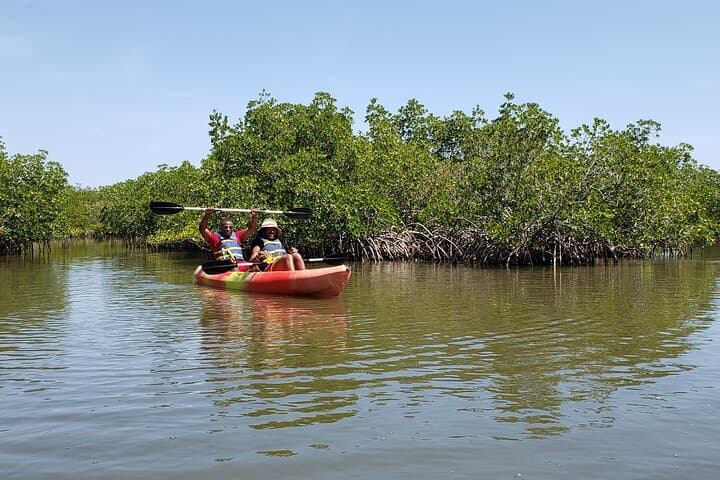
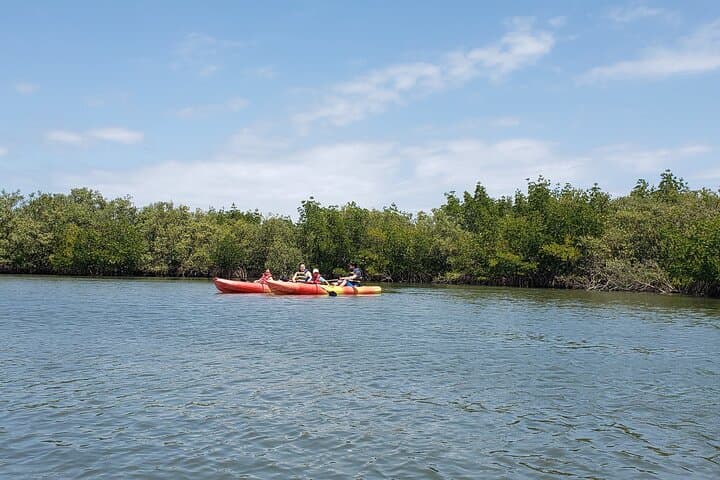
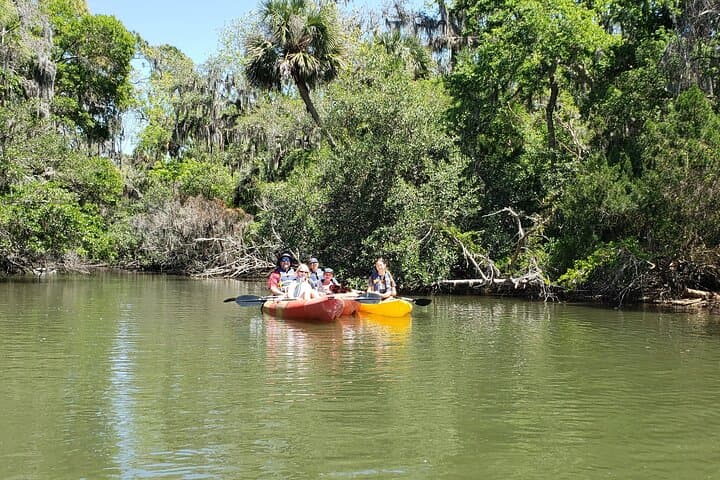
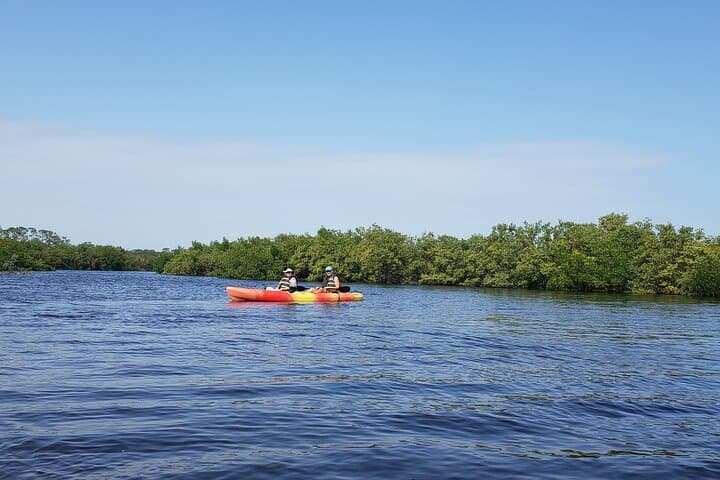
Paddlers push off into a glassy estuary at dawn, the shoreline a ribbon of salt marsh and palmetto. Gulls wheel overhead, a dolphin's back breaks the water and the kayak rocks gently as the guide points to a tangle of mangrove roots where a heron waits motionless. The backwaters around New Smyrna Beach feel alive and patient — currents that nudge you forward, mangrove thickets that hold secrets, and inlets that open into the wider Indian River Lagoon.
Paddlers push off into a glassy estuary at dawn, the shoreline a ribbon of salt marsh and palmetto. Gulls wheel overhead, a dolphin's back breaks the water and the kayak rocks gently as the guide points to a tangle of mangrove roots where a heron waits motionless. The backwaters around New Smyrna Beach feel alive and patient — currents that nudge you forward, mangrove thickets that hold secrets, and inlets that open into the wider Indian River Lagoon.
The area sits on the Indian River Lagoon, one of North America's most biodiverse estuaries; indigenous peoples long used these waters for food and travel, and later settlers developed fishing and boatbuilding along the coast. Geologically the lagoon is a shallow, barrier-island system shaped by tides and longshore drift; the result is quiet creeks, oyster bars and exposed seagrass beds that attract birds, dolphins and seasonal manatees.
On a two-hour guided paddle, expect low-impact navigation through sheltered channels, steady but easy paddling, and frequent stops for wildlife viewing and natural history notes. Guides provide single or tandem kayaks, PFDs and safety whistles; groups are small and focused on observation rather than speed.
Practical tips: aim for early morning or late afternoon light to avoid heat and maximize wildlife activity; wear quick-dry clothing and reef-safe sunscreen; bring water in a sealed bottle and a small dry bag for phone and keys. Keep distance from marine mammals, follow the guide's instructions, and leave no trace—this is fragile estuary habitat that benefits from careful recreation.