THE ADVENTURE COLLECTIVE® · Independent discovery and booking for outdoor travel

A sheltered 10 km paddle that starts in saltwater, threads under a railway bridge, visits a temple island and winds through mangrove canals before returning across a shifting sandbar. Ideal for paddlers seeking wildlife, cultural stops and calm backwater scenery.
A sheltered 10 km paddle that starts in saltwater, threads under a railway bridge, visits a temple island and winds through mangrove canals before returning across a shifting sandbar. Ideal for paddlers seeking wildlife, cultural stops and calm backwater scenery.
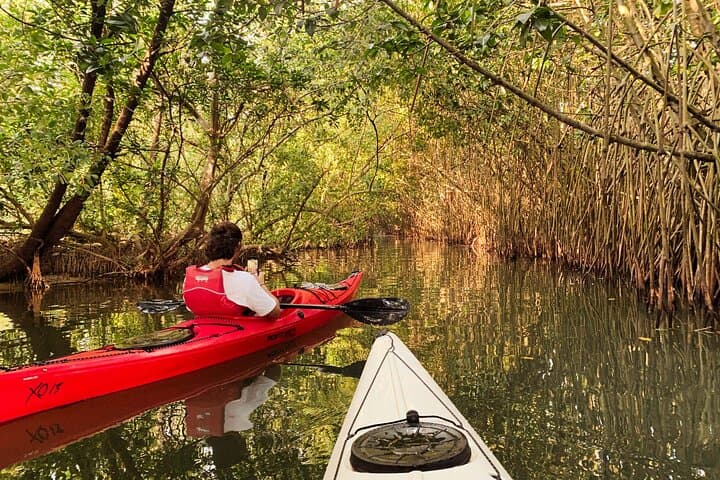
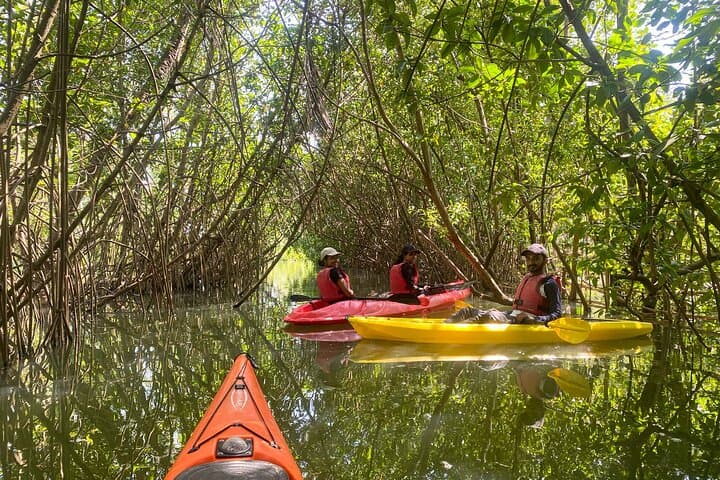
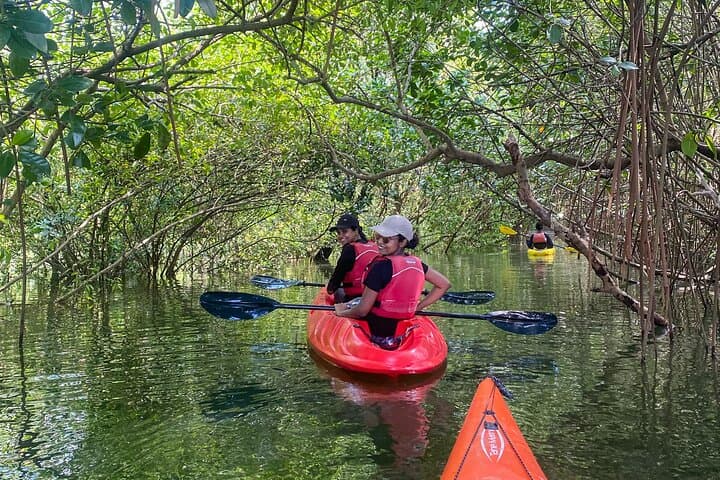
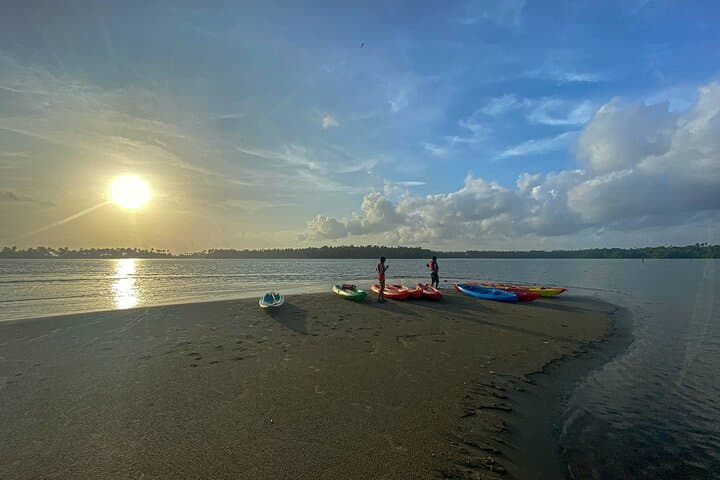
You push off from a narrow sandbar where the Arabian Sea exhales into a sheltered lagoon; salt spray on one side, a glassy freshwater channel on the other. Paddles slice the surface and the world narrows to mangrove roots and the occasional call of a kingfisher. The route threads beneath a low railway bridge, pauses at a compact temple island, then slips into shaded canals where prop roots knit a green tunnel overhead.
Verified experiences and guided adventures in the surrounding area.
Operated by Syzygy Ecosports · Paravur, Kerala
You push off from a narrow sandbar where the Arabian Sea exhales into a sheltered lagoon; salt spray on one side, a glassy freshwater channel on the other. Paddles slice the surface and the world narrows to mangrove roots and the occasional call of a kingfisher. The route threads beneath a low railway bridge, pauses at a compact temple island, then slips into shaded canals where prop roots knit a green tunnel overhead.
These backwaters are part of Kerala’s larger coastal lagoon system carved by river mouths, tidal flows and decades of local fishing communities shaping channels and sand flats. Chithan Thampuran Temple Island is a small cultural waypoint—locals have used these waterways for generations to reach temples and fishing grounds. Geologically the area is recent, formed from silt and tidal deposits; the sandbars change with weather and currents, which is why guides watch tides closely.
Expect quiet navigation through tight mangrove channels, occasional exposed mud banks and a dynamic sand flat called Black Devil Snail Sandbar that can shift between trips. Wildlife is subtle: herons, kingfishers and, sometimes, playful otters.
Practical notes: the tour runs about four hours and covers roughly 10 km round-trip on sit-on-top single or tandem kayaks with a guide escort. Dress for humidity and sun—quick-dry layers, secure footwear and a spare change of clothes are essential. Guides brief paddling technique and safety before launch and accompany you the whole way, pointing out shallow spillways and keeping the group away from strong outflows. Aim for calm morning or late-afternoon launches to avoid onshore wind and to catch the best light.
moderate.
3–4 hours.
Moderate fitness; able to paddle continuously for stretches of 30–60 minutes with brief breaks
No; guides provide basic instruction before launch and accompany the group. Paddlers should be comfortable sitting and paddling for up to an hour at a time.
Minimum age as an independent paddler is 10 years; children must be accompanied by an adult and tandems are available for younger guests.
Basic changing and shower facilities are available at the launch point; it’s wise to bring biodegradable soap and a towel.
Trips operate rain or shine, but guides will cancel for unsafe wind or lightning—full refunds for cancellations made at least 24 hours prior are standard.
The Paravur backwaters have long been used by coastal communities for fishing and transport; the nearby temples and fishing hamlets reflect a shoreline culture tied to lagoon channels and seasonal harvests.
Mangroves here stabilize shorelines and support juvenile fish—avoid trampling roots, carry out all trash and use reef-safe sunscreen to reduce local impacts.
Syzygy Ecosports operates guided outdoor trips and adventures with an emphasis on safety, stewardship, and memorable experiences.
You push off from a narrow sandbar where the Arabian Sea exhales into a sheltered lagoon; salt spray on one side, a glassy freshwater channel on the other. Paddles slice the surface and the world narrows to mangrove roots and the occasional call of a kingfisher. The route threads beneath a low railway bridge, pauses at a compact temple island, then slips into shaded canals where prop roots knit a green tunnel overhead.
You push off from a narrow sandbar where the Arabian Sea exhales into a sheltered lagoon; salt spray on one side, a glassy freshwater channel on the other. Paddles slice the surface and the world narrows to mangrove roots and the occasional call of a kingfisher. The route threads beneath a low railway bridge, pauses at a compact temple island, then slips into shaded canals where prop roots knit a green tunnel overhead.
These backwaters are part of Kerala’s larger coastal lagoon system carved by river mouths, tidal flows and decades of local fishing communities shaping channels and sand flats. Chithan Thampuran Temple Island is a small cultural waypoint—locals have used these waterways for generations to reach temples and fishing grounds. Geologically the area is recent, formed from silt and tidal deposits; the sandbars change with weather and currents, which is why guides watch tides closely.
Expect quiet navigation through tight mangrove channels, occasional exposed mud banks and a dynamic sand flat called Black Devil Snail Sandbar that can shift between trips. Wildlife is subtle: herons, kingfishers and, sometimes, playful otters.
Practical notes: the tour runs about four hours and covers roughly 10 km round-trip on sit-on-top single or tandem kayaks with a guide escort. Dress for humidity and sun—quick-dry layers, secure footwear and a spare change of clothes are essential. Guides brief paddling technique and safety before launch and accompany you the whole way, pointing out shallow spillways and keeping the group away from strong outflows. Aim for calm morning or late-afternoon launches to avoid onshore wind and to catch the best light.