THE ADVENTURE COLLECTIVE® · Independent discovery and booking for outdoor travel

Paddle north from Luang Prabang along the Nam Ou and Mekong to Tham Pak Ou — limestone caves housing thousands of Buddha images. This full-day kayak trip blends calm river miles, riverside villages, and a guided cave visit.
Paddle north from Luang Prabang along the Nam Ou and Mekong to Tham Pak Ou — limestone caves housing thousands of Buddha images. This full-day kayak trip blends calm river miles, riverside villages, and a guided cave visit.
The morning light slices across the Mekong, and a narrow bow parts the river like a deliberate footstep. Paddlers set off from Luang Prabang, following the Nam Ou where limestone ribs rise and the current eases into a steady, carrying rhythm. The cliffs of Pha Aen loom ahead; the rivers guide you toward a cue of river traffic, wooden boats and the quiet silhouette of Tham Pak Ou.
Verified experiences and guided adventures in the surrounding area.
Operated by Before2 · Luang Prabang, Luang Prabang Province
The morning light slices across the Mekong, and a narrow bow parts the river like a deliberate footstep. Paddlers set off from Luang Prabang, following the Nam Ou where limestone ribs rise and the current eases into a steady, carrying rhythm. The cliffs of Pha Aen loom ahead; the rivers guide you toward a cue of river traffic, wooden boats and the quiet silhouette of Tham Pak Ou.
Pak Ou Caves sit where the Nam Ou meets the Mekong — two caverns hewn in limestone and filled over centuries with thousands of small Buddha images left by pilgrims. The geology here is classic karst: vertical cliff faces, caves formed by solutional erosion, and visible bedding lines that tell of ancient shallow seas. Culturally, the caves have been a pilgrimage site for local Lao Buddhists for generations; nearby Ban Xang Hai still produces traditional lao-lao rice wine for local tables.
Practicalities: tours run half-day to full-day (this option is a 6–8 hour experience) with hotel transfer, guide, and kayaks provided. Expect calm paddling interspersed with sections of gentle current; basic paddling ability covers most of the route but be ready for a longer day. Wear quick-dry layers, sun protection, and shoes that grip wet rocks for cave visits. Bring a dry bag for cameras, mosquito repellent, and cash for small purchases in riverside villages.
Timing matters: mornings and late afternoons offer softer light and fewer tourist boats. Respect temple etiquette inside the caves, keep a modest distance from statues, and pack out trash — the river’s health depends on it.
easy.
6–8 hours.
Suitable for beginners with basic paddling stamina; expect long periods seated and short shore hikes/stairs into caves
Yes — guides provide basic instruction and the route uses stable sit‑on‑top kayaks; moderate paddling fitness helps for the full‑day option.
Children can join but infants must sit on an adult’s lap; confirm safety and seating arrangements with the operator when booking.
Short stair climbs lead into two limestone caves filled with thousands of small Buddha statues; modest dress and quiet behavior are expected inside.
This product is sold as all‑sales‑final; no refunds for cancellations and trips may be canceled for bad weather or insufficient participants.
Pak Ou has served as a regional Buddhist shrine for centuries; its accumulated Buddhas reflect donations from local villagers and river travelers.
River health is impacted by litter and upstream development; opt for operators who minimize single‑use plastics and support local communities.
Before2 operates guided outdoor trips and adventures with an emphasis on safety, stewardship, and memorable experiences.
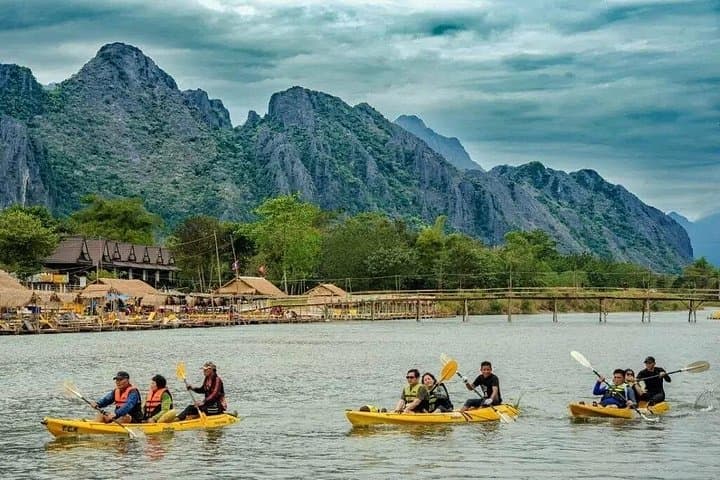

The morning light slices across the Mekong, and a narrow bow parts the river like a deliberate footstep. Paddlers set off from Luang Prabang, following the Nam Ou where limestone ribs rise and the current eases into a steady, carrying rhythm. The cliffs of Pha Aen loom ahead; the rivers guide you toward a cue of river traffic, wooden boats and the quiet silhouette of Tham Pak Ou.
The morning light slices across the Mekong, and a narrow bow parts the river like a deliberate footstep. Paddlers set off from Luang Prabang, following the Nam Ou where limestone ribs rise and the current eases into a steady, carrying rhythm. The cliffs of Pha Aen loom ahead; the rivers guide you toward a cue of river traffic, wooden boats and the quiet silhouette of Tham Pak Ou.
Pak Ou Caves sit where the Nam Ou meets the Mekong — two caverns hewn in limestone and filled over centuries with thousands of small Buddha images left by pilgrims. The geology here is classic karst: vertical cliff faces, caves formed by solutional erosion, and visible bedding lines that tell of ancient shallow seas. Culturally, the caves have been a pilgrimage site for local Lao Buddhists for generations; nearby Ban Xang Hai still produces traditional lao-lao rice wine for local tables.
Practicalities: tours run half-day to full-day (this option is a 6–8 hour experience) with hotel transfer, guide, and kayaks provided. Expect calm paddling interspersed with sections of gentle current; basic paddling ability covers most of the route but be ready for a longer day. Wear quick-dry layers, sun protection, and shoes that grip wet rocks for cave visits. Bring a dry bag for cameras, mosquito repellent, and cash for small purchases in riverside villages.
Timing matters: mornings and late afternoons offer softer light and fewer tourist boats. Respect temple etiquette inside the caves, keep a modest distance from statues, and pack out trash — the river’s health depends on it.