THE ADVENTURE COLLECTIVE® · Independent discovery and booking for outdoor travel

Trade the cobbled streets for a river view: this easy two-hour kayak tour on the Guadalquivir passes Torre del Oro, Triana, and the Cartuja with minimal current and maximal historic perspective.
Trade the cobbled streets for a river view: this easy two-hour kayak tour on the Guadalquivir passes Torre del Oro, Triana, and the Cartuja with minimal current and maximal historic perspective.
Paddlers push off from a low stone quay and the Guadalquivir takes over—slow, broad, and flat, it carries the city’s stones and stories downstream while daring you to look up from the water.
Verified experiences and guided adventures in the surrounding area.
Operated by Feel The city · Seville, Andalusia
Paddlers push off from a low stone quay and the Guadalquivir takes over—slow, broad, and flat, it carries the city’s stones and stories downstream while daring you to look up from the water.
This two-hour urban paddle unfolds past Seville’s maritime landmarks: the medieval Torre del Oro, the straight-lined docks that once staged trade with the Americas, and the ceramic-fronted houses of Triana where flamenco found one of its voices. Geologically the river here is a deepened, managed channel of the lower Guadalquivir floodplain; its banks show human shaping more than wild cliffs, but the river still stages wildlife—herons, kingfishers—and the occasional working barge.
Culturally the route traces the city’s Atlantic connections: from Magellan-era shipyards to the modern leisure promenades. Launch points are simple—piers and ramps with changing rooms and lockers—and the water’s minimal current makes the route suited to first-timers. Guides typically point out architecture, the history of trade with the Americas, and quieter side channels that reveal Triana’s market life.
Practical guidance: arrive with swim-capable guests, wear quick-drying layers, and stow valuables in a dry bag. Expect light exertion—short paddle bursts and frequent stops for photos—so hydrate and plan sun protection. Tours usually run 2–3 hours and are wheelchair-accessible at launch sites; cancellation policies often require 24-hour notice. For a fresh perspective on Seville, trading sidewalks for an easy-moving river is an efficient way to see the city’s history from water level while keeping the activity relaxed and accessible.
easy.
2–3 hours.
Suitable for people with normal physical fitness who can swim at a basic level; minimal stamina required.
No—this is an initiation-level activity with an on-shore briefing; guides keep the route calm and the current is negligible.
Children aged 6–12 must know how to swim and be accompanied by a parent or guardian who authorizes participation.
Full refunds are typically available if you cancel at least 24 hours before the scheduled start; policies can vary by operator.
Yes—many launch and changing facilities on this route are wheelchair accessible and public transport options are nearby.
The Guadalquivir was Seville’s artery for transatlantic trade; landmarks like Torre del Oro mark its maritime importance since the 13th century.
Stick to designated launch points, pack out all waste, and prefer biodegradable sunscreen to reduce chemical runoff into the river.
Feel The city operates guided outdoor trips and adventures with an emphasis on safety, stewardship, and memorable experiences.


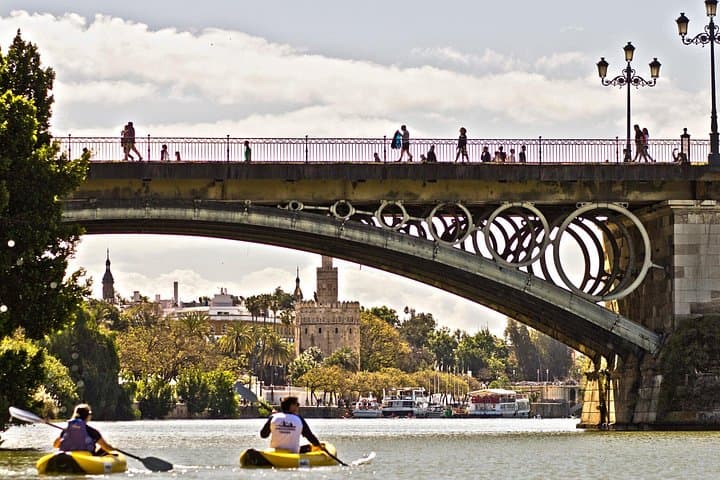
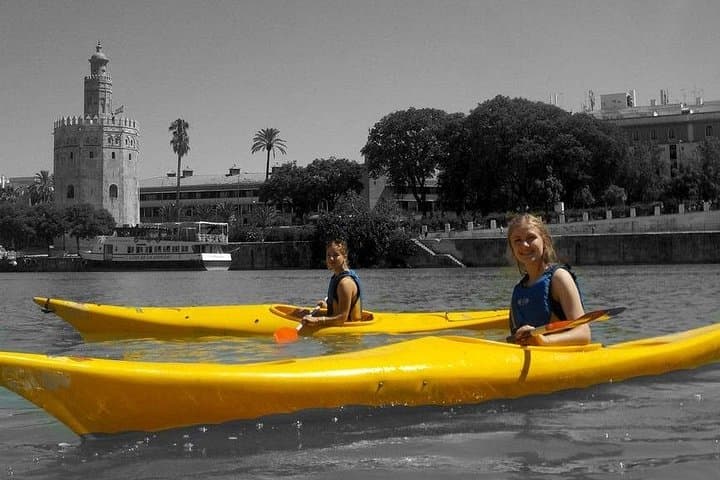
Paddlers push off from a low stone quay and the Guadalquivir takes over—slow, broad, and flat, it carries the city’s stones and stories downstream while daring you to look up from the water.
Paddlers push off from a low stone quay and the Guadalquivir takes over—slow, broad, and flat, it carries the city’s stones and stories downstream while daring you to look up from the water.
This two-hour urban paddle unfolds past Seville’s maritime landmarks: the medieval Torre del Oro, the straight-lined docks that once staged trade with the Americas, and the ceramic-fronted houses of Triana where flamenco found one of its voices. Geologically the river here is a deepened, managed channel of the lower Guadalquivir floodplain; its banks show human shaping more than wild cliffs, but the river still stages wildlife—herons, kingfishers—and the occasional working barge.
Culturally the route traces the city’s Atlantic connections: from Magellan-era shipyards to the modern leisure promenades. Launch points are simple—piers and ramps with changing rooms and lockers—and the water’s minimal current makes the route suited to first-timers. Guides typically point out architecture, the history of trade with the Americas, and quieter side channels that reveal Triana’s market life.
Practical guidance: arrive with swim-capable guests, wear quick-drying layers, and stow valuables in a dry bag. Expect light exertion—short paddle bursts and frequent stops for photos—so hydrate and plan sun protection. Tours usually run 2–3 hours and are wheelchair-accessible at launch sites; cancellation policies often require 24-hour notice. For a fresh perspective on Seville, trading sidewalks for an easy-moving river is an efficient way to see the city’s history from water level while keeping the activity relaxed and accessible.