THE ADVENTURE COLLECTIVE® · Independent discovery and booking for outdoor travel

Float beneath the arches of Ponte a Buriano on a calm, two-hour kayak along the Arno. This easy flatwater paddle mixes river scenery, active birdlife and a slice of Tuscan river history.
Float beneath the arches of Ponte a Buriano on a calm, two-hour kayak along the Arno. This easy flatwater paddle mixes river scenery, active birdlife and a slice of Tuscan river history.
A cool morning mist lifts off the Arno as your paddle slices the surface and the Romanesque arches of Ponte a Buriano come into view. The river here slows and widens, inviting a relaxed two-hour paddle where birds call from riverside willows and the current nudges you downstream with low, steady encouragement.
Verified experiences and guided adventures in the surrounding area.
A cool morning mist lifts off the Arno as your paddle slices the surface and the Romanesque arches of Ponte a Buriano come into view. The river here slows and widens, inviting a relaxed two-hour paddle where birds call from riverside willows and the current nudges you downstream with low, steady encouragement.
The bridge itself carries centuries of human traffic — the existing stone structure dates to the Renaissance era, and the shorelines preserve agricultural terraces and mill sites that shaped local life. Geologically, the river has carved a shallow valley through Pliocene clays and sandstones; the gentle banks and broad channel make this reach ideal for flatwater kayaking. Culturally, this stretch of the Arno fed villages and estates and even caught the eye of observers as far back as Leonardo da Vinci.
On a typical outing you'll cover roughly 5–8 km depending on routing, with no meaningful elevation gain and mostly calm water. Expect shallow riffles near the Penna dam and occasional wake from utility craft; birdlife is the real draw — herons and kingfishers are common. Guides usually provide basic instruction and life jackets, so novices and steady walkers on the water can join.
Practical takeaways: paddle in the cooler morning or late afternoon for better light and fewer insects, bring a dry bag for phones, and wear closed sandals or neoprene shoes for easy re-entry. Hydrate, apply sun protection, and listen to your guide — the Arno here rewards a steady, observant pace.
easy.
2 hours.
Suitable for people in reasonable shape who can sit and paddle for two hours; light core strength and balance helpful
No — guides provide basic instruction and the Arno in this reach is flat and forgiving, suitable for first-timers with reasonable fitness.
Quick-dry clothing, a hat, closed water shoes, and layers if mornings are cool; avoid heavy cotton that stays wet.
Many operators accept older children with adult supervision — check minimum age and weight limits with the provider before booking.
Expect common river birds such as grey herons and kingfishers, plus occasional ducks and small mammals along the banks.
The stone bridge at Ponte a Buriano has medieval origins and the present masonry reflects centuries of repair; the Arno valley here supported local mills and agricultural estates for generations.
The reserve protects riparian habitat and migratory birds—stay on watercraft corridors, avoid disturbing nesting birds, and pack out any waste to minimize impact.
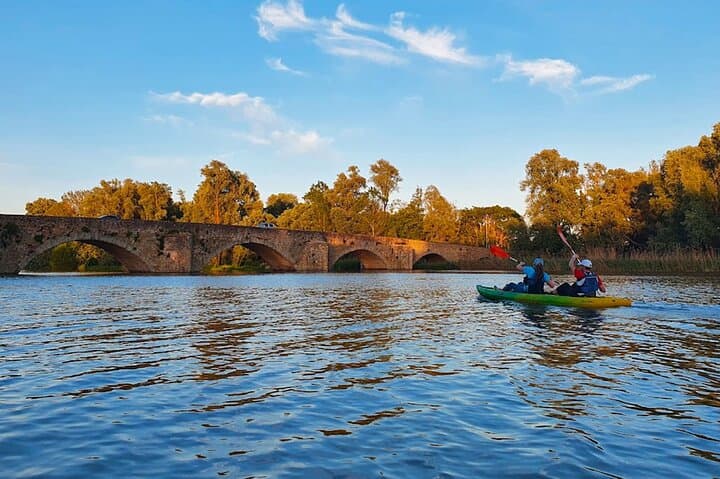
A cool morning mist lifts off the Arno as your paddle slices the surface and the Romanesque arches of Ponte a Buriano come into view. The river here slows and widens, inviting a relaxed two-hour paddle where birds call from riverside willows and the current nudges you downstream with low, steady encouragement.
A cool morning mist lifts off the Arno as your paddle slices the surface and the Romanesque arches of Ponte a Buriano come into view. The river here slows and widens, inviting a relaxed two-hour paddle where birds call from riverside willows and the current nudges you downstream with low, steady encouragement.
The bridge itself carries centuries of human traffic — the existing stone structure dates to the Renaissance era, and the shorelines preserve agricultural terraces and mill sites that shaped local life. Geologically, the river has carved a shallow valley through Pliocene clays and sandstones; the gentle banks and broad channel make this reach ideal for flatwater kayaking. Culturally, this stretch of the Arno fed villages and estates and even caught the eye of observers as far back as Leonardo da Vinci.
On a typical outing you'll cover roughly 5–8 km depending on routing, with no meaningful elevation gain and mostly calm water. Expect shallow riffles near the Penna dam and occasional wake from utility craft; birdlife is the real draw — herons and kingfishers are common. Guides usually provide basic instruction and life jackets, so novices and steady walkers on the water can join.
Practical takeaways: paddle in the cooler morning or late afternoon for better light and fewer insects, bring a dry bag for phones, and wear closed sandals or neoprene shoes for easy re-entry. Hydrate, apply sun protection, and listen to your guide — the Arno here rewards a steady, observant pace.