THE ADVENTURE COLLECTIVE® · Independent discovery and booking for outdoor travel

Paddle into Nerul's mangrove labyrinth on a two-hour guided kayak trip, spotting kingfishers, cormorants and osprey while learning tidal ecology from a local guide. Ideal for beginners, the tour pairs gentle paddling with focused wildlife viewing.
Paddle into Nerul's mangrove labyrinth on a two-hour guided kayak trip, spotting kingfishers, cormorants and osprey while learning tidal ecology from a local guide. Ideal for beginners, the tour pairs gentle paddling with focused wildlife viewing.
You push off from a low wooden jetty and the river pulls you into a green corridor: mangrove roots braid the water, kingfishers flick between branches, and the distant roar of the Arabian Sea becomes a background hum.
Verified experiences and guided adventures in the surrounding area.
Operated by Goa Kayaking · Nerul, Goa
You push off from a low wooden jetty and the river pulls you into a green corridor: mangrove roots braid the water, kingfishers flick between branches, and the distant roar of the Arabian Sea becomes a background hum.
Spike's River (locally called Nerul River) runs through sandy flats and salt marshes north of Panaji. Geologically, the channel is shaped by tidal exchange that floods the mangrove root systems at high tide and exposes mudflats at low tide—conditions that concentrate fish and attract raptors and waders. Culturally the area supports small fishing communities; traditional cashew and coconut groves lie a short distance inland and local guides often point out old sluice gates and boatyards used for inshore fishing.
On a two-hour guided paddle you’ll thread narrow creeks, explore small mangrove islands when the tide allows, and pause for binocular-led birding—expect kingfishers, brahminy kites, cormorants and occasional osprey. The pace is gentle but tidal timing dictates how far you can go.
Practical guidance: book a morning or late-afternoon slot to avoid midday heat and to benefit from higher bird activity. Wear quick-drying layers, a brimmed hat and reef-safe sunscreen; bring a water bottle and a dry bag for phones. If you have back issues or are pregnant, this activity is not recommended. Groups are small and gear—sit-on kayaks, paddles, vests—is provided. Local guides brief on paddling technique, tide safety and how to minimize disturbance to wildlife. For photographers, a long lens and a tethered camera strap help capture shy birds without leaving the kayak.
easy.
2 hours.
Suitable for most fitness levels; you should be comfortable sitting and paddling for short bursts and able to climb in/out of a kayak
No—this tour is designed for beginners; the guide covers basic paddling and safety before launch.
Common sightings include kingfishers, brahminy kites, cormorants, egrets and occasional osprey; sightings depend on tide and season.
Yes—children from age six can participate, but they must be able to sit in a kayak and follow safety instructions; parental supervision is required.
The operator’s cancellation policy is strict (all sales final); contact the provider before travel for rescheduling options in case of unsafe conditions.
The Nerul area has long supported small-scale fishing and coconut cultivation; mangroves here have historically protected inland villages from coastal storms.
Mangrove stands are locally vulnerable to development and pollution; stay on water routes, avoid disturbing roots, and follow guides' advice to reduce wildlife disturbance.
Goa Kayaking operates guided outdoor trips and adventures with an emphasis on safety, stewardship, and memorable experiences.
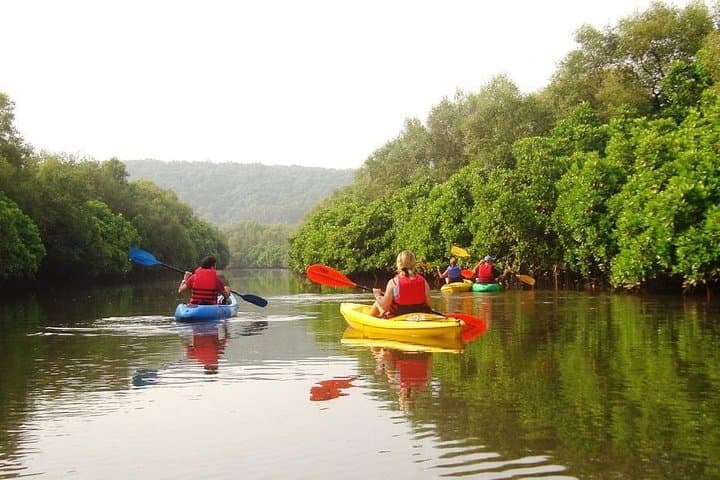
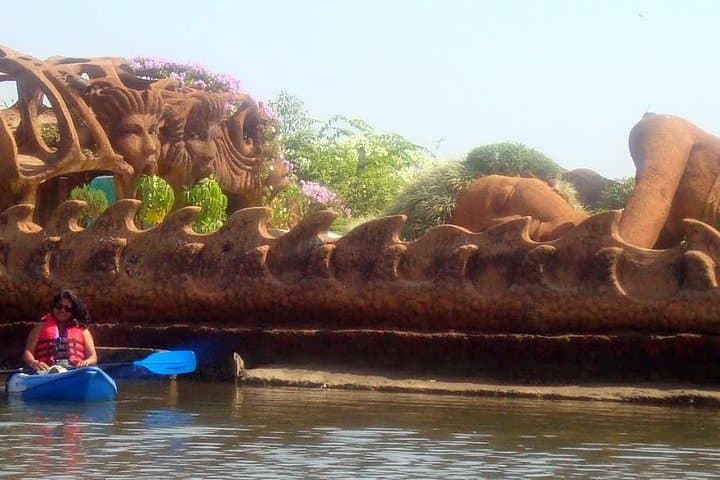
You push off from a low wooden jetty and the river pulls you into a green corridor: mangrove roots braid the water, kingfishers flick between branches, and the distant roar of the Arabian Sea becomes a background hum.
You push off from a low wooden jetty and the river pulls you into a green corridor: mangrove roots braid the water, kingfishers flick between branches, and the distant roar of the Arabian Sea becomes a background hum.
Spike's River (locally called Nerul River) runs through sandy flats and salt marshes north of Panaji. Geologically, the channel is shaped by tidal exchange that floods the mangrove root systems at high tide and exposes mudflats at low tide—conditions that concentrate fish and attract raptors and waders. Culturally the area supports small fishing communities; traditional cashew and coconut groves lie a short distance inland and local guides often point out old sluice gates and boatyards used for inshore fishing.
On a two-hour guided paddle you’ll thread narrow creeks, explore small mangrove islands when the tide allows, and pause for binocular-led birding—expect kingfishers, brahminy kites, cormorants and occasional osprey. The pace is gentle but tidal timing dictates how far you can go.
Practical guidance: book a morning or late-afternoon slot to avoid midday heat and to benefit from higher bird activity. Wear quick-drying layers, a brimmed hat and reef-safe sunscreen; bring a water bottle and a dry bag for phones. If you have back issues or are pregnant, this activity is not recommended. Groups are small and gear—sit-on kayaks, paddles, vests—is provided. Local guides brief on paddling technique, tide safety and how to minimize disturbance to wildlife. For photographers, a long lens and a tethered camera strap help capture shy birds without leaving the kayak.