THE ADVENTURE COLLECTIVE® · Independent discovery and booking for outdoor travel

Paddle from Langosta Beach into the calm estuary of Las Baulas National Park on a private kayak fishing trip. Expect expert local guidance, professional fishing kayaks, and a chance to hook snook, jack crevalle, sea bass, or snapper in three hours on the water.
Paddle from Langosta Beach into the calm estuary of Las Baulas National Park on a private kayak fishing trip. Expect expert local guidance, professional fishing kayaks, and a chance to hook snook, jack crevalle, sea bass, or snapper in three hours on the water.
A low, steady chop moves across the estuary as the sun climbs, and the kayaks line up like quiet boats waiting for instruction. You push off from the narrow stretch of Langosta Beach—just south of Tamarindo—and glide into blue-green water that clarifies to glass where mangroves shade the shallows. The guide checks lines, offers a quick primer on the fishing rigs, and the afternoon contracts into a series of small, precise efforts: a cast into a shadow, a patient drift, the sudden tug that breaks the calm.
Verified experiences and guided adventures in the surrounding area.
Operated by Side by Side ATV Tours & WILD LIFE · Playa Langosta, Guanacaste
A low, steady chop moves across the estuary as the sun climbs, and the kayaks line up like quiet boats waiting for instruction. You push off from the narrow stretch of Langosta Beach—just south of Tamarindo—and glide into blue-green water that clarifies to glass where mangroves shade the shallows. The guide checks lines, offers a quick primer on the fishing rigs, and the afternoon contracts into a series of small, precise efforts: a cast into a shadow, a patient drift, the sudden tug that breaks the calm.
This stretch of coastline sits within Parque Nacional Marino Las Baulas de Guanacaste, a protected marine park created in part to shelter the leatherback sea turtles that return here to nest. Geologically, the shoreline is young—Pliocene sands and volcanic outwash reworked by Pacific tides—so the estuary channels keep shifting, creating pockets where baitfish gather and predators follow. Locals still fish with techniques honed before sport tourism arrived: a mix of live bait, trolling near the channel mouth, and bottom rigs where the sand gives way to rock.
Culture here is practical and close to the water. Tamarindo’s surf-town energy is a five-minute drive north, but Langosta’s quieter shore feels like the town’s original harbor: fishermen mending nets, guides launching kayaks, and a stretch of beach that sees both morning anglers and evening leatherback patrols. Guides on this private trip bring professional sit-on-top fishing kayaks, life vests, tackle, and local knowledge—how to read the tide, where snook hide, when the jacks push bait toward the surface.
Practical guidance: the trip runs roughly three hours and is best booked for early morning or late afternoon when tides concentrate fish and sun exposure is lower. Expect stable but narrow kayaks—good balance matters more than brute arm power—and bring reef-safe sunscreen, a sun hat, and a small dry bag for phone and documents. If you want a shot at larger reef species, ask the operator about bait options and tide timing when you book.
Wildlife is part of the experience; frigatebirds wheel overhead and green sea turtles may surface nearby. Respect turtle nesting zones—guides will brief you—and practice catch-and-release for undersized fish. For photographers, low light at dawn or dusk gives the best reflections and action shots of strikes; a telephoto helps with birds.
This is an accessible yet focused adventure: technically straightforward but demanding attention to balance, local conditions, and conservation-minded behavior. When the last line is coiled and the kayaks are pulled up on sand, the estuary has done what it does best—pushed you into the moment and left something worth bringing back home in the memory.
moderate.
3 hours.
Suitable for people in average physical condition; requires core stability and the ability to maneuver a sit-on-top kayak for several hours.
The private kayak fishing adventure runs about three hours from launch to return.
No prior experience is required, but basic balance and a willingness to paddle are necessary; guides give a safety and technique briefing.
Common targets include snook, jack crevalle, sea bass, and snapper—seasonal abundance varies with tides and bait conditions.
Yes—professional sit-on-top fishing kayaks, life vests, and tackle are included in the price.
Operator offers pickup from Langosta and Tamarindo; confirm pickup location and arrival times when booking.
The activity is suitable for most fitness levels but is not recommended for those with serious back, heart conditions, or pregnancy; children should be supervised and measured for proper life vests.
Parque Nacional Marino Las Baulas was established in part to protect the leatherback turtle nesting beaches; fishing and tourism now coexist under regulated conservation rules.
Operators emphasize reef-safe sunscreen, restricted beach lighting during nesting season, and catch-and-release best practices to reduce impact on juvenile fish.
Side by Side ATV Tours & WILD LIFE operates guided outdoor trips and adventures with an emphasis on safety, stewardship, and memorable experiences.
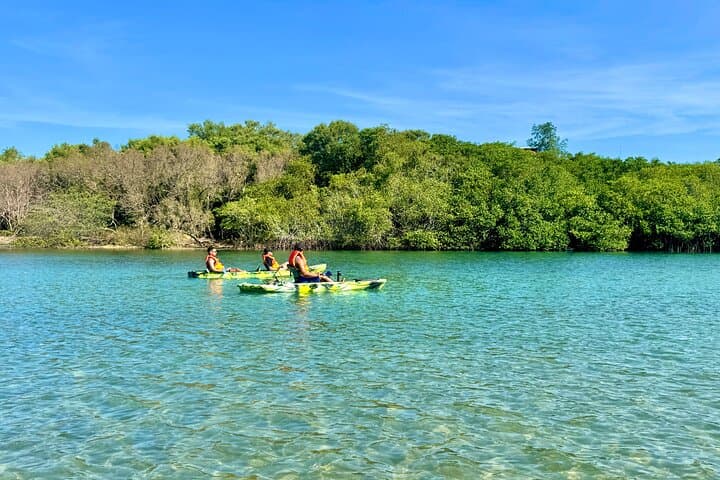
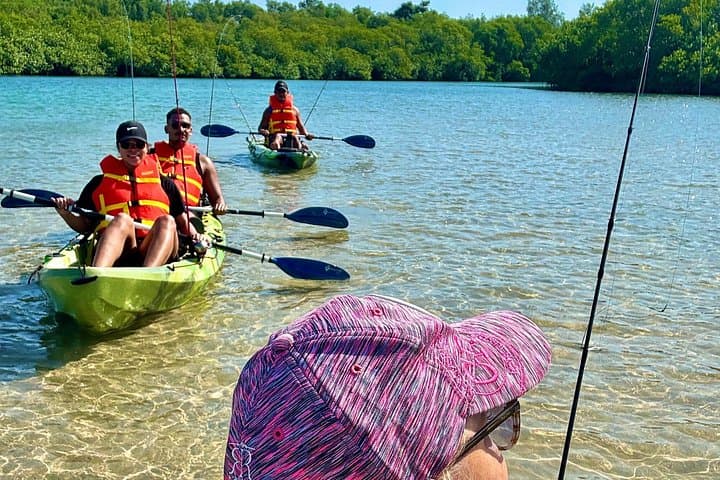
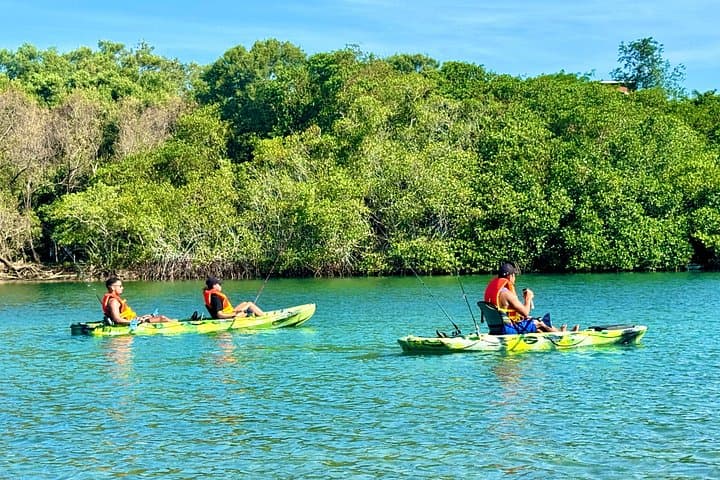
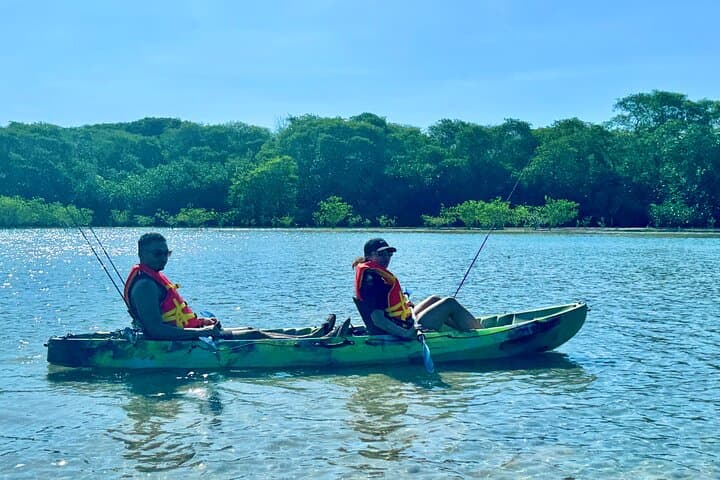
A low, steady chop moves across the estuary as the sun climbs, and the kayaks line up like quiet boats waiting for instruction. You push off from the narrow stretch of Langosta Beach—just south of Tamarindo—and glide into blue-green water that clarifies to glass where mangroves shade the shallows. The guide checks lines, offers a quick primer on the fishing rigs, and the afternoon contracts into a series of small, precise efforts: a cast into a shadow, a patient drift, the sudden tug that breaks the calm.
A low, steady chop moves across the estuary as the sun climbs, and the kayaks line up like quiet boats waiting for instruction. You push off from the narrow stretch of Langosta Beach—just south of Tamarindo—and glide into blue-green water that clarifies to glass where mangroves shade the shallows. The guide checks lines, offers a quick primer on the fishing rigs, and the afternoon contracts into a series of small, precise efforts: a cast into a shadow, a patient drift, the sudden tug that breaks the calm.
This stretch of coastline sits within Parque Nacional Marino Las Baulas de Guanacaste, a protected marine park created in part to shelter the leatherback sea turtles that return here to nest. Geologically, the shoreline is young—Pliocene sands and volcanic outwash reworked by Pacific tides—so the estuary channels keep shifting, creating pockets where baitfish gather and predators follow. Locals still fish with techniques honed before sport tourism arrived: a mix of live bait, trolling near the channel mouth, and bottom rigs where the sand gives way to rock.
Culture here is practical and close to the water. Tamarindo’s surf-town energy is a five-minute drive north, but Langosta’s quieter shore feels like the town’s original harbor: fishermen mending nets, guides launching kayaks, and a stretch of beach that sees both morning anglers and evening leatherback patrols. Guides on this private trip bring professional sit-on-top fishing kayaks, life vests, tackle, and local knowledge—how to read the tide, where snook hide, when the jacks push bait toward the surface.
Practical guidance: the trip runs roughly three hours and is best booked for early morning or late afternoon when tides concentrate fish and sun exposure is lower. Expect stable but narrow kayaks—good balance matters more than brute arm power—and bring reef-safe sunscreen, a sun hat, and a small dry bag for phone and documents. If you want a shot at larger reef species, ask the operator about bait options and tide timing when you book.
Wildlife is part of the experience; frigatebirds wheel overhead and green sea turtles may surface nearby. Respect turtle nesting zones—guides will brief you—and practice catch-and-release for undersized fish. For photographers, low light at dawn or dusk gives the best reflections and action shots of strikes; a telephoto helps with birds.
This is an accessible yet focused adventure: technically straightforward but demanding attention to balance, local conditions, and conservation-minded behavior. When the last line is coiled and the kayaks are pulled up on sand, the estuary has done what it does best—pushed you into the moment and left something worth bringing back home in the memory.