THE ADVENTURE COLLECTIVE® · Independent discovery and booking for outdoor travel

Pedal-powered Hobie kayaks, a 7" Lowrance fishfinder, and local guides combine for a hands-on kayak fishing trip out of Cavtat. Spend three hours skimming the Adriatic surface, casting for amberjack, seabass, and grouper while learning local fishing practice.
Pedal-powered Hobie kayaks, a 7" Lowrance fishfinder, and local guides combine for a hands-on kayak fishing trip out of Cavtat. Spend three hours skimming the Adriatic surface, casting for amberjack, seabass, and grouper while learning local fishing practice.
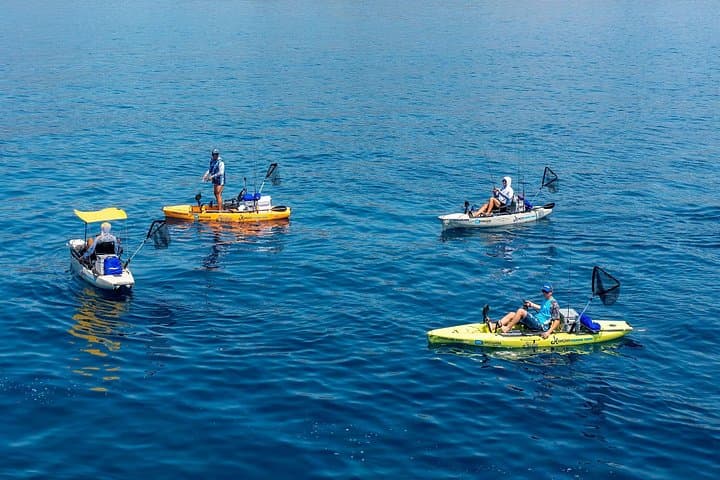
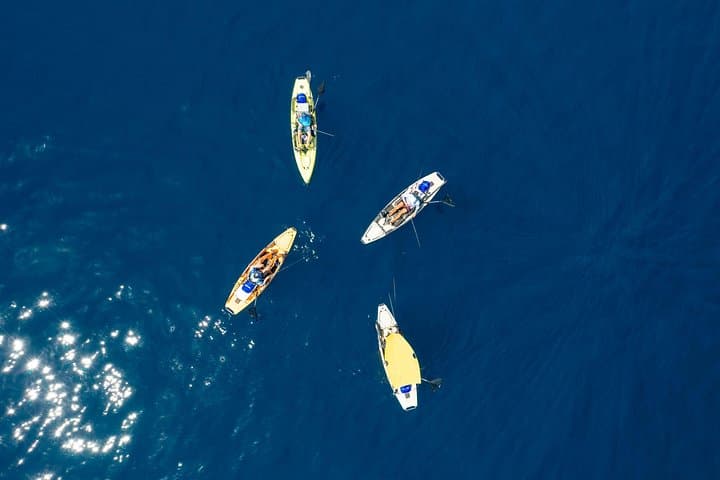
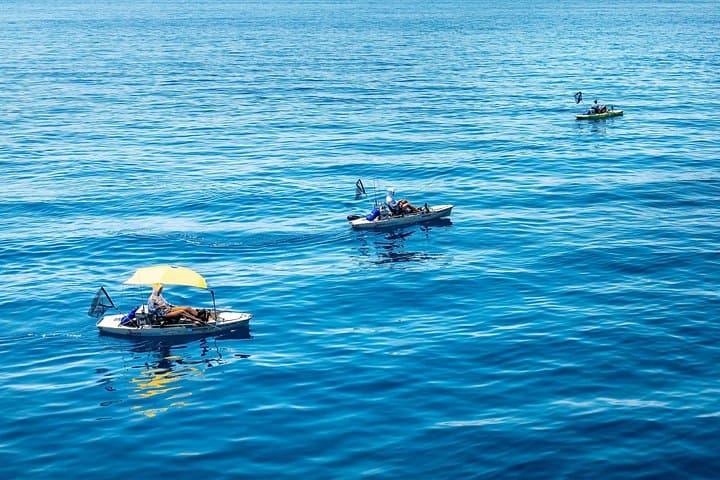
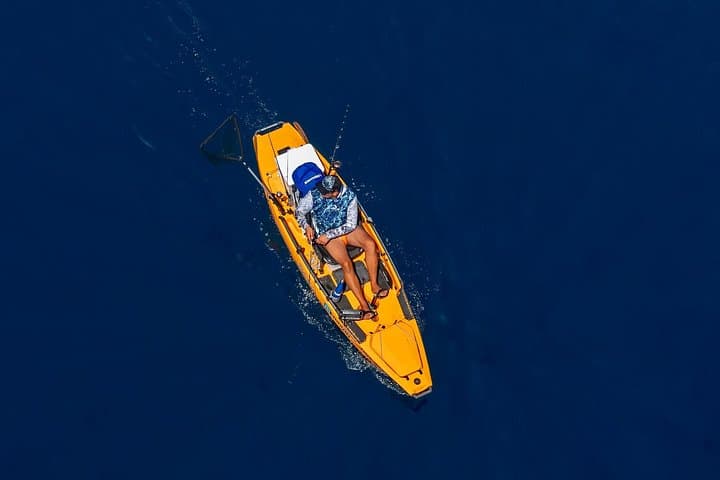
A pair of fins on the hull, a gentle churn beneath your feet, and the Adriatic opening like a glass highway — that’s the first impression of Kanjac Kayak Fishing out of Cavtat. You push off from a pebble cove and the town’s low-slung roofs slide behind you. The Hobie pedal kayaks move with a quiet insistence; the water nudges the hull as if inviting you to follow the current where the fish like to gather.
Verified experiences and guided adventures in the surrounding area.
Operated by Kanjac Kayak Fishing Cavtat · Cavtat, Dubrovnik-Neretva County
A pair of fins on the hull, a gentle churn beneath your feet, and the Adriatic opening like a glass highway — that’s the first impression of Kanjac Kayak Fishing out of Cavtat. You push off from a pebble cove and the town’s low-slung roofs slide behind you. The Hobie pedal kayaks move with a quiet insistence; the water nudges the hull as if inviting you to follow the current where the fish like to gather.
This short, three-hour outing folds together local sea lore, practical angling, and the raw geology of the Dalmatian coast. Cavtat itself began life as Epidaurum, a Greek and later Roman settlement that used these same coves as natural harbors. Today the coastline is a shelf of limestone and ancient marine terraces; underwater ledges and submerged boulders create fishy ambush points where amberjack and dusky grouper wait.
The operation is sharp and simple: experienced local guides kit you with two sets of rods, reels, and baits and a 7” Lowrance fishfinder. You can pedal and sight-fish along nearby bays — Mlini and the shallows toward the Rat peninsula are common stops — or let the guides pick drift lines where dorado, seabass, and John Dory are reported. The tone is relaxed but focused; this is fishing adapted to the small-boat scale, where patience matters and the sea gives signs if you know how to read them.
Culturally, the rhythm here is coastal Croatia — early starts, slow afternoons, and food made from what the sea provides. Guides will share tips on local species and sustainable practices; many anglers on these trips favor targeted catch-and-release for larger specimens, keeping smaller fish for a seaside snack.
Practicalities: expect to cover 4–8 km of surface distance in three hours depending on wind and how often you stop to fish. The experience suits beginners and seasoned anglers alike — no heavy paddling required thanks to the pedal drive — but you should be comfortable moving in a small craft and steady on your feet when launching from pebbled shores.
Bring polarized sunglasses, reef-safe sunscreen, a hat, and closed-toe water shoes. Hydration is supplied, but bring snacks if you have a long morning of casting ahead. Mornings are best for calm water and clearer fishfinder readings; afternoons offer warm light and fewer tour boats.
Kanjac’s kayak-fishing loop is less about big-game drama and more about an intimate negotiation with the Adriatic: you, the kayak, the fishfinder, and the sea nudging you toward its quieter edges. It’s an accessible way to learn Mediterranean angling while seeing Cavtat from a low, immediate angle — one that leaves you smelling of salt and thinking like a local by the time you climb back onto dry land.
easy.
3 hours.
Accessible to most fitness levels — you should be able to sit and pedal for a few hours and climb in/out of a low kayak.
No personal license is required for this guided trip — the operator provides rods and handles local regulations, but ask the guide about catch limits.
Tours are private in this listing; group size will be small and organized by the operator for safety and space on the kayaks.
Common targets include seabass, seabream, mackerel, amberjack, dentex, John Dory, and dusky grouper depending on season and depth.
Yes — the Hobie pedal system reduces paddling effort and guides provide instruction on casting and safety.
Trips may be canceled for safety in strong wind or rough seas; the operator’s policy allows full refund if canceled at least 24 hours before departure.
Bring a hat, polarized sunglasses, reef-safe sunscreen, and a small dry bag for valuables — bottled water is provided.
Cavtat was originally the ancient settlement Epidaurum; its sheltered coves have been used by mariners since Greek and Roman times.
Guides encourage selective catch-and-release and the use of biodegradable tackle; avoid anchoring on seagrass beds to protect Posidonia meadows.
Kanjac Kayak Fishing Cavtat operates guided outdoor trips and adventures with an emphasis on safety, stewardship, and memorable experiences.
A pair of fins on the hull, a gentle churn beneath your feet, and the Adriatic opening like a glass highway — that’s the first impression of Kanjac Kayak Fishing out of Cavtat. You push off from a pebble cove and the town’s low-slung roofs slide behind you. The Hobie pedal kayaks move with a quiet insistence; the water nudges the hull as if inviting you to follow the current where the fish like to gather.
A pair of fins on the hull, a gentle churn beneath your feet, and the Adriatic opening like a glass highway — that’s the first impression of Kanjac Kayak Fishing out of Cavtat. You push off from a pebble cove and the town’s low-slung roofs slide behind you. The Hobie pedal kayaks move with a quiet insistence; the water nudges the hull as if inviting you to follow the current where the fish like to gather.
This short, three-hour outing folds together local sea lore, practical angling, and the raw geology of the Dalmatian coast. Cavtat itself began life as Epidaurum, a Greek and later Roman settlement that used these same coves as natural harbors. Today the coastline is a shelf of limestone and ancient marine terraces; underwater ledges and submerged boulders create fishy ambush points where amberjack and dusky grouper wait.
The operation is sharp and simple: experienced local guides kit you with two sets of rods, reels, and baits and a 7” Lowrance fishfinder. You can pedal and sight-fish along nearby bays — Mlini and the shallows toward the Rat peninsula are common stops — or let the guides pick drift lines where dorado, seabass, and John Dory are reported. The tone is relaxed but focused; this is fishing adapted to the small-boat scale, where patience matters and the sea gives signs if you know how to read them.
Culturally, the rhythm here is coastal Croatia — early starts, slow afternoons, and food made from what the sea provides. Guides will share tips on local species and sustainable practices; many anglers on these trips favor targeted catch-and-release for larger specimens, keeping smaller fish for a seaside snack.
Practicalities: expect to cover 4–8 km of surface distance in three hours depending on wind and how often you stop to fish. The experience suits beginners and seasoned anglers alike — no heavy paddling required thanks to the pedal drive — but you should be comfortable moving in a small craft and steady on your feet when launching from pebbled shores.
Bring polarized sunglasses, reef-safe sunscreen, a hat, and closed-toe water shoes. Hydration is supplied, but bring snacks if you have a long morning of casting ahead. Mornings are best for calm water and clearer fishfinder readings; afternoons offer warm light and fewer tour boats.
Kanjac’s kayak-fishing loop is less about big-game drama and more about an intimate negotiation with the Adriatic: you, the kayak, the fishfinder, and the sea nudging you toward its quieter edges. It’s an accessible way to learn Mediterranean angling while seeing Cavtat from a low, immediate angle — one that leaves you smelling of salt and thinking like a local by the time you climb back onto dry land.