THE ADVENTURE COLLECTIVE® · Independent discovery and booking for outdoor travel

Paddle a quiet estuary under a moonless sky and watch the water flare with living light. This guided kayak tour at Punta Cuchillos pairs an easy evening paddle with a brief natural-history talk for a safe, family-friendly bioluminescence experience.
Paddle a quiet estuary under a moonless sky and watch the water flare with living light. This guided kayak tour at Punta Cuchillos pairs an easy evening paddle with a brief natural-history talk for a safe, family-friendly bioluminescence experience.
Night arrives not as a curtain but as a slow, patient tide. At Punta Cuchillos the mangrove channels blacken and the paddle cuts through water that seems to inhale the stars. Guides launch single kayaks and canoes into the sheltered estuary; each stroke wakes a scatter of blue-green light that rolls along the hull like bottled lightning.
Verified experiences and guided adventures in the surrounding area.
Operated by Eddy’s Bioluminescent Reserve · Paquera, Puntarenas
Night arrives not as a curtain but as a slow, patient tide. At Punta Cuchillos the mangrove channels blacken and the paddle cuts through water that seems to inhale the stars. Guides launch single kayaks and canoes into the sheltered estuary; each stroke wakes a scatter of blue-green light that rolls along the hull like bottled lightning.
The Nicoya Peninsula’s coast is shaped by tectonic uplift and coastal deposition, creating shallow inlets and mangrove-lined channels where dinoflagellates concentrate. Indigenous and coastal fishing traditions shaped human use of these waters for centuries; today small guides run low-impact kayak trips that combine natural history talks with hands-on paddling. The tour focuses on the biology of bioluminescence—how microscopic organisms emit light when disturbed—and why moon phase and local runoff influence intensity.
Expect one hour on the water after dusk, a short orientation and a safety briefing, and a quiet, small-group paddle. The route is calm, with minimal currents, but visibility is dark; the experience is sensory rather than scenic. Bring a headlamp with a red filter, water, and an extra layer for the breeze off the estuary.
Practical: tours run year-round but are brightest during new-moon windows and in lower-tide conditions; avoid nights near the full moon. The activity is family-friendly but not recommended for pregnant travelers. Guides provide kayaks or canoes and basic instruction; no advanced paddling skills required. Leave no trace: avoid sunscreen or lotions before launch and follow guide instructions to protect fragile mangrove habitat.
easy.
1–1.5 hours.
Suitable for most adults and older children; requires basic upper-body mobility and ability to sit in a kayak for an hour.
Guides guarantee the experience but brightness varies with moon phase, tides and recent rainfall; new-moon nights and calm water give the best displays.
No—guides offer a short orientation and use stable kayaks or canoes suitable for beginners.
Yes—this family-friendly tour accommodates children, though infants should sit on laps and lifejackets are provided.
Access typically involves a short drive across the Nicoya Peninsula; many travelers arrange transport through their accommodation or the tour operator for timely evening pickup.
Coastal communities on the Nicoya Peninsula have fished these estuaries for generations; modern eco-tours aim to blend local livelihood with conservation education.
Tours limit group size and avoid flash photography; visitors are asked to avoid chemicals and follow guides to prevent disturbance to sensitive mangrove and plankton communities.
Eddy’s Bioluminescent Reserve operates guided outdoor trips and adventures with an emphasis on safety, stewardship, and memorable experiences.
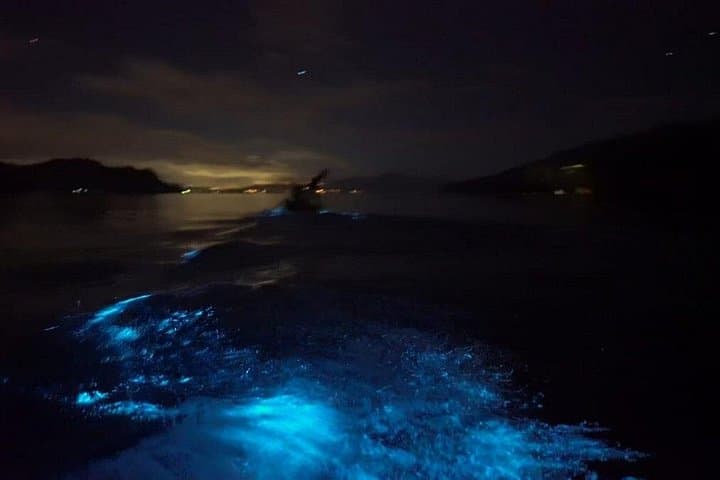
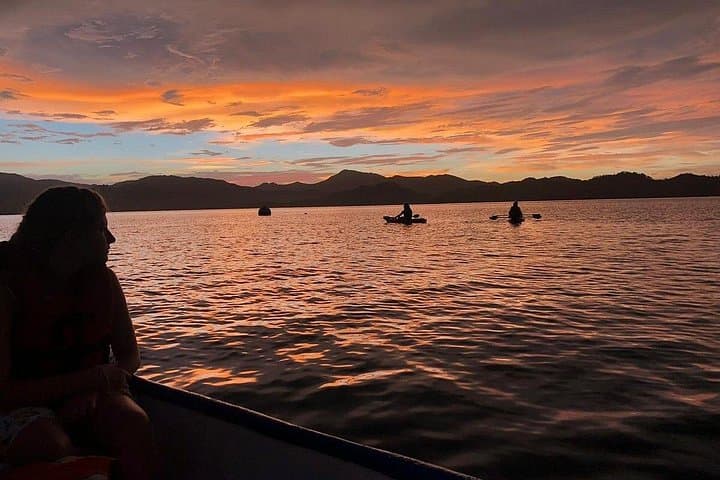
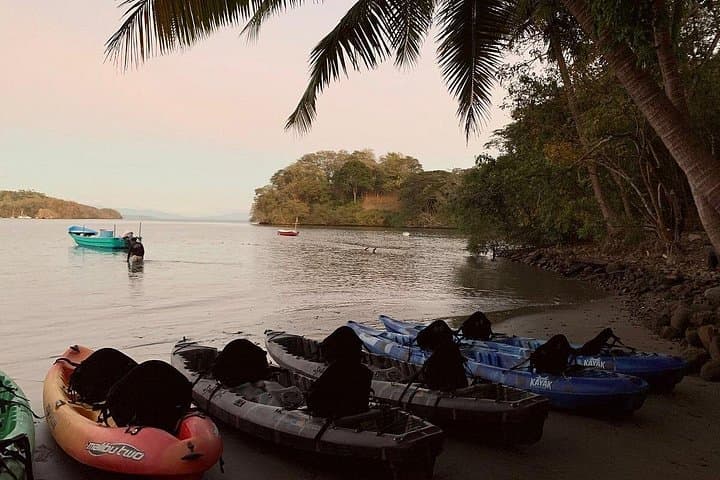
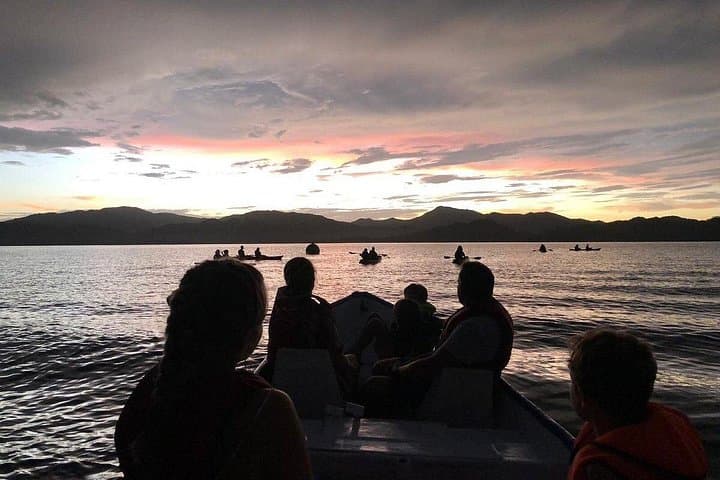
Night arrives not as a curtain but as a slow, patient tide. At Punta Cuchillos the mangrove channels blacken and the paddle cuts through water that seems to inhale the stars. Guides launch single kayaks and canoes into the sheltered estuary; each stroke wakes a scatter of blue-green light that rolls along the hull like bottled lightning.
Night arrives not as a curtain but as a slow, patient tide. At Punta Cuchillos the mangrove channels blacken and the paddle cuts through water that seems to inhale the stars. Guides launch single kayaks and canoes into the sheltered estuary; each stroke wakes a scatter of blue-green light that rolls along the hull like bottled lightning.
The Nicoya Peninsula’s coast is shaped by tectonic uplift and coastal deposition, creating shallow inlets and mangrove-lined channels where dinoflagellates concentrate. Indigenous and coastal fishing traditions shaped human use of these waters for centuries; today small guides run low-impact kayak trips that combine natural history talks with hands-on paddling. The tour focuses on the biology of bioluminescence—how microscopic organisms emit light when disturbed—and why moon phase and local runoff influence intensity.
Expect one hour on the water after dusk, a short orientation and a safety briefing, and a quiet, small-group paddle. The route is calm, with minimal currents, but visibility is dark; the experience is sensory rather than scenic. Bring a headlamp with a red filter, water, and an extra layer for the breeze off the estuary.
Practical: tours run year-round but are brightest during new-moon windows and in lower-tide conditions; avoid nights near the full moon. The activity is family-friendly but not recommended for pregnant travelers. Guides provide kayaks or canoes and basic instruction; no advanced paddling skills required. Leave no trace: avoid sunscreen or lotions before launch and follow guide instructions to protect fragile mangrove habitat.