THE ADVENTURE COLLECTIVE® · Independent discovery and booking for outdoor travel

Paddle through towering Navajo sandstone walls on a 4-mile Lake Powell route from Antelope Point to Antelope Canyon. Expect sporty stretches, dramatic geology, and a 2–2.5 hour guided paddle that brings you face-to-face with Glen Canyon’s raw cliffs.
Paddle through towering Navajo sandstone walls on a 4-mile Lake Powell route from Antelope Point to Antelope Canyon. Expect sporty stretches, dramatic geology, and a 2–2.5 hour guided paddle that brings you face-to-face with Glen Canyon’s raw cliffs.
The morning light strips the red cliffs of Glen Canyon into sharp layers as paddlers gather at Antelope Point Launch Ramp. Water slaps against hulls and the wind plays with the canyon mouths; ahead, the Colorado River channel narrows and the canyon walls begin to rise, daring you deeper into a drowned river landscape.
Verified experiences and guided adventures in the surrounding area.
Operated by Paddle Express · Page, Arizona
The morning light strips the red cliffs of Glen Canyon into sharp layers as paddlers gather at Antelope Point Launch Ramp. Water slaps against hulls and the wind plays with the canyon mouths; ahead, the Colorado River channel narrows and the canyon walls begin to rise, daring you deeper into a drowned river landscape.
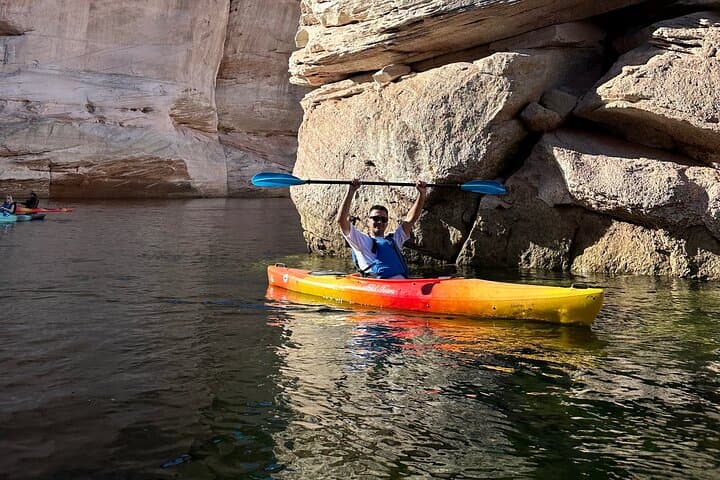
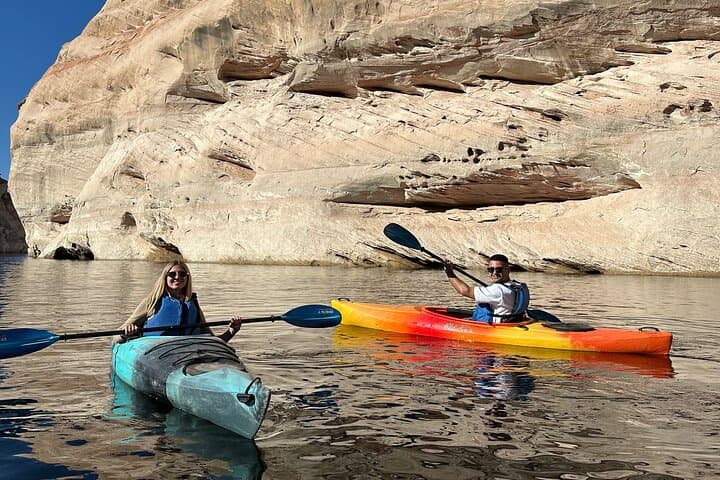
This paddle follows a stretch of Lake Powell carved from Navajo sandstone when the Colorado River met the Glen Canyon bedrock. The modern lake, formed after Glen Canyon Dam was completed mid-20th century, has left dramatic shelves and submerged washes that reveal cross-bedded sandstone, sculpted alcoves, and rock varnish from ancient desert climates. The area sits on traditional Navajo lands—observe signage and local guidance, and give cultural sites respectful distance.
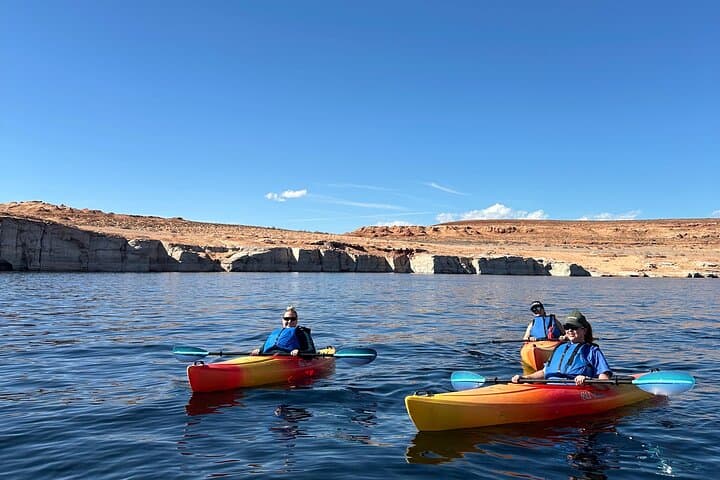
Expect about a 4-mile round-trip paddle, roughly 2–2.5 hours on the water, in sit-inside or tandem kayaks. Strong gusts and wake from motorboats can make sections sporty; currents in tight slots push you forward and demand steady strokes. Guides brief you at the launch 45 minutes before departure, fit life vests and supply dry bags.
Practical notes: carry 1–2 liters of water, sun protection, and a light wind layer. Start early to avoid midday heat and heavy boat traffic. Footwear that can get wet and a secure phone or camera will keep your memories safe. Respect speed zones, watch for submerged rock shelves near canyon mouths, and follow your guide’s route through the narrows. This paddle pairs dramatic geology with active exploration—ideal for paddlers who want close-up canyon views without technical whitewater.
moderate.
2–3 hours.
Moderate; able to paddle continuously for 2+ hours and manage short bursts against wind or wakes.
The advertised route is about 4 miles and typically takes 2–2.5 hours on the water; it’s moderate—suitable for beginners with basic paddling ability but expect effort in wind or when navigating wakes.
No formal experience is required; guides provide instruction and safety briefings, but basic balance and willingness to paddle for several hours are necessary.
Light, quick-dry clothing, sun protection, closed-toe water shoes, and 1–2 liters of water; valuables should go in a dry bag supplied by the operator.
This area is within the broader Navajo Nation region; follow guide instructions, respect signage, and avoid photographing restricted cultural sites when asked by guides or land managers.
Lake Powell filled after Glen Canyon Dam was completed in the 1960s, flooding pre-existing river channels cut into Navajo sandstone that date back millions of years.
Boat wakes and high visitation accelerate shoreline erosion; stay in designated channels, pack out trash, and follow speed zones to reduce impact.
Paddle Express operates guided outdoor trips and adventures with an emphasis on safety, stewardship, and memorable experiences.
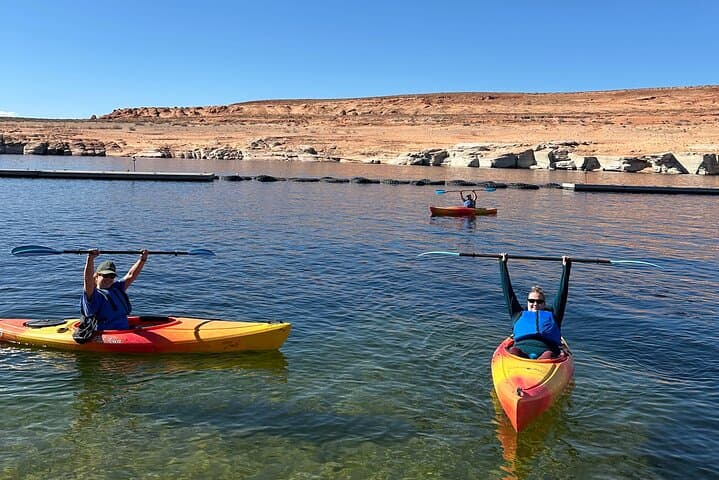
The morning light strips the red cliffs of Glen Canyon into sharp layers as paddlers gather at Antelope Point Launch Ramp. Water slaps against hulls and the wind plays with the canyon mouths; ahead, the Colorado River channel narrows and the canyon walls begin to rise, daring you deeper into a drowned river landscape.
The morning light strips the red cliffs of Glen Canyon into sharp layers as paddlers gather at Antelope Point Launch Ramp. Water slaps against hulls and the wind plays with the canyon mouths; ahead, the Colorado River channel narrows and the canyon walls begin to rise, daring you deeper into a drowned river landscape.
This paddle follows a stretch of Lake Powell carved from Navajo sandstone when the Colorado River met the Glen Canyon bedrock. The modern lake, formed after Glen Canyon Dam was completed mid-20th century, has left dramatic shelves and submerged washes that reveal cross-bedded sandstone, sculpted alcoves, and rock varnish from ancient desert climates. The area sits on traditional Navajo lands—observe signage and local guidance, and give cultural sites respectful distance.
Expect about a 4-mile round-trip paddle, roughly 2–2.5 hours on the water, in sit-inside or tandem kayaks. Strong gusts and wake from motorboats can make sections sporty; currents in tight slots push you forward and demand steady strokes. Guides brief you at the launch 45 minutes before departure, fit life vests and supply dry bags.
Practical notes: carry 1–2 liters of water, sun protection, and a light wind layer. Start early to avoid midday heat and heavy boat traffic. Footwear that can get wet and a secure phone or camera will keep your memories safe. Respect speed zones, watch for submerged rock shelves near canyon mouths, and follow your guide’s route through the narrows. This paddle pairs dramatic geology with active exploration—ideal for paddlers who want close-up canyon views without technical whitewater.