THE ADVENTURE COLLECTIVE® · Independent discovery and booking for outdoor travel

Glide from cliff-mouth caves to quiet, boat-access-only beaches on a three-hour kayak-and-snorkel tour of Ibiza’s southwest coast. Perfect for curious paddlers and first-time snorkelers, the trip pairs coastal geology with underwater meadows and shark-free swimming.
Glide from cliff-mouth caves to quiet, boat-access-only beaches on a three-hour kayak-and-snorkel tour of Ibiza’s southwest coast. Perfect for curious paddlers and first-time snorkelers, the trip pairs coastal geology with underwater meadows and shark-free swimming.
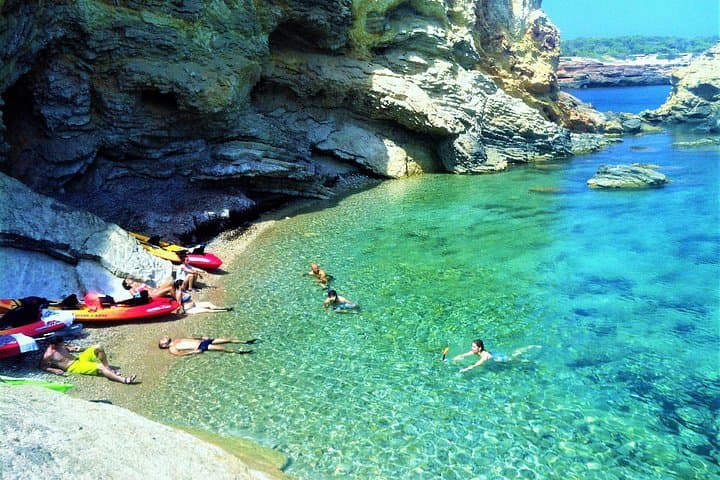
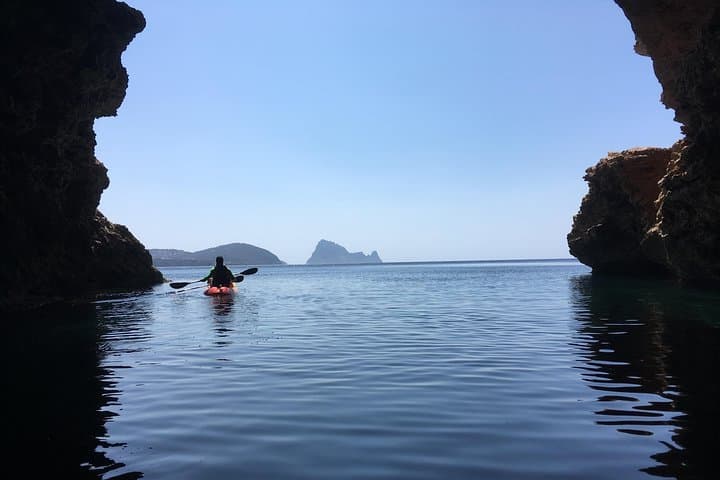
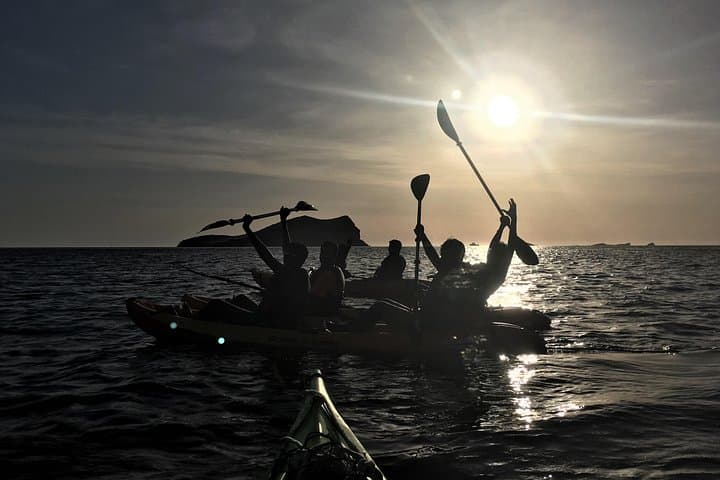
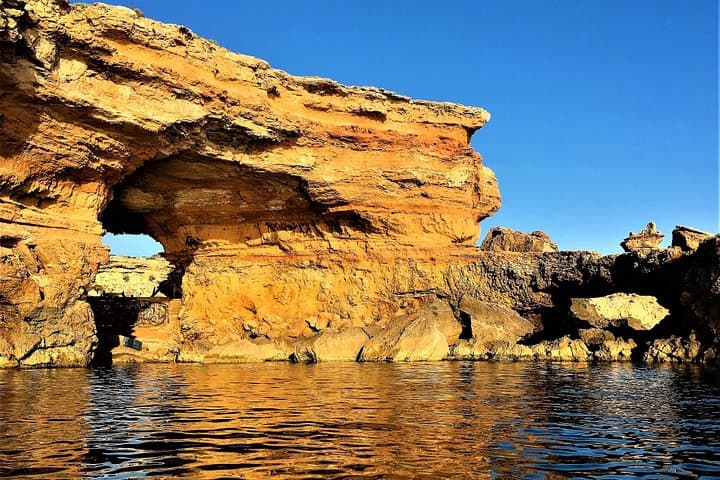
A pale boat bobs as the guide clips on a small flag and the sea waits like an invitation. You push off from a stony cove and the island’s limestone cliffs peel away—blue opening up to the horizon, caves cut like dark mouths, and beaches reached only by water. For three hours, the kayak becomes both transport and viewpoint: you skim past sugar-white sand shelves, slip into cave mouths where light slants like a curtain, and drop your mask to watch fish patrol fields of Posidonia.
Verified experiences and guided adventures in the surrounding area.
Operated by Fun Kayaks · Ibiza Town, Balearic Islands
A pale boat bobs as the guide clips on a small flag and the sea waits like an invitation. You push off from a stony cove and the island’s limestone cliffs peel away—blue opening up to the horizon, caves cut like dark mouths, and beaches reached only by water. For three hours, the kayak becomes both transport and viewpoint: you skim past sugar-white sand shelves, slip into cave mouths where light slants like a curtain, and drop your mask to watch fish patrol fields of Posidonia.
Ibiza’s coast is younger rock shaping older stories. Phoenicians and Romans used these same coves as anchorages; later, salt and fishing defined local livelihoods. Geologically, the southwest coast is carved from soft limestone and marine terraces, producing plunge cliffs and sea caves that amplify the current. Culturally, the island still balances a global tourism profile with fishing villages and small beach restaurants—salt-cured tuna and sobrassada show up on shore lunches if you ask.
The townscapes are compact but the coast is restless. Winds build in the afternoon here; mornings are often glassy and best for paddling. The marine meadows of Posidonia oceanica, an endemic seagrass, create underwater lawns that host octopus, bream, and small grouper; they also keep the water clear and the snorkel views sharp. Guides will point out these features and emphasize low-impact behavior: no fins on seagrass, no touching corals or wildlife.
Practically speaking, this is a three-hour, moderate outing. Expect 4–6 km of paddling depending on the route—round-trip or one-way—and sea level gradients, not elevation. Kayaks are stable sit-on-tops for first-timers; a short on-land practice session precedes departure. Snorkeling is done from the kayak or from a quiet beach stop; equipment is supplied. The excursion is private and small-group, making it suitable for couples or families with older kids.
Timing matters: book a morning slot for calmer water and clearer snorkeling; bring reef-safe sunscreen, a sun hat, and a lightweight long-sleeve for splash protection. Water shoes make beach entries simpler, and a small dry bag keeps your phone and keys safe. If the sea kicks up, guides alter the route or reschedule—safety first.
What this trip delivers is direct contact with Ibiza’s coastal geology and marine life, minus the crowds. Whether you want a gentle morning paddle through cave mouths or a quick snorkel over eelgrass beds, expect intimate encounters and practical local knowledge delivered by guides who read the currents and the coastline.
moderate.
3 hours.
Light to moderate fitness; you should be comfortable doing short bursts of paddling and brief snorkeling swims.
Yes—masks, snorkels and usually fins are supplied; you can bring your own if you prefer.
No; guides provide a short skills session and use stable sit-on-top kayaks suitable for beginners.
Families are welcome, but operators usually require a minimum age or that children be competent swimmers—confirm when booking; infant seats are available per listing.
Tours can be canceled or rescheduled for high winds or rough seas; you’ll be offered a full refund if canceled more than 24 hours prior in line with the policy.
Meeting is at a local launch point on Ibiza’s coast—exact coordinates and directions are provided at booking; group meet points are common.
Moderate fitness is recommended: short paddling stretches and snorkeling swims; not suitable for people with severe mobility limitations.
Ibiza’s coastline has long served sailors and fishers; ancient salt pans and maritime routes shaped local communities and their relationship with the sea.
The area contains Posidonia oceanica meadows—critically important for biodiversity and carbon sequestration; operators emphasize no-touch policies and reef-safe products.
Fun Kayaks operates guided outdoor trips and adventures with an emphasis on safety, stewardship, and memorable experiences.
A pale boat bobs as the guide clips on a small flag and the sea waits like an invitation. You push off from a stony cove and the island’s limestone cliffs peel away—blue opening up to the horizon, caves cut like dark mouths, and beaches reached only by water. For three hours, the kayak becomes both transport and viewpoint: you skim past sugar-white sand shelves, slip into cave mouths where light slants like a curtain, and drop your mask to watch fish patrol fields of Posidonia.
A pale boat bobs as the guide clips on a small flag and the sea waits like an invitation. You push off from a stony cove and the island’s limestone cliffs peel away—blue opening up to the horizon, caves cut like dark mouths, and beaches reached only by water. For three hours, the kayak becomes both transport and viewpoint: you skim past sugar-white sand shelves, slip into cave mouths where light slants like a curtain, and drop your mask to watch fish patrol fields of Posidonia.
Ibiza’s coast is younger rock shaping older stories. Phoenicians and Romans used these same coves as anchorages; later, salt and fishing defined local livelihoods. Geologically, the southwest coast is carved from soft limestone and marine terraces, producing plunge cliffs and sea caves that amplify the current. Culturally, the island still balances a global tourism profile with fishing villages and small beach restaurants—salt-cured tuna and sobrassada show up on shore lunches if you ask.
The townscapes are compact but the coast is restless. Winds build in the afternoon here; mornings are often glassy and best for paddling. The marine meadows of Posidonia oceanica, an endemic seagrass, create underwater lawns that host octopus, bream, and small grouper; they also keep the water clear and the snorkel views sharp. Guides will point out these features and emphasize low-impact behavior: no fins on seagrass, no touching corals or wildlife.
Practically speaking, this is a three-hour, moderate outing. Expect 4–6 km of paddling depending on the route—round-trip or one-way—and sea level gradients, not elevation. Kayaks are stable sit-on-tops for first-timers; a short on-land practice session precedes departure. Snorkeling is done from the kayak or from a quiet beach stop; equipment is supplied. The excursion is private and small-group, making it suitable for couples or families with older kids.
Timing matters: book a morning slot for calmer water and clearer snorkeling; bring reef-safe sunscreen, a sun hat, and a lightweight long-sleeve for splash protection. Water shoes make beach entries simpler, and a small dry bag keeps your phone and keys safe. If the sea kicks up, guides alter the route or reschedule—safety first.
What this trip delivers is direct contact with Ibiza’s coastal geology and marine life, minus the crowds. Whether you want a gentle morning paddle through cave mouths or a quick snorkel over eelgrass beds, expect intimate encounters and practical local knowledge delivered by guides who read the currents and the coastline.