THE ADVENTURE COLLECTIVE® · Independent discovery and booking for outdoor travel

Paddle into the throat of Antelope Canyon from Lake Powell, then swap your paddle for hiking boots to walk the lower slot—this guided kayak-and-hike pairs narrow, color-washed sandstone with quiet water passages. Expect close-up geology, Navajo cultural context, and a mix of paddling and short scrambling.
Paddle into the throat of Antelope Canyon from Lake Powell, then swap your paddle for hiking boots to walk the lower slot—this guided kayak-and-hike pairs narrow, color-washed sandstone with quiet water passages. Expect close-up geology, Navajo cultural context, and a mix of paddling and short scrambling.
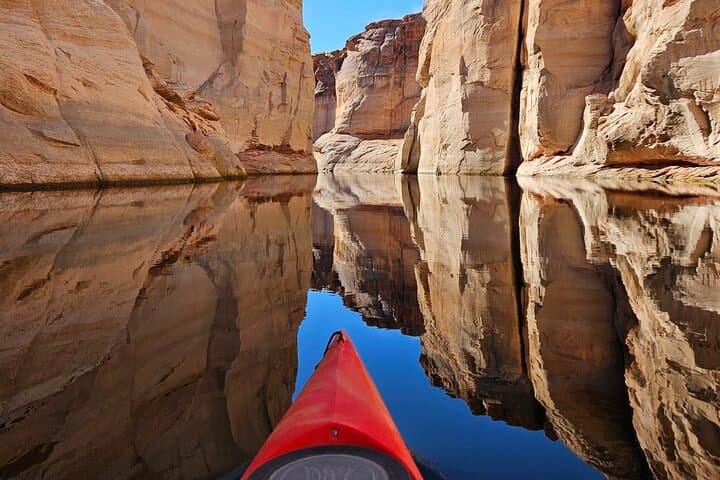
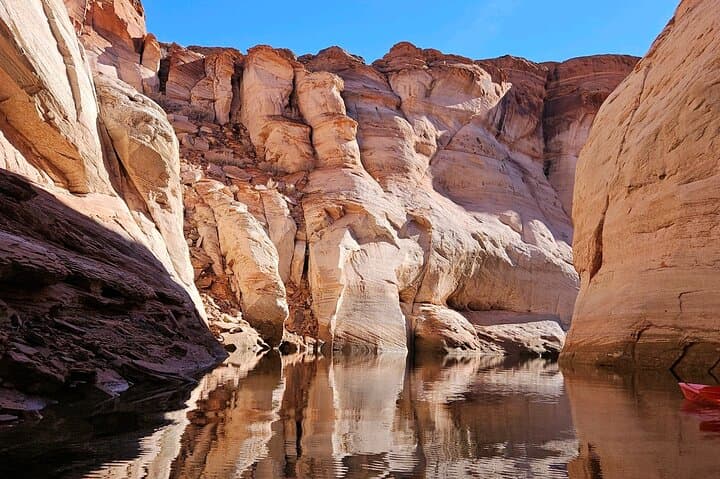
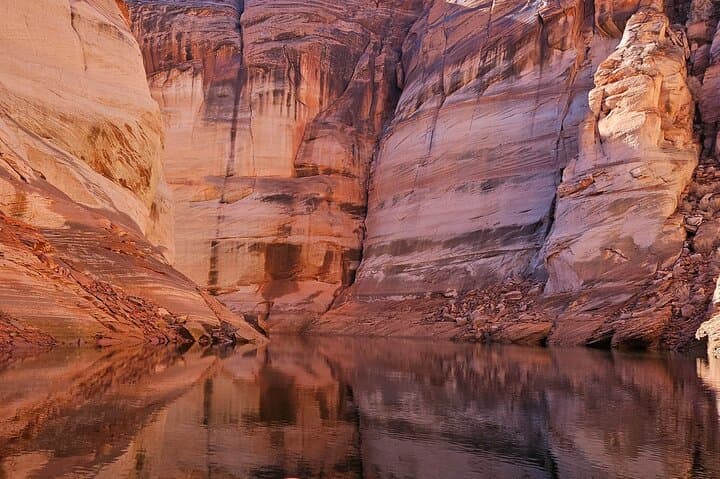
The paddle begins in glassy blue—Lake Powell stretches like a deliberate pause, the canyon walls watching as you push off. Your guide keeps a steady hand on the bow while the kayak slips into a narrowing throat of stone. Sunlight fractures into warm bands, painting the water with reds and oranges that seem to glow from within the rock. The canyon closes around you until the river of sky above is a ribbon; the only sounds are paddles whispering and the occasional drip from a carved lip.
Verified experiences and guided adventures in the surrounding area.
Operated by Paddle Powellz · Page, Arizona
The paddle begins in glassy blue—Lake Powell stretches like a deliberate pause, the canyon walls watching as you push off. Your guide keeps a steady hand on the bow while the kayak slips into a narrowing throat of stone. Sunlight fractures into warm bands, painting the water with reds and oranges that seem to glow from within the rock. The canyon closes around you until the river of sky above is a ribbon; the only sounds are paddles whispering and the occasional drip from a carved lip.
This is a different way to meet Antelope Canyon. Rather than approaching on foot from the rim, you enter from the water where Glen Canyon’s imprisoned river carved and later Lake Powell re-flooded the lower passages. The slot canyons here are recent in geologic terms—wind and flash floods scoured Navajo sandstone into sinuous, high-walled corridors. The area sits on the Navajo Nation; many of the pages of regional history are written in tribal stewardship, Navajo place names, and the dramatic changes brought by Glen Canyon Dam in the 1960s.
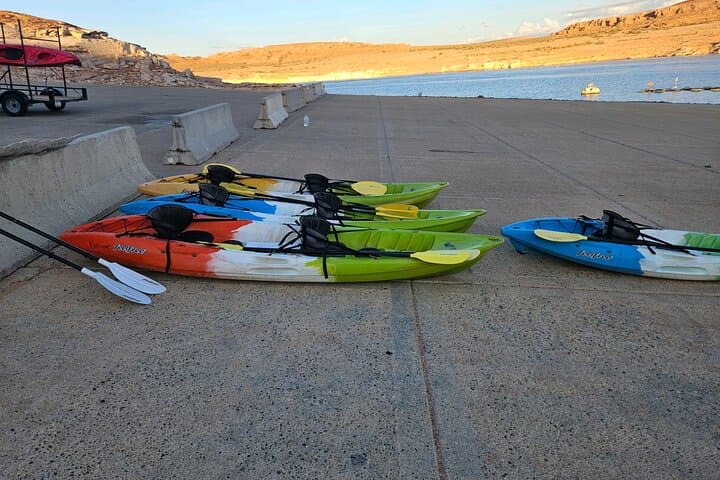
Culturally and practically, this tour threads two experiences: a guided kayak run through narrow canyon mouths and a hike through the lower stretches of the slot canyon. Guides carry the kayaks across steep sandy beaches so you can focus on the view, not the hauling. Water levels and recent monsoons rewrite the canyon daily—what you see one season may have new pools, new ledges, or a different beach the next.
If you go, aim for morning light to avoid heat and to catch the richest colors inside the canyon walls. Wear sturdy water shoes with good toe protection; the sand and slick stone are an unpredictable mix. Hydrate before you launch—desert sun plus reflective water is deceptively draining. Listen closely during the orientation: river etiquette, spotting for flash-flood windows, and signals are part of staying safe. The hike portion includes tight slots and occasional scrambling; take your time and let guides point out fragile surfaces and Navajo sandstone layers.
Photography is generous but tricky: mid-day shafts can produce spectacular color, but contrasts are high—bracket exposures and use a polarizer for glare on the water. Respect Navajo land rules and stay with licensed guides; these areas are managed to protect cultural sites and fragile geology. After the return paddle there’s often time for a quick swim off the kayak if conditions allow—an immediate, cooling counterpoint to desert heat.
This combined kayak-and-hike trip delivers two realities of the Colorado Plateau in one outing—the patient, slow work of water on stone and the modern, human-made lake that changed the face of the canyon. It’s equal parts motion and close-range geology, a hands-on, wet-boot approach to a landscape usually seen from above.
moderate.
4 hours.
Comfortable for people in average aerobic shape; requires basic paddling stamina and ability to scramble short, uneven sections.
No prior experience is required; guides provide basic instruction and the tour suits beginners comfortable with gentle paddling.
Shared tours are capped—this operator limits groups to around 11 paddlers plus guide for instruction and safety.
Guided access and permits are handled by the operator; independent access to some slot areas on Navajo land is restricted.
Children can join if they meet age/weight requirements and can follow guide instructions; check operator policies when booking.
Trips are canceled for unsafe conditions like flash-flood risk or high winds; you’ll be offered a refund if canceled at least 24 hours prior or for safety reasons.
Occasional swims off the kayaks are allowed if conditions are calm and the guide gives clearance.
The canyon sits on Navajo Nation land and the modern shoreline was reshaped after Glen Canyon Dam formed Lake Powell in the 1960s.
Tours operate under Navajo Nation regulations—stick to paths, pack out trash, and avoid touching delicate sandstone to preserve petroglyph areas and fragile formations.
Paddle Powellz operates guided outdoor trips and adventures with an emphasis on safety, stewardship, and memorable experiences.
The paddle begins in glassy blue—Lake Powell stretches like a deliberate pause, the canyon walls watching as you push off. Your guide keeps a steady hand on the bow while the kayak slips into a narrowing throat of stone. Sunlight fractures into warm bands, painting the water with reds and oranges that seem to glow from within the rock. The canyon closes around you until the river of sky above is a ribbon; the only sounds are paddles whispering and the occasional drip from a carved lip.
The paddle begins in glassy blue—Lake Powell stretches like a deliberate pause, the canyon walls watching as you push off. Your guide keeps a steady hand on the bow while the kayak slips into a narrowing throat of stone. Sunlight fractures into warm bands, painting the water with reds and oranges that seem to glow from within the rock. The canyon closes around you until the river of sky above is a ribbon; the only sounds are paddles whispering and the occasional drip from a carved lip.
This is a different way to meet Antelope Canyon. Rather than approaching on foot from the rim, you enter from the water where Glen Canyon’s imprisoned river carved and later Lake Powell re-flooded the lower passages. The slot canyons here are recent in geologic terms—wind and flash floods scoured Navajo sandstone into sinuous, high-walled corridors. The area sits on the Navajo Nation; many of the pages of regional history are written in tribal stewardship, Navajo place names, and the dramatic changes brought by Glen Canyon Dam in the 1960s.
Culturally and practically, this tour threads two experiences: a guided kayak run through narrow canyon mouths and a hike through the lower stretches of the slot canyon. Guides carry the kayaks across steep sandy beaches so you can focus on the view, not the hauling. Water levels and recent monsoons rewrite the canyon daily—what you see one season may have new pools, new ledges, or a different beach the next.
If you go, aim for morning light to avoid heat and to catch the richest colors inside the canyon walls. Wear sturdy water shoes with good toe protection; the sand and slick stone are an unpredictable mix. Hydrate before you launch—desert sun plus reflective water is deceptively draining. Listen closely during the orientation: river etiquette, spotting for flash-flood windows, and signals are part of staying safe. The hike portion includes tight slots and occasional scrambling; take your time and let guides point out fragile surfaces and Navajo sandstone layers.
Photography is generous but tricky: mid-day shafts can produce spectacular color, but contrasts are high—bracket exposures and use a polarizer for glare on the water. Respect Navajo land rules and stay with licensed guides; these areas are managed to protect cultural sites and fragile geology. After the return paddle there’s often time for a quick swim off the kayak if conditions allow—an immediate, cooling counterpoint to desert heat.
This combined kayak-and-hike trip delivers two realities of the Colorado Plateau in one outing—the patient, slow work of water on stone and the modern, human-made lake that changed the face of the canyon. It’s equal parts motion and close-range geology, a hands-on, wet-boot approach to a landscape usually seen from above.