THE ADVENTURE COLLECTIVE® · Independent discovery and booking for outdoor travel

Watch sulfur burn blue beneath the Ijen caldera and meet the miners who harvest it on this overnight-start private transport tour from Banyuwangi. Practical nighttime hiking, sulfur-gas precautions, and sunrise over a turquoise crater lake make this an unforgettable, gritty experience.
Watch sulfur burn blue beneath the Ijen caldera and meet the miners who harvest it on this overnight-start private transport tour from Banyuwangi. Practical nighttime hiking, sulfur-gas precautions, and sunrise over a turquoise crater lake make this an unforgettable, gritty experience.
The van eases away from Banyuwangi and the road becomes a ribbon of dark jungle; by midnight the air sharpens and the crater's sulfur scent begins to insist on your attention.
Verified experiences and guided adventures in the surrounding area.
Operated by Java Online Driver - Day Tour · Banyuwangi, East Java
The van eases away from Banyuwangi and the road becomes a ribbon of dark jungle; by midnight the air sharpens and the crater's sulfur scent begins to insist on your attention.
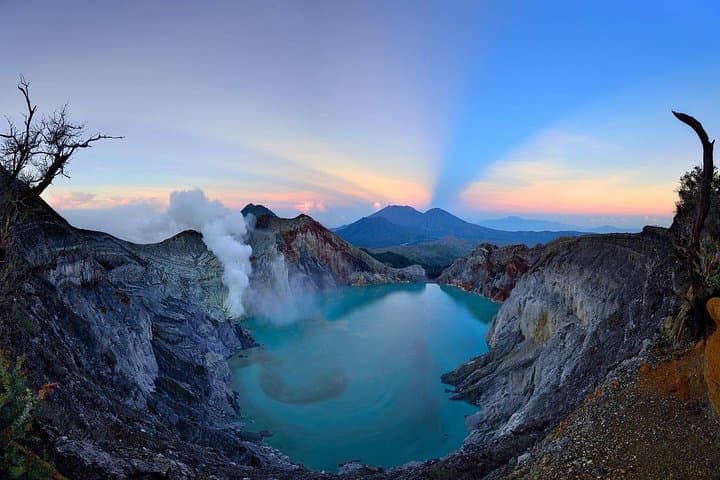
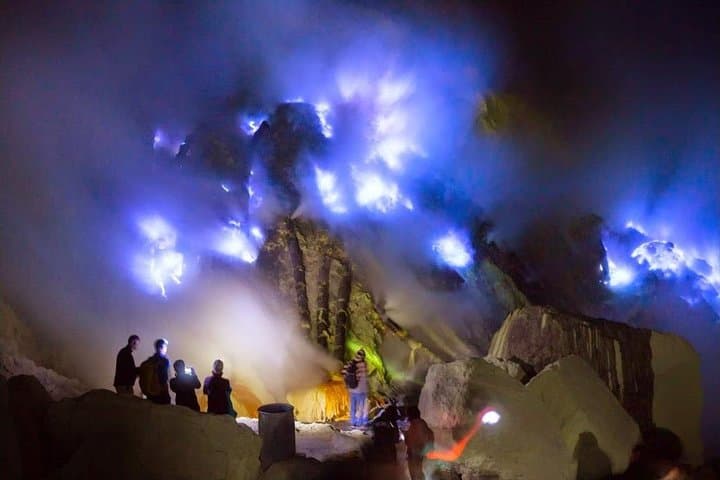
Kawah Ijen is known for its electric blue flames—a rare combustion of sulfur gases at the crater floor—and a sunrise that paints the acidic lake a startling turquoise. The landscape is young volcanic rock: knife-edged ridges, loose scree, and the crater lip where traditional miners shoulder baskets of molten sulfur. This place is both geological classroom and living culture: sulfur extraction has shaped local livelihoods for generations, while the caldera itself formed from repeated eruptions and collapse.
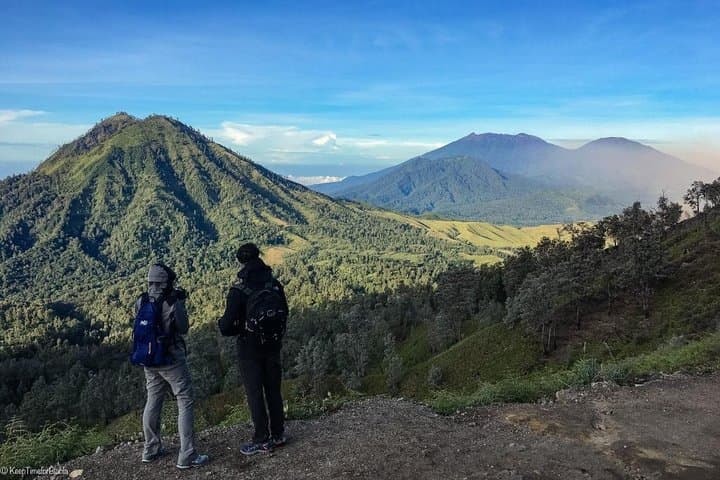
Expect a steep night hike on roughly 3 km of uphill trail with an elevation change of about 300–400 m from the parking area to the rim; firm fitness and steady footing matter. The surface alternates packed dirt, loose gravel, and occasional steps carved by miners. Wind and cold at the rim can bite—temperatures often drop into single digits before dawn.
Practical guidance: start late-night (around 00:30–02:00 pickup from Banyuwangi) to reach the crater for blue fire and sunrise; carry a reliable headlamp, a rated mask or scarf for sulfur fumes, warm layers, and at least 1.5 liters of water. Guides and drivers handle logistics and route-finding, but good footwear and steady knees make the difference. Respect the miners working below and the fragile caldera—stay on the trail, keep distance from fumaroles, and leave no trace.
moderate.
10 hours (overnight start, includes transport).
Participants should have a moderate level of fitness — comfortable with a steep 1–2 hour night ascent and unsteady terrain.
From the common parking area to the rim is roughly 1–2 hours uphill (approx. 1.5–3 km depending on start point) with a similar descent time; total walking is moderate in length.
Blue flame visibility depends on volcanic activity, wind and timing; guides aim for the best window but blue fire cannot be guaranteed.
Guides know safer vantage points; wearing a mask and keeping distance from vents greatly reduces exposure—those with serious respiratory issues should avoid close exposure.
This experience is not recommended for pregnant travelers or those with serious back/heart conditions; operators often limit participation by age—confirm with the provider.
The Ijen caldera is part of a volcanic complex on East Java; traditional sulfur mining methods have persisted for generations despite modern pressures.
The caldera ecosystem is fragile and affected by tourism and mining; stick to trails, avoid littering, and support operators who follow local regulations and fair pay practices.
Java Online Driver - Day Tour operates guided outdoor trips and adventures with an emphasis on safety, stewardship, and memorable experiences.
The van eases away from Banyuwangi and the road becomes a ribbon of dark jungle; by midnight the air sharpens and the crater's sulfur scent begins to insist on your attention.
The van eases away from Banyuwangi and the road becomes a ribbon of dark jungle; by midnight the air sharpens and the crater's sulfur scent begins to insist on your attention.
Kawah Ijen is known for its electric blue flames—a rare combustion of sulfur gases at the crater floor—and a sunrise that paints the acidic lake a startling turquoise. The landscape is young volcanic rock: knife-edged ridges, loose scree, and the crater lip where traditional miners shoulder baskets of molten sulfur. This place is both geological classroom and living culture: sulfur extraction has shaped local livelihoods for generations, while the caldera itself formed from repeated eruptions and collapse.
Expect a steep night hike on roughly 3 km of uphill trail with an elevation change of about 300–400 m from the parking area to the rim; firm fitness and steady footing matter. The surface alternates packed dirt, loose gravel, and occasional steps carved by miners. Wind and cold at the rim can bite—temperatures often drop into single digits before dawn.
Practical guidance: start late-night (around 00:30–02:00 pickup from Banyuwangi) to reach the crater for blue fire and sunrise; carry a reliable headlamp, a rated mask or scarf for sulfur fumes, warm layers, and at least 1.5 liters of water. Guides and drivers handle logistics and route-finding, but good footwear and steady knees make the difference. Respect the miners working below and the fragile caldera—stay on the trail, keep distance from fumaroles, and leave no trace.