THE ADVENTURE COLLECTIVE® · Independent discovery and booking for outdoor travel

A short, three-day trek from Pokhara leads to Kaupche Glacier Lake via Sikles and the Madi River. This newly opened, less-crowded route combines village culture, moraine-strewn trails, and sweeping glacial views.
A short, three-day trek from Pokhara leads to Kaupche Glacier Lake via Sikles and the Madi River. This newly opened, less-crowded route combines village culture, moraine-strewn trails, and sweeping glacial views.
A thin mountain wind cuts across an open ridge as the jeep drops you at a dirt trailhead hours north of Pokhara. The valley ahead is raw—steep terraces, a ribbon of the Madi River, and pine-scrub slopes that lead toward a compact glacial cirque. Kaupche Glacier Lake holds a quiet authority; the water glints cold, and ice-sculpted rocks push the shoreline into sharp, tactile lines.
Verified experiences and guided adventures in the surrounding area.
Operated by Nepal Mountain Club Pvt Ltd · Pokhara, Gandaki Province
A thin mountain wind cuts across an open ridge as the jeep drops you at a dirt trailhead hours north of Pokhara. The valley ahead is raw—steep terraces, a ribbon of the Madi River, and pine-scrub slopes that lead toward a compact glacial cirque. Kaupche Glacier Lake holds a quiet authority; the water glints cold, and ice-sculpted rocks push the shoreline into sharp, tactile lines.
This route threads through traditional Gurung villages like Sikles and the less-frequented hamlet of Hugu, offering a slice of local mountain life along trails recently opened to trekkers. Geologically the lake sits at a blunt glacial terminus carved during late-Holocene ice activity; moraine ridges, steep scree, and small waterfalls such as Idi mark the transition from cultivated land to high alpine.
Culturally, communities here balance subsistence farming with growing eco-tourism under the Annapurna Conservation Area regulations—permits and TIMS are part of the rhythm. Expect simple guesthouse stays, cooked dal-bhat, and evenings lit by lanterns.
Practically: the trek is compact (about 3 days with 2 nights in local lodges), moderate effort with short steep sections and loose talus near the lake. Trails are exposed above Mahuri Bhir and can be muddy after rain. Guides and private 4WD transfers from Lakeside Pokhara simplify logistics and navigation on a new, less-crowded route. Bring layered clothing for cold mornings, a reliable daypack, and water treatment. Timing your trek for clear weather rewards you with wide views back to the Annapurna massif; even on overcast days, the landscape’s rawness and local hospitality make the effort worthwhile.
moderate.
3 days.
Good general fitness with experience on uneven trails; able to hike 4–6 hours a day with a light pack.
The itinerary is typically 3 days with 2 nights in guesthouses—one night en route in a village and one near the lake area.
Yes; this area falls under the Annapurna Conservation Area rules—ACAP and TIMS permits are usually handled by the operator and included in the package.
Autumn (Sept–Nov) and spring (Mar–May) offer the most stable weather and clear mountain views; monsoon months bring mud and limited visibility.
The trek reaches moderate elevations where acclimatization matters—follow a gradual ascent profile, stay hydrated, and monitor symptoms.
The trail passes traditional Gurung villages that have practiced terrace farming and transhumance for centuries; cultural exchanges with trekkers are recent but increasing.
Travel here is regulated by ACAP rules—stick to established trails, minimize waste, and use local guides to support community-based tourism.
Nepal Mountain Club Pvt Ltd operates guided outdoor trips and adventures with an emphasis on safety, stewardship, and memorable experiences.


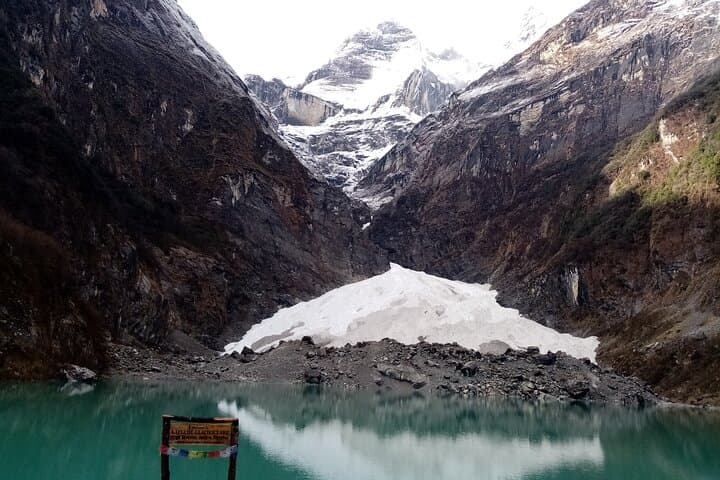
A thin mountain wind cuts across an open ridge as the jeep drops you at a dirt trailhead hours north of Pokhara. The valley ahead is raw—steep terraces, a ribbon of the Madi River, and pine-scrub slopes that lead toward a compact glacial cirque. Kaupche Glacier Lake holds a quiet authority; the water glints cold, and ice-sculpted rocks push the shoreline into sharp, tactile lines.
A thin mountain wind cuts across an open ridge as the jeep drops you at a dirt trailhead hours north of Pokhara. The valley ahead is raw—steep terraces, a ribbon of the Madi River, and pine-scrub slopes that lead toward a compact glacial cirque. Kaupche Glacier Lake holds a quiet authority; the water glints cold, and ice-sculpted rocks push the shoreline into sharp, tactile lines.
This route threads through traditional Gurung villages like Sikles and the less-frequented hamlet of Hugu, offering a slice of local mountain life along trails recently opened to trekkers. Geologically the lake sits at a blunt glacial terminus carved during late-Holocene ice activity; moraine ridges, steep scree, and small waterfalls such as Idi mark the transition from cultivated land to high alpine.
Culturally, communities here balance subsistence farming with growing eco-tourism under the Annapurna Conservation Area regulations—permits and TIMS are part of the rhythm. Expect simple guesthouse stays, cooked dal-bhat, and evenings lit by lanterns.
Practically: the trek is compact (about 3 days with 2 nights in local lodges), moderate effort with short steep sections and loose talus near the lake. Trails are exposed above Mahuri Bhir and can be muddy after rain. Guides and private 4WD transfers from Lakeside Pokhara simplify logistics and navigation on a new, less-crowded route. Bring layered clothing for cold mornings, a reliable daypack, and water treatment. Timing your trek for clear weather rewards you with wide views back to the Annapurna massif; even on overcast days, the landscape’s rawness and local hospitality make the effort worthwhile.