THE ADVENTURE COLLECTIVE® · Independent discovery and booking for outdoor travel

Head into Kaudulla’s dry plains on a private 4x4 safari to watch elephant herds gather at an ancient reservoir. This three-hour game drive blends tangible history—the 3rd-century tank—and concentrated wildlife spotting in a compact, accessible park.
Head into Kaudulla’s dry plains on a private 4x4 safari to watch elephant herds gather at an ancient reservoir. This three-hour game drive blends tangible history—the 3rd-century tank—and concentrated wildlife spotting in a compact, accessible park.
The jeep rises and settles on the red-dust track, the Kaudulla tank glittering like a raw mirror to the right. Wary egrets lift off in impatience and a distant rumble—elephants moving as a single decision—draws attention toward a line of dark backs slipping through scrub. A private 4x4 safari here feels intimate: the landscape opens in broad, dry plains punctuated by patches of dry evergreen forest and abandoned cultivation, all orbiting the reservoir that created this wildlife magnet.
Verified experiences and guided adventures in the surrounding area.
Operated by Lakpura LLC · Habarana, North Central Province
The jeep rises and settles on the red-dust track, the Kaudulla tank glittering like a raw mirror to the right. Wary egrets lift off in impatience and a distant rumble—elephants moving as a single decision—draws attention toward a line of dark backs slipping through scrub. A private 4x4 safari here feels intimate: the landscape opens in broad, dry plains punctuated by patches of dry evergreen forest and abandoned cultivation, all orbiting the reservoir that created this wildlife magnet.
Built around an ancient irrigation tank commissioned by King Mahasena in the 3rd century AD, Kaudulla's modern park (established 2002) occupies roughly 6,900 hectares and functions as a seasonal conduit between jungle corridors. Geology is simple—low ridges of metamorphic rock, seasonally flooded grasslands, and sandy causeways—yet the behavioral choreography of elephants, waterbirds, and deer writes a complicated script every day.
Local culture leans on a long history of water engineering and village agriculture; guides and drivers often point out old bunds and sluices that still shape the water table. For travelers, the practical side matters: safaris run in rough terrain, typically in open-topped 4x4s with a maximum of six passengers, and pickups are commonly arranged from Habarana or park gates within a short radius.
To maximize sightings, plan a dawn or late-afternoon drive during the dry season (peaks around August–September). Bring sun protection, insect repellent, and binoculars; stay in the vehicle, follow the guide’s cues, and leave no trace—this is a working landscape where small choices matter to wildlife and local communities alike.
easy.
3 hours.
Minimal fitness required—able to step into/out of a 4x4 and sit for the duration.
The private safari is approximately three hours (180 minutes), typically conducted in a 4x4 game vehicle.
Late dry season—around August to October—concentrates elephant herds around the Kaudulla tank, though sightings can occur year-round.
No—the drive is suitable for most fitness levels; you'll be sitting in a 4x4 and making short stops for viewing.
Yes—many operators include free pickup/drop-off within a short radius of the park gate; confirm your exact pickup point when booking.
Kaudulla centers on an ancient irrigation tank rebuilt under King Mahasena in the 3rd century AD; the tank’s revival shaped local agriculture and now supports the park’s wildlife.
Kaudulla functions as a seasonal corridor to Minneriya, so limiting noise, staying in vehicles, and avoiding feeding wildlife helps preserve natural behaviors and habitat integrity.
Lakpura LLC operates guided outdoor trips and adventures with an emphasis on safety, stewardship, and memorable experiences.
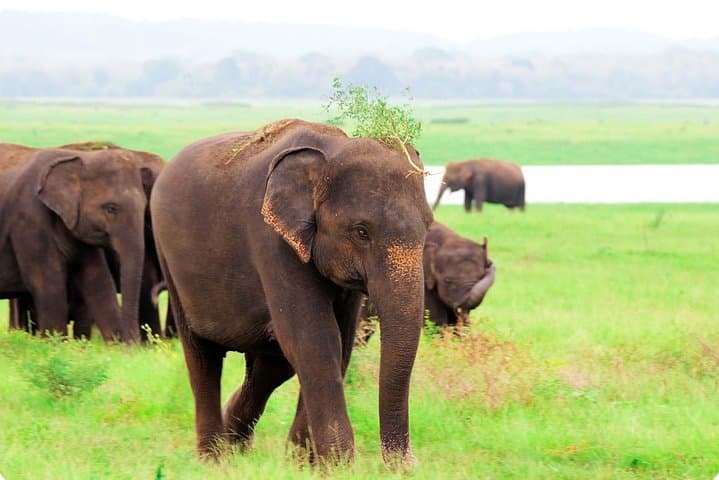
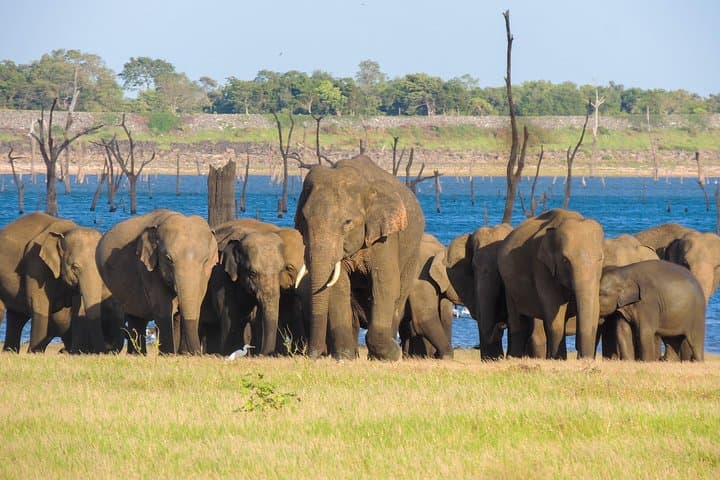
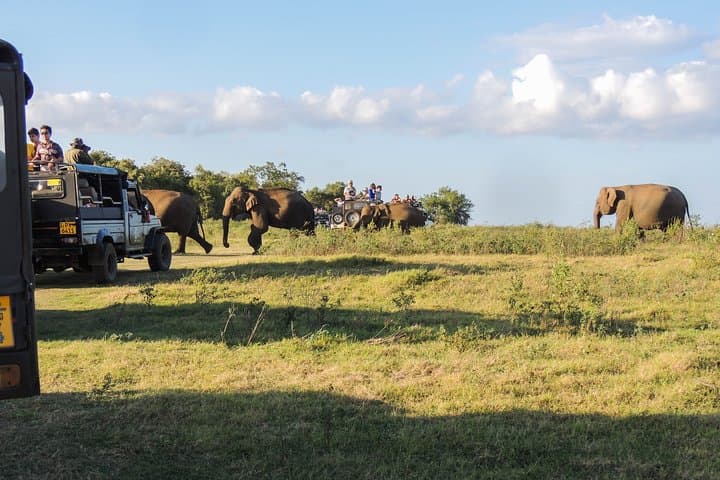
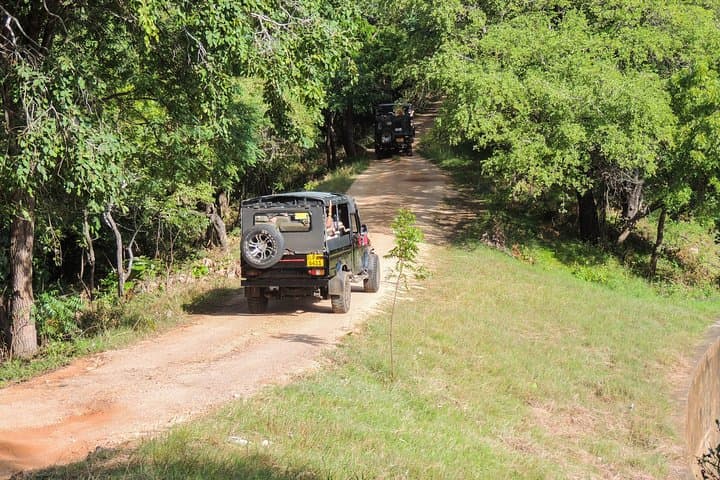
The jeep rises and settles on the red-dust track, the Kaudulla tank glittering like a raw mirror to the right. Wary egrets lift off in impatience and a distant rumble—elephants moving as a single decision—draws attention toward a line of dark backs slipping through scrub. A private 4x4 safari here feels intimate: the landscape opens in broad, dry plains punctuated by patches of dry evergreen forest and abandoned cultivation, all orbiting the reservoir that created this wildlife magnet.
The jeep rises and settles on the red-dust track, the Kaudulla tank glittering like a raw mirror to the right. Wary egrets lift off in impatience and a distant rumble—elephants moving as a single decision—draws attention toward a line of dark backs slipping through scrub. A private 4x4 safari here feels intimate: the landscape opens in broad, dry plains punctuated by patches of dry evergreen forest and abandoned cultivation, all orbiting the reservoir that created this wildlife magnet.
Built around an ancient irrigation tank commissioned by King Mahasena in the 3rd century AD, Kaudulla's modern park (established 2002) occupies roughly 6,900 hectares and functions as a seasonal conduit between jungle corridors. Geology is simple—low ridges of metamorphic rock, seasonally flooded grasslands, and sandy causeways—yet the behavioral choreography of elephants, waterbirds, and deer writes a complicated script every day.
Local culture leans on a long history of water engineering and village agriculture; guides and drivers often point out old bunds and sluices that still shape the water table. For travelers, the practical side matters: safaris run in rough terrain, typically in open-topped 4x4s with a maximum of six passengers, and pickups are commonly arranged from Habarana or park gates within a short radius.
To maximize sightings, plan a dawn or late-afternoon drive during the dry season (peaks around August–September). Bring sun protection, insect repellent, and binoculars; stay in the vehicle, follow the guide’s cues, and leave no trace—this is a working landscape where small choices matter to wildlife and local communities alike.