THE ADVENTURE COLLECTIVE® · Independent discovery and booking for outdoor travel

Watch herds converge on a broad reservoir at dawn on a private 4x4 jeep safari through Kaudulla National Park. This practical guide covers when to go, what you’ll see and how to prepare for a safe, high-impact wildlife experience.
Watch herds converge on a broad reservoir at dawn on a private 4x4 jeep safari through Kaudulla National Park. This practical guide covers when to go, what you’ll see and how to prepare for a safe, high-impact wildlife experience.
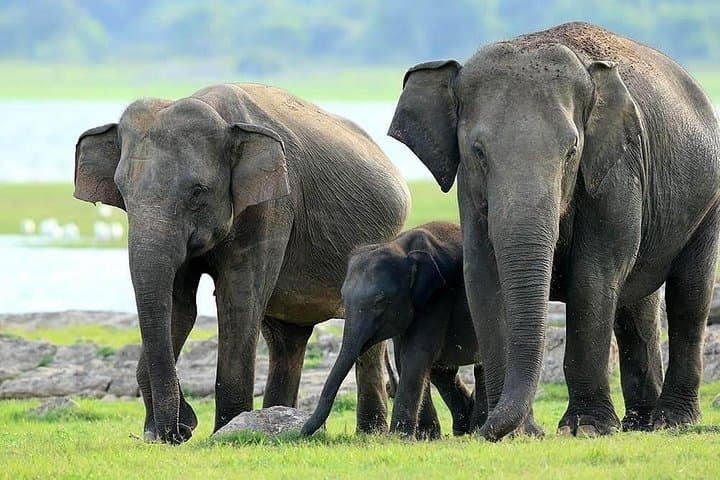
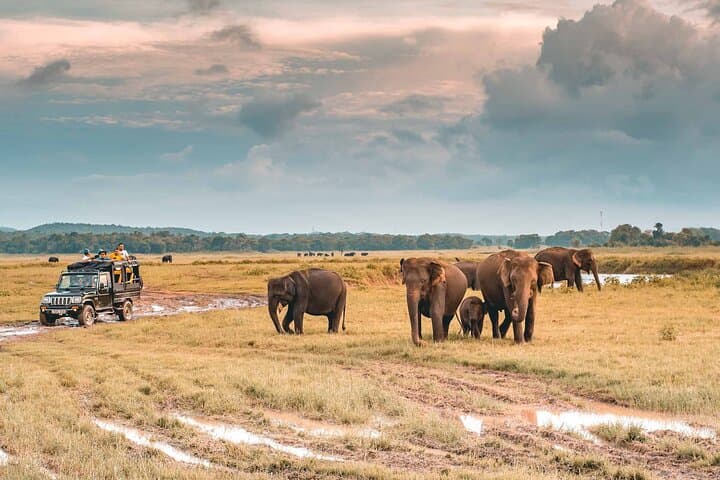
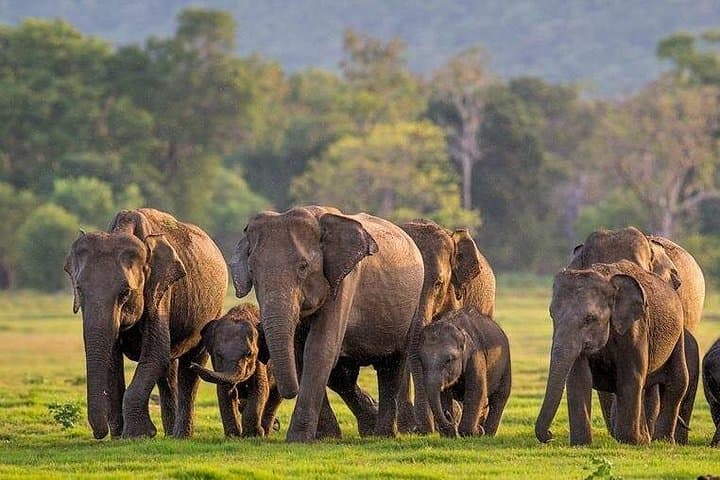
The jeep crunches over red-dust track and a shallow haze lifts off the reservoir; a herd moves like a low tide across the grass, trunks probing the water. Early light turns the broad plains around Kaudulla into a stage for elephant families, monitor lizards slipping into reed beds and kingfishers flashing along the tank edge.
Verified experiences and guided adventures in the surrounding area.
Operated by Travceylon Leisure · Habarana, North Central Province
The jeep crunches over red-dust track and a shallow haze lifts off the reservoir; a herd moves like a low tide across the grass, trunks probing the water. Early light turns the broad plains around Kaudulla into a stage for elephant families, monitor lizards slipping into reed beds and kingfishers flashing along the tank edge.
Kaudulla sits in Sri Lanka’s North Central Province, part of an ancient irrigation landscape whose tanks date back centuries and were expanded during the Polonnaruwa period. Designated a national park in 2002, Kaudulla protects seasonally congregating elephants drawn to the park’s reservoir and surrounding grasslands. Geologically the area is gently undulating Precambrian rock with sandy loam soils that support dry-zone scrub and grassy wetlands.
Culturally the park lies within communities that have long-managed water and rice cultivation; local guides often point out irrigation features and temple ruins near the approach road. Expect sightings of Asian elephants, toque macaques, marsh crocodiles and a rich bird list; leopards occur but are rarely seen on daytime safaris.
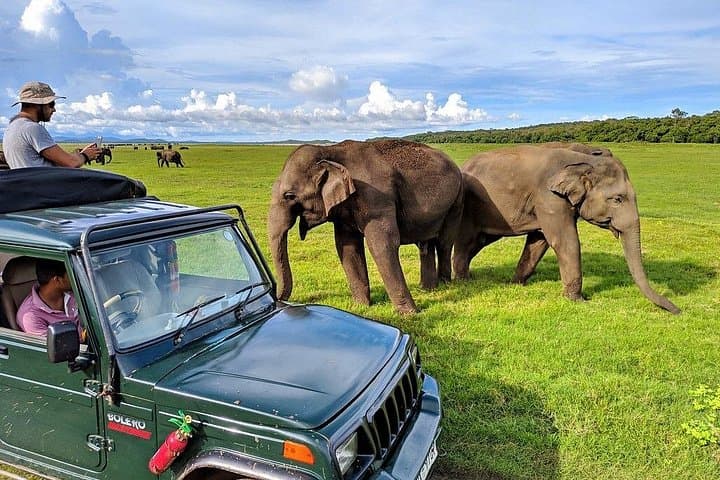
Practically, safaris run in 3–4 hour blocks by private 4x4 jeep. Arrive at first light for the quietest viewing and to avoid midday heat; dress in muted colors, bring binoculars and insect repellent, and keep a respectful distance from animals. Vehicles stay on designated tracks; follow ranger guidance and avoid sudden noises around herds. The best months for large gatherings are July–October during the dry period, though wildlife viewing is possible year-round. A jeep safari here is as much about patient watching as it is about the thrill of an unexpected encounter.
easy.
3 hours.
Suitable for most fitness levels; activity involves sitting in a jeep with occasional short walks at the park edge.
The dry period between July and October often concentrates herds around the reservoir, but elephants can be seen year-round depending on local water availability.
This particular safari includes the park entrance ticket and pickup within a small radius of the park gate; confirm pickup details with your operator when booking.
Safaris are conducted in closed or open-top 4x4s; they are generally suitable for all ages but not recommended for guests with serious spinal or cardiovascular conditions.
No—guides require guests to remain in the vehicle and follow instructions to avoid stressing wildlife and to keep everyone safe.
Kaudulla’s reservoir forms part of an ancient irrigation network expanded during the Polonnaruwa era; the park was designated in 2002 to protect dry-zone elephants and wetlands.
Tourism supports anti-poaching and monitoring, but visitors should avoid feeding wildlife, keep to tracks and minimize noise to reduce disturbance to elephants and breeding birds.
Travceylon Leisure operates guided outdoor trips and adventures with an emphasis on safety, stewardship, and memorable experiences.
The jeep crunches over red-dust track and a shallow haze lifts off the reservoir; a herd moves like a low tide across the grass, trunks probing the water. Early light turns the broad plains around Kaudulla into a stage for elephant families, monitor lizards slipping into reed beds and kingfishers flashing along the tank edge.
The jeep crunches over red-dust track and a shallow haze lifts off the reservoir; a herd moves like a low tide across the grass, trunks probing the water. Early light turns the broad plains around Kaudulla into a stage for elephant families, monitor lizards slipping into reed beds and kingfishers flashing along the tank edge.
Kaudulla sits in Sri Lanka’s North Central Province, part of an ancient irrigation landscape whose tanks date back centuries and were expanded during the Polonnaruwa period. Designated a national park in 2002, Kaudulla protects seasonally congregating elephants drawn to the park’s reservoir and surrounding grasslands. Geologically the area is gently undulating Precambrian rock with sandy loam soils that support dry-zone scrub and grassy wetlands.
Culturally the park lies within communities that have long-managed water and rice cultivation; local guides often point out irrigation features and temple ruins near the approach road. Expect sightings of Asian elephants, toque macaques, marsh crocodiles and a rich bird list; leopards occur but are rarely seen on daytime safaris.
Practically, safaris run in 3–4 hour blocks by private 4x4 jeep. Arrive at first light for the quietest viewing and to avoid midday heat; dress in muted colors, bring binoculars and insect repellent, and keep a respectful distance from animals. Vehicles stay on designated tracks; follow ranger guidance and avoid sudden noises around herds. The best months for large gatherings are July–October during the dry period, though wildlife viewing is possible year-round. A jeep safari here is as much about patient watching as it is about the thrill of an unexpected encounter.