THE ADVENTURE COLLECTIVE® · Independent discovery and booking for outdoor travel

Spend an hour on a volunteer-run micro-dairy in Kaua‘i’s Keapana valley, meeting goat kids, lambs and mini calves while learning hands-on milking and regenerative farm practices. Morning sessions increase the chance of milking and haltering demonstrations—expect private, family-friendly animal time tailored to your interests.
Spend an hour on a volunteer-run micro-dairy in Kaua‘i’s Keapana valley, meeting goat kids, lambs and mini calves while learning hands-on milking and regenerative farm practices. Morning sessions increase the chance of milking and haltering demonstrations—expect private, family-friendly animal time tailored to your interests.
The track drops through a citrus corridor and the air changes—tang of ripening fruit, the soft rustle of cane and the restless bleat of goat kids. Arrive early and the valley still holds ocean humidity; the young animals are awake and insistently curious, nudging pockets and laps until you meet their gaze.
Verified experiences and guided adventures in the surrounding area.
Operated by Wai & Aina · Kapaa, Hawaii
The track drops through a citrus corridor and the air changes—tang of ripening fruit, the soft rustle of cane and the restless bleat of goat kids. Arrive early and the valley still holds ocean humidity; the young animals are awake and insistently curious, nudging pockets and laps until you meet their gaze.
This is rural Kaua‘i beyond the resorts: small-scale agriculture carved from volcanic soil and nourished by frequent rains. The island’s geologic past—lava flows sculpted into valleys and terraces—creates pockets of fertile ground where volunteer-run micro-dairies and fruit forests take root. Culturally, farms like this revive old local practices: rotational grazing, water catchment and composting adapted for an island ecology.
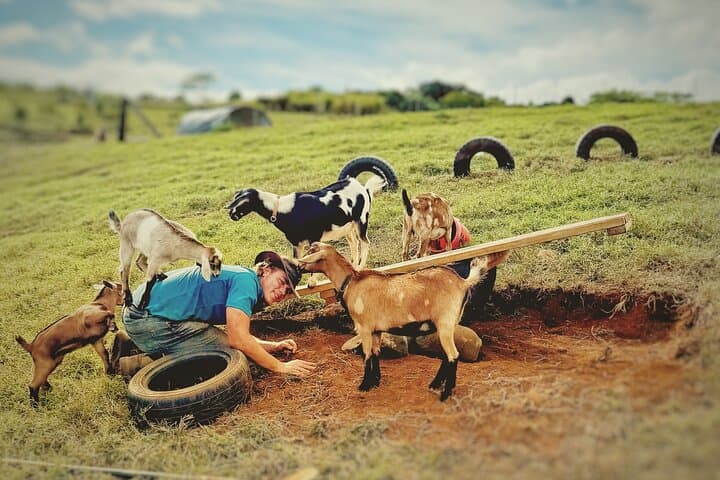
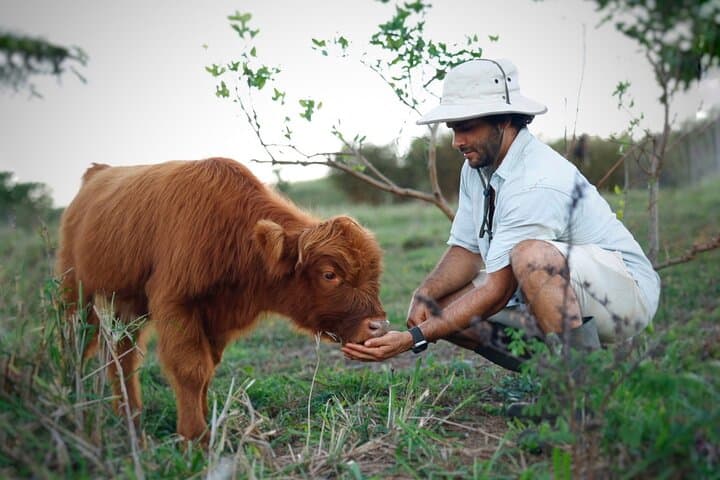
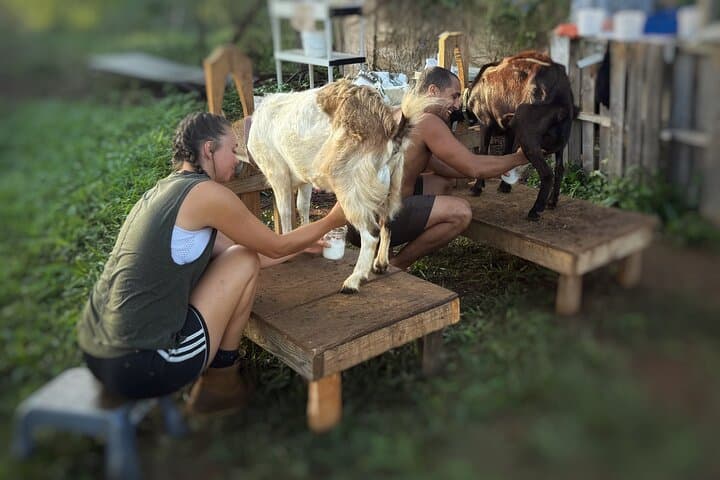
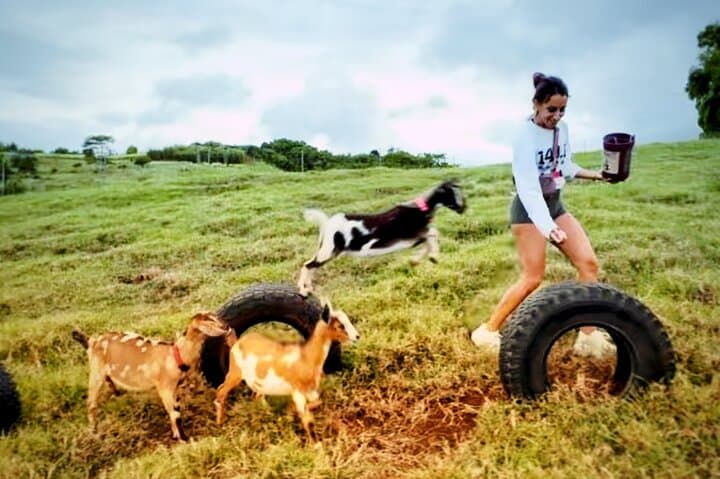
On the tour you’ll meet mini Nubian goats, lambs, calves and poultry; try bottle-feeding, brush or halter a mini cow, and learn basic milking techniques. Hosts explain regenerative practices—riparian buffers, fruit forest layers and community-focused production—that help maintain soil on steep slopes and protect nearshore waters.
Practical notes: sessions run about 45–60 minutes and are private and family-friendly. Morning slots often overlap with milking and halter work; wear closed-toe shoes and sun protection, and expect uneven gravel paths and soft mud after rains. The farm is adaptable for mobility needs if arranged in advance.
Bring a small camera, an open mind and patience—animals set the tempo here. Hydrate before you arrive, arrive on time to catch morning chores, and leave with a clearer sense of how island-scale farming ties animal care, water, and community stewardship together.
easy.
45–60 minutes.
Suitable for all fitness levels; participants should be steady on their feet for short walking and standing periods.
Yes; the activity is private and designed for visitors of all ages with guaranteed baby-animal interaction—supervision is required for young children.
The farm is wheelchair/stroller accessible with modifications; contact the operator in advance so staff can adapt the route or bring animals to you.
Sampling raw milk may be offered as part of the experience; staff will inform you about handling and any health advisories before tasting.
Public transport is available but requires a 25–30 minute walk from the Kealia stop; plan a taxi or rental car for direct access if mobility or timing is a concern.
Small-scale farms on Kaua‘i reflect a shift back to diversified local agriculture that blends traditional Hawaiian knowledge with regenerative practices introduced by community growers.
The farm emphasizes water catchment, riparian buffers and regenerative grazing to reduce erosion and protect nearshore reefs; visitor behavior—staying on paths and following biosecurity guidance—helps minimize impact.
Wai & Aina operates guided outdoor trips and adventures with an emphasis on safety, stewardship, and memorable experiences.
The track drops through a citrus corridor and the air changes—tang of ripening fruit, the soft rustle of cane and the restless bleat of goat kids. Arrive early and the valley still holds ocean humidity; the young animals are awake and insistently curious, nudging pockets and laps until you meet their gaze.
The track drops through a citrus corridor and the air changes—tang of ripening fruit, the soft rustle of cane and the restless bleat of goat kids. Arrive early and the valley still holds ocean humidity; the young animals are awake and insistently curious, nudging pockets and laps until you meet their gaze.
This is rural Kaua‘i beyond the resorts: small-scale agriculture carved from volcanic soil and nourished by frequent rains. The island’s geologic past—lava flows sculpted into valleys and terraces—creates pockets of fertile ground where volunteer-run micro-dairies and fruit forests take root. Culturally, farms like this revive old local practices: rotational grazing, water catchment and composting adapted for an island ecology.
On the tour you’ll meet mini Nubian goats, lambs, calves and poultry; try bottle-feeding, brush or halter a mini cow, and learn basic milking techniques. Hosts explain regenerative practices—riparian buffers, fruit forest layers and community-focused production—that help maintain soil on steep slopes and protect nearshore waters.
Practical notes: sessions run about 45–60 minutes and are private and family-friendly. Morning slots often overlap with milking and halter work; wear closed-toe shoes and sun protection, and expect uneven gravel paths and soft mud after rains. The farm is adaptable for mobility needs if arranged in advance.
Bring a small camera, an open mind and patience—animals set the tempo here. Hydrate before you arrive, arrive on time to catch morning chores, and leave with a clearer sense of how island-scale farming ties animal care, water, and community stewardship together.