THE ADVENTURE COLLECTIVE® · Independent discovery and booking for outdoor travel

Spend a long day from Reykjavík exploring Iceland’s south coast and a guided Katla ice cave accessed by a 40‑minute super‑jeep crossing. Expect waterfalls, black sand beaches, glacier gear, and a guide‑led glacier walk.
Spend a long day from Reykjavík exploring Iceland’s south coast and a guided Katla ice cave accessed by a 40‑minute super‑jeep crossing. Expect waterfalls, black sand beaches, glacier gear, and a guide‑led glacier walk.
A rumble of tires and cold air — the minibus pulls out of Reykjavík before dawn and the city shrinks to a line of streetlights. By midmorning you’re on a super‑jeep, seatbelt clicked, bouncing over raw black sand and glacial moraine toward Mýrdalsjökull. The glacier rides above you like a slow-moving sea; the guides point to the shadow of Katla beneath the ice and tell stories of past eruptions that reshaped this shoreline.
Verified experiences and guided adventures in the surrounding area.
Operated by Troll Expeditions · Vik, Southern Region
A rumble of tires and cold air — the minibus pulls out of Reykjavík before dawn and the city shrinks to a line of streetlights. By midmorning you’re on a super‑jeep, seatbelt clicked, bouncing over raw black sand and glacial moraine toward Mýrdalsjökull. The glacier rides above you like a slow-moving sea; the guides point to the shadow of Katla beneath the ice and tell stories of past eruptions that reshaped this shoreline.
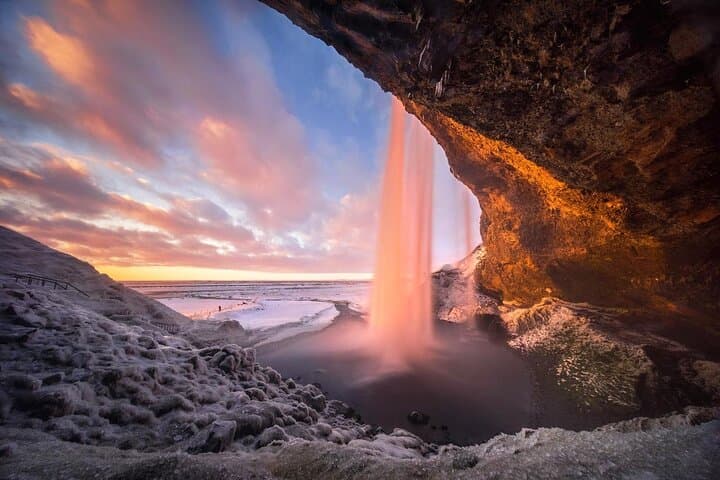
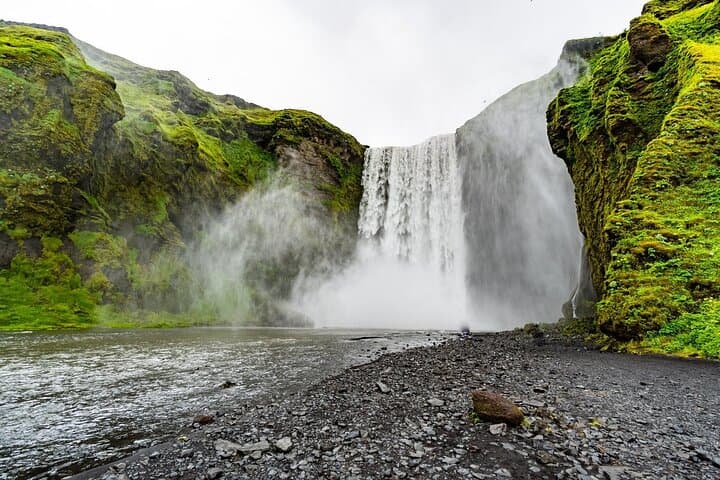
The route threads Icelandic history and geology: Seljalandsfoss and Skógafoss show how volcanic uplifts and meltwater carve cliffs and plunge 60 meters into mist. Reynisfjara’s basalt columns are cooled lava frozen into hexagonal ribs, and the black sand recalls the lava flows that fed the North Atlantic. Local guides blend folklore and science, explaining how Katla’s eruptions have driven both fear and adaptation in coastal communities.
Practically, the day is long — expect up to 12 hours including travel. The cave visit itself involves a guided approach over icy ground; helmets and crampons are provided and in‑use under instructor supervision. Weather dictates the plan: tours cancel in unsafe conditions. Bring waterproof boots, warm layers, snacks and a sense of flexibility.
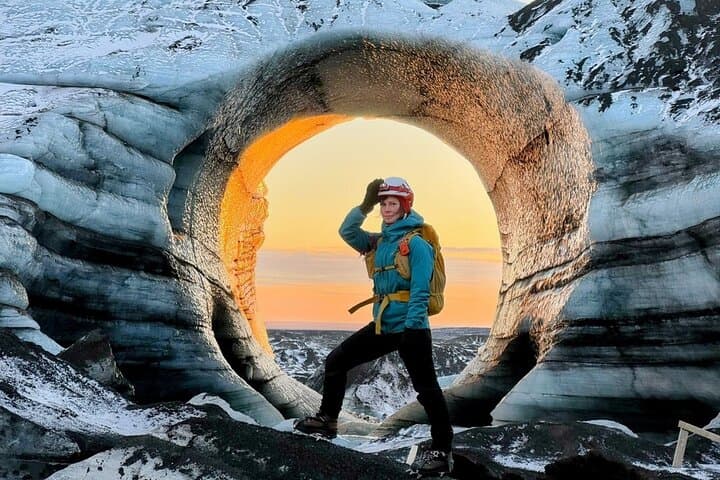
You’ll see the raw, lunar folds of Iceland’s south coast and stand in a cathedral of blue ice while guides manage safety and navigation. It’s not technical mountaineering, but it’s an expedition: respect the landscape, listen to your guide, and be ready for a day that moves fast between ocean, falls, and glacier.
moderate.
12 hours (including travel).
Suitable for most people with basic walking fitness; expect short glacier climbs and uneven terrain.
The tour runs about 12 hours from pickup in Reykjavík; be ready at your designated pickup stop around 8:00 AM and expect a full‑day excursion.
Children 8 and older may join; guides provide helmets and crampons and supervise glacier access, but parents should assess comfort with off‑road rides and icy walking.
Tours may be cancelled for safety; the operator typically offers a full refund if cancelled at least 24 hours prior or due to unsafe conditions.
Helmets, crampons and guide support are provided; bring warm layers, waterproof outerwear, sturdy boots, snacks and your camera.
The Katla volcano lies beneath the Mýrdalsjökull ice cap; historical Katla eruptions have periodically reshaped the south coast and influenced settlement patterns in the region.
Glacial and coastal environments are fragile—stay on marked approaches, follow guide instructions, and carry out all trash; warming trends are steadily changing ice cave accessibility.
Troll Expeditions operates guided outdoor trips and adventures with an emphasis on safety, stewardship, and memorable experiences.
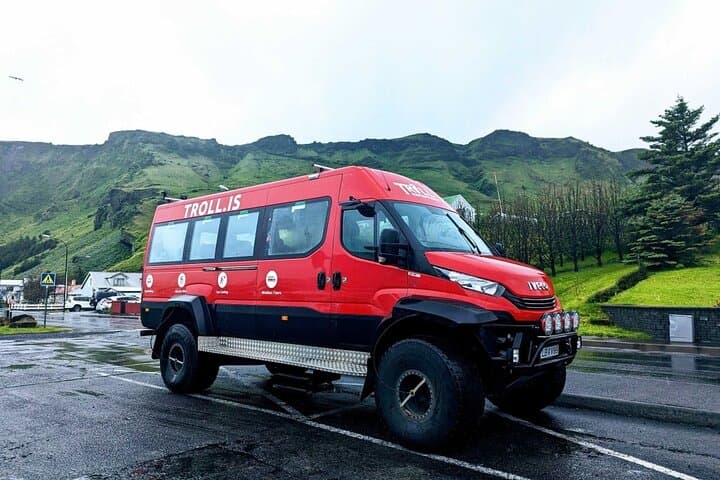
A rumble of tires and cold air — the minibus pulls out of Reykjavík before dawn and the city shrinks to a line of streetlights. By midmorning you’re on a super‑jeep, seatbelt clicked, bouncing over raw black sand and glacial moraine toward Mýrdalsjökull. The glacier rides above you like a slow-moving sea; the guides point to the shadow of Katla beneath the ice and tell stories of past eruptions that reshaped this shoreline.
A rumble of tires and cold air — the minibus pulls out of Reykjavík before dawn and the city shrinks to a line of streetlights. By midmorning you’re on a super‑jeep, seatbelt clicked, bouncing over raw black sand and glacial moraine toward Mýrdalsjökull. The glacier rides above you like a slow-moving sea; the guides point to the shadow of Katla beneath the ice and tell stories of past eruptions that reshaped this shoreline.
The route threads Icelandic history and geology: Seljalandsfoss and Skógafoss show how volcanic uplifts and meltwater carve cliffs and plunge 60 meters into mist. Reynisfjara’s basalt columns are cooled lava frozen into hexagonal ribs, and the black sand recalls the lava flows that fed the North Atlantic. Local guides blend folklore and science, explaining how Katla’s eruptions have driven both fear and adaptation in coastal communities.
Practically, the day is long — expect up to 12 hours including travel. The cave visit itself involves a guided approach over icy ground; helmets and crampons are provided and in‑use under instructor supervision. Weather dictates the plan: tours cancel in unsafe conditions. Bring waterproof boots, warm layers, snacks and a sense of flexibility.
You’ll see the raw, lunar folds of Iceland’s south coast and stand in a cathedral of blue ice while guides manage safety and navigation. It’s not technical mountaineering, but it’s an expedition: respect the landscape, listen to your guide, and be ready for a day that moves fast between ocean, falls, and glacier.