THE ADVENTURE COLLECTIVE® · Independent discovery and booking for outdoor travel

Walk Kathmandu’s living temples in a single day: watch rites on the Bagmati at Pashupatinath, spin prayers around Boudhanath’s stupa, and explore Bhaktapur’s Malla-era squares and craft lanes. This practical cultural circuit pairs direct spiritual encounters with clear guidance on etiquette and logistics.
Walk Kathmandu’s living temples in a single day: watch rites on the Bagmati at Pashupatinath, spin prayers around Boudhanath’s stupa, and explore Bhaktapur’s Malla-era squares and craft lanes. This practical cultural circuit pairs direct spiritual encounters with clear guidance on etiquette and logistics.
Morning light in Kathmandu finds the city half-awake: smoke from incense threads the air along the Bagmati, prayer flags snap above narrow alleys, and temple bells punctuate conversation. On this full-day cultural circuit, visitors move from the gold-roofed Pashupatinath riverside ghats to the vast white dome of Boudhanath and into the tiled streets of Bhaktapur—each stop offering its own rhythm of ritual and craft.
Verified experiences and guided adventures in the surrounding area.
Operated by Ganesh Tour · Kathmandu, Bagmati Province
Morning light in Kathmandu finds the city half-awake: smoke from incense threads the air along the Bagmati, prayer flags snap above narrow alleys, and temple bells punctuate conversation. On this full-day cultural circuit, visitors move from the gold-roofed Pashupatinath riverside ghats to the vast white dome of Boudhanath and into the tiled streets of Bhaktapur—each stop offering its own rhythm of ritual and craft.
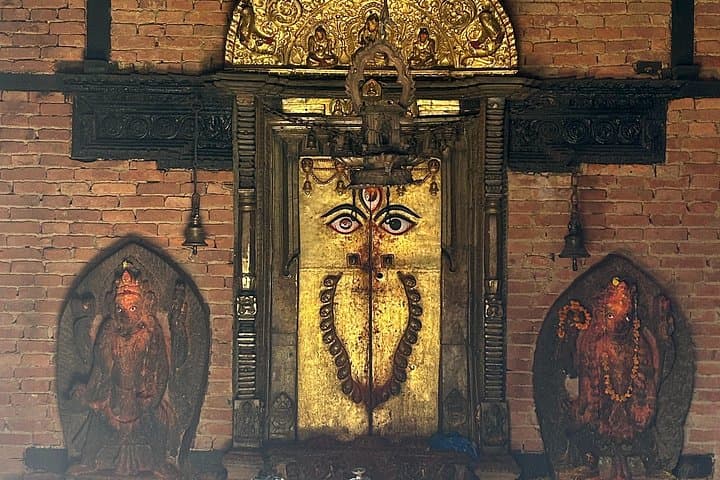
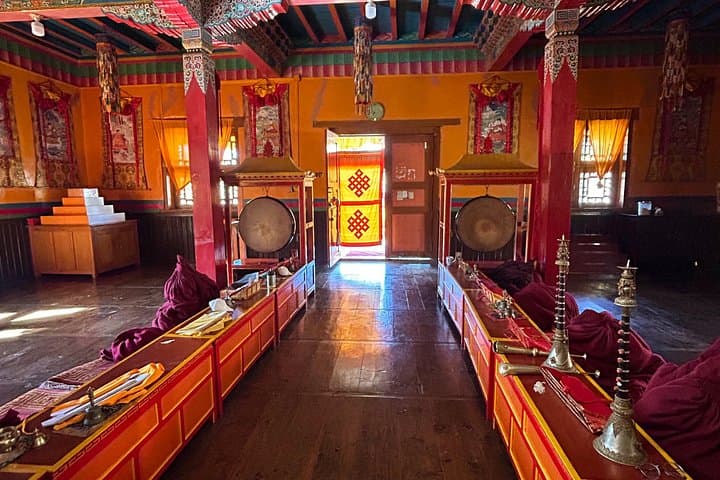
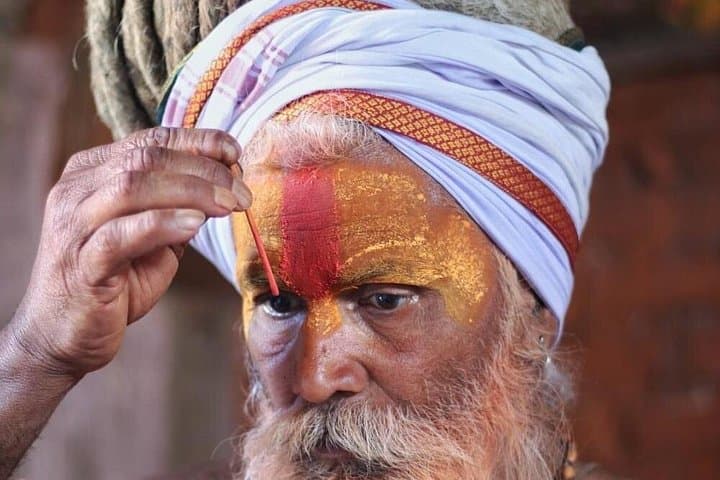
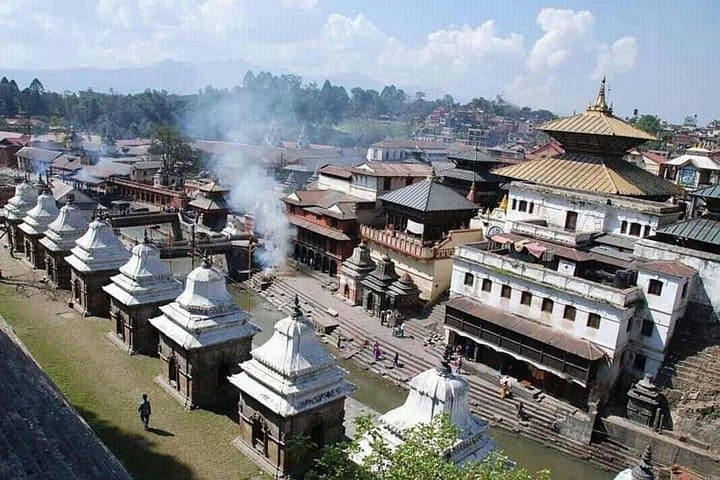
Pashupatinath is an active Shiva complex where pagoda roofs and silver-plated doors frame public cremation ghats across the Bagmati; the rituals here provide an unvarnished lesson in Hindu life and death. Boudhanath’s colossal stupa anchors a living Tibetan Buddhist quarter—circumambulation (kora), spinning prayer wheels, butter lamps and monk chants create a meditative pace. Bhaktapur, once a Malla kingdom, preserves carved woodwork, terraced courtyards and the five-story Nyatapola Temple—its stone guardians and potters’ squares reveal centuries of Newar craftsmanship.
Geology and history converge in the Kathmandu Valley: an elevated basin of alluvial soils that became a cultural crossroads for trans-Himalayan trade and religious exchange. Visitors should expect about 3–5 km of mostly level walking with short steps in temple complexes and minimal elevation change (valley floor ~1,350 m).
Practical guidance: dress modestly (shoulders and knees covered), carry cash for small offerings and local vendors, respect photography restrictions around inner sanctums, and plan for 6–7 hours including transit and time at each site. Start early to catch cooler air and avoid the mid-day sun; if you stay for Pashupatinath’s evening aarti, give yourself time for the return trip in city traffic.
easy.
6–7 hours.
Light walking on mostly flat terrain; suitable for most people with basic mobility.
No—non-Hindus are not permitted inside the inner sanctums at Pashupatinath, but visitors can observe rituals and view the ghats from designated areas across the Bagmati.
No—the itinerary involves gentle walking and short stairs; it’s rated easy and suitable for a wide range of fitness levels.
Meals are usually not included—bring local currency for food, donations and occasional entrance fees or tips unless your booking specifies otherwise.
Many parts of the tour have accessible transport and level areas, but some temple precincts and historic courtyards have steps or uneven surfaces—check accessibility details with the operator for specific needs.
The sites visited are part of the Kathmandu Valley UNESCO World Heritage area—Bhaktapur’s Malla-era palaces and Boudhanath’s Tibetan-influenced monastic quarter reflect centuries of regional religious exchange.
These living religious sites are sensitive to foot traffic and pollution—minimize plastic waste, avoid offerings of non-biodegradable materials, and follow local rules to reduce impact.
Ganesh Tour operates guided outdoor trips and adventures with an emphasis on safety, stewardship, and memorable experiences.
Morning light in Kathmandu finds the city half-awake: smoke from incense threads the air along the Bagmati, prayer flags snap above narrow alleys, and temple bells punctuate conversation. On this full-day cultural circuit, visitors move from the gold-roofed Pashupatinath riverside ghats to the vast white dome of Boudhanath and into the tiled streets of Bhaktapur—each stop offering its own rhythm of ritual and craft.
Morning light in Kathmandu finds the city half-awake: smoke from incense threads the air along the Bagmati, prayer flags snap above narrow alleys, and temple bells punctuate conversation. On this full-day cultural circuit, visitors move from the gold-roofed Pashupatinath riverside ghats to the vast white dome of Boudhanath and into the tiled streets of Bhaktapur—each stop offering its own rhythm of ritual and craft.
Pashupatinath is an active Shiva complex where pagoda roofs and silver-plated doors frame public cremation ghats across the Bagmati; the rituals here provide an unvarnished lesson in Hindu life and death. Boudhanath’s colossal stupa anchors a living Tibetan Buddhist quarter—circumambulation (kora), spinning prayer wheels, butter lamps and monk chants create a meditative pace. Bhaktapur, once a Malla kingdom, preserves carved woodwork, terraced courtyards and the five-story Nyatapola Temple—its stone guardians and potters’ squares reveal centuries of Newar craftsmanship.
Geology and history converge in the Kathmandu Valley: an elevated basin of alluvial soils that became a cultural crossroads for trans-Himalayan trade and religious exchange. Visitors should expect about 3–5 km of mostly level walking with short steps in temple complexes and minimal elevation change (valley floor ~1,350 m).
Practical guidance: dress modestly (shoulders and knees covered), carry cash for small offerings and local vendors, respect photography restrictions around inner sanctums, and plan for 6–7 hours including transit and time at each site. Start early to catch cooler air and avoid the mid-day sun; if you stay for Pashupatinath’s evening aarti, give yourself time for the return trip in city traffic.