THE ADVENTURE COLLECTIVE® · Independent discovery and booking for outdoor travel

Spend a long day moving through Kathmandu Valley’s living history: hilltop stupas, riverside ghats and intricately carved palace courtyards. This private tour covers five UNESCO‑listed sites with guided context and private transport.
Spend a long day moving through Kathmandu Valley’s living history: hilltop stupas, riverside ghats and intricately carved palace courtyards. This private tour covers five UNESCO‑listed sites with guided context and private transport.
You step from the air‑conditioned vehicle onto a sun‑warmed stone courtyard and the city presses in: prayer flags snap like small signals, temple bells insist on attention, and a band of monkeys moves with casual ownership across a stairwell.
Verified experiences and guided adventures in the surrounding area.
Operated by The Great Adventure Treks & Expedition - Private Day Tours · Kathmandu, Bagmati Province
You step from the air‑conditioned vehicle onto a sun‑warmed stone courtyard and the city presses in: prayer flags snap like small signals, temple bells insist on attention, and a band of monkeys moves with casual ownership across a stairwell.
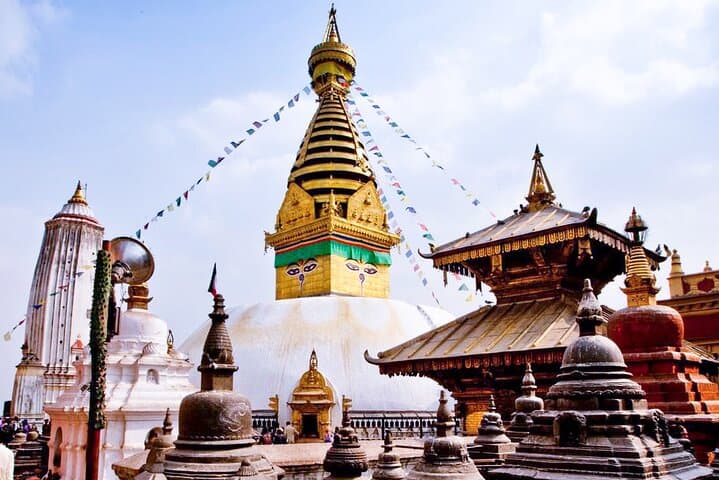
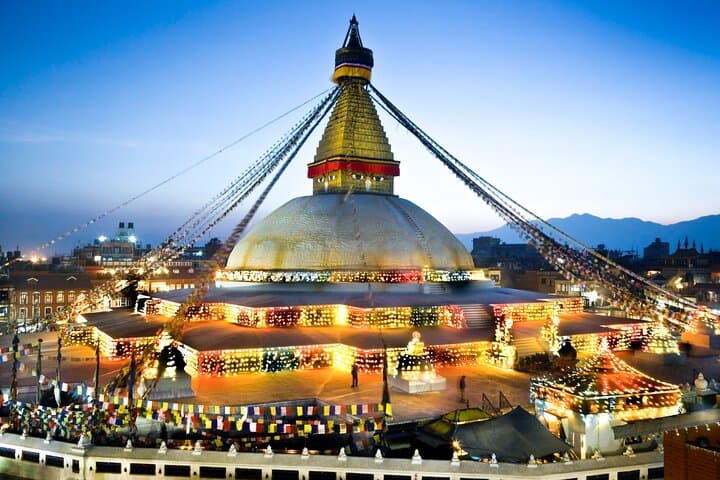
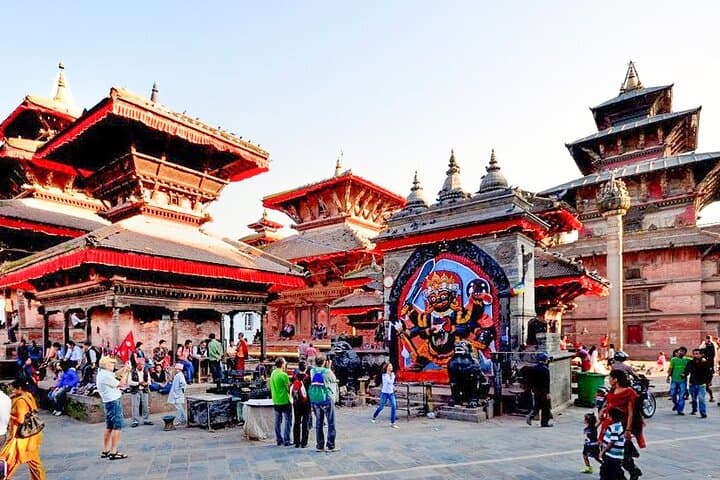
This full‑day World Heritage tour threads five of Kathmandu Valley's defining sites—Swayambhunath’s hilltop stupa, the sacred ghats of Pashupatinath, Boudhanath’s vast mandala, Patan Durbar Square’s carved woodwork, and the courtyards of Kathmandu Durbar Square—each a chapter of the valley’s layered past.
Historically the valley has been a political and spiritual crossroads for centuries: Newar artisans refined pagoda architecture here, Buddhist and Hindu practices developed side‑by‑side, and legends of Manjushri explain the basin’s lake origins. Geologically the valley sits in a tectonic basin; its clay soils and brick façades reflect both the earth beneath and the quarrying of local stone.
Culture is alive in small details: priests performing aarti, butter lamps bright against dusk, craftsmen repairing a wooden strut. The Bagmati River carries offerings and rituals along its banks; the monkeys at Swayambhunath are as much a feature as the painted eyes on the stupa.
Practical guidance: this is a long, walk‑heavy day—expect stair climbs at Swayambhu and uneven courtyards in the Durbar squares. Dress modestly at Pashupatinath, bring layered clothing for changing temperatures, carry cash for small temple donations and museum fees, and plan an early start to avoid midday heat and crowds. Respect ritual spaces, avoid feeding wildlife, and use the included private pickup to maximize time at each site.
easy.
10–15 hours.
Suitable for most fitness levels; requires comfortable all‑day walking and stair climbing
Admission to individual sites is not included—expect to pay modest entry fees at Durbar squares and some museum areas.
Yes—private, air‑conditioned pickup and drop‑off from central Kathmandu hotels is included in the tour package.
The tour is suitable for children and most visitors, but several sites have steep stairs and uneven ground; contact the operator about specific accessibility needs.
Photography is generally allowed in open areas, but inner sanctums—especially at Pashupatinath—may restrict cameras and require respectful distance during rituals.
Kathmandu Valley's palaces and stupas reflect centuries of Newar craftsmanship and a history where Hindu and Buddhist traditions developed in close proximity.
High visitor numbers strain fragile brickwork and shrine areas—follow established paths, avoid touching carved timber, and decline single‑use plastic where possible.
The Great Adventure Treks & Expedition - Private Day Tours operates guided outdoor trips and adventures with an emphasis on safety, stewardship, and memorable experiences.
You step from the air‑conditioned vehicle onto a sun‑warmed stone courtyard and the city presses in: prayer flags snap like small signals, temple bells insist on attention, and a band of monkeys moves with casual ownership across a stairwell.
You step from the air‑conditioned vehicle onto a sun‑warmed stone courtyard and the city presses in: prayer flags snap like small signals, temple bells insist on attention, and a band of monkeys moves with casual ownership across a stairwell.
This full‑day World Heritage tour threads five of Kathmandu Valley's defining sites—Swayambhunath’s hilltop stupa, the sacred ghats of Pashupatinath, Boudhanath’s vast mandala, Patan Durbar Square’s carved woodwork, and the courtyards of Kathmandu Durbar Square—each a chapter of the valley’s layered past.
Historically the valley has been a political and spiritual crossroads for centuries: Newar artisans refined pagoda architecture here, Buddhist and Hindu practices developed side‑by‑side, and legends of Manjushri explain the basin’s lake origins. Geologically the valley sits in a tectonic basin; its clay soils and brick façades reflect both the earth beneath and the quarrying of local stone.
Culture is alive in small details: priests performing aarti, butter lamps bright against dusk, craftsmen repairing a wooden strut. The Bagmati River carries offerings and rituals along its banks; the monkeys at Swayambhunath are as much a feature as the painted eyes on the stupa.
Practical guidance: this is a long, walk‑heavy day—expect stair climbs at Swayambhu and uneven courtyards in the Durbar squares. Dress modestly at Pashupatinath, bring layered clothing for changing temperatures, carry cash for small temple donations and museum fees, and plan an early start to avoid midday heat and crowds. Respect ritual spaces, avoid feeding wildlife, and use the included private pickup to maximize time at each site.