THE ADVENTURE COLLECTIVE® · Independent discovery and booking for outdoor travel

See Kathmandu’s major UNESCO sites in a focused half-day: Pashupatinath’s riverside rituals, the vast calm of Boudhanath, Patan’s carved courtyards, and Swayambhunath’s hilltop views. This private tour balances cultural context with practical guidance for first-time visitors.
See Kathmandu’s major UNESCO sites in a focused half-day: Pashupatinath’s riverside rituals, the vast calm of Boudhanath, Patan’s carved courtyards, and Swayambhunath’s hilltop views. This private tour balances cultural context with practical guidance for first-time visitors.
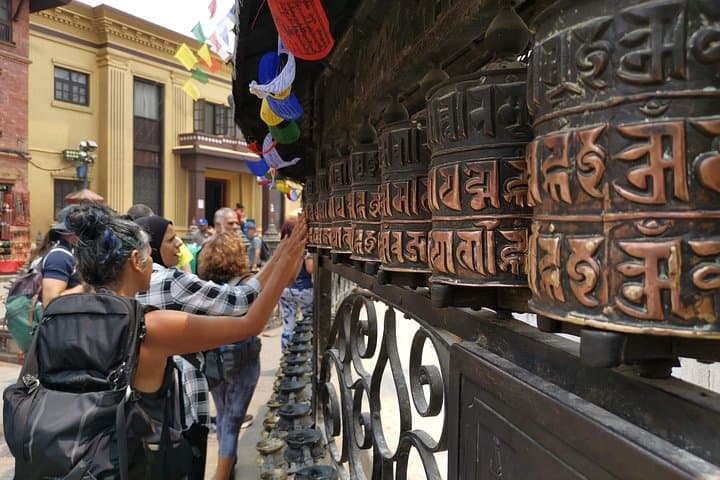
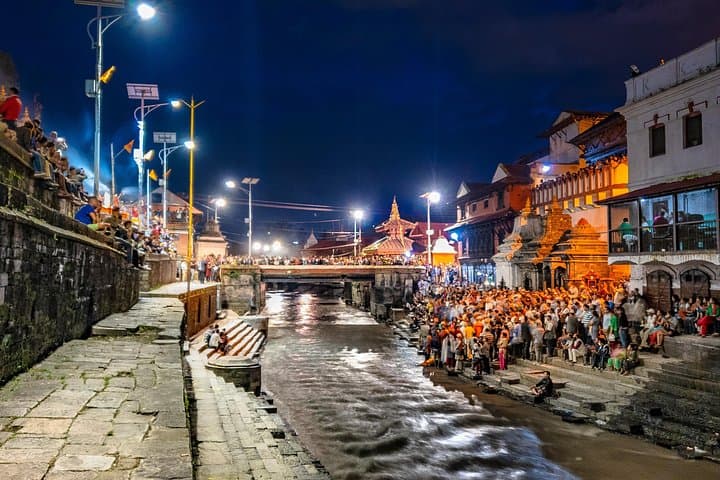
Morning light slices across the Kathmandu Valley as your car threads through narrow streets and prayer flags snap in the wind. You step first onto the banks of the Bagmati at Pashupatinath — a working Hindu temple where ritual fire and incense rise above riverside ghats — then move to the quieter, circular calm of Boudhanath's vast white stupa, its painted eyes watching the slow rotation of prayer wheels.
Verified experiences and guided adventures in the surrounding area.
Operated by Beyond The Limits Treks & Expedition P ltd · Kathmandu, Bagmati Province
Morning light slices across the Kathmandu Valley as your car threads through narrow streets and prayer flags snap in the wind. You step first onto the banks of the Bagmati at Pashupatinath — a working Hindu temple where ritual fire and incense rise above riverside ghats — then move to the quieter, circular calm of Boudhanath's vast white stupa, its painted eyes watching the slow rotation of prayer wheels.
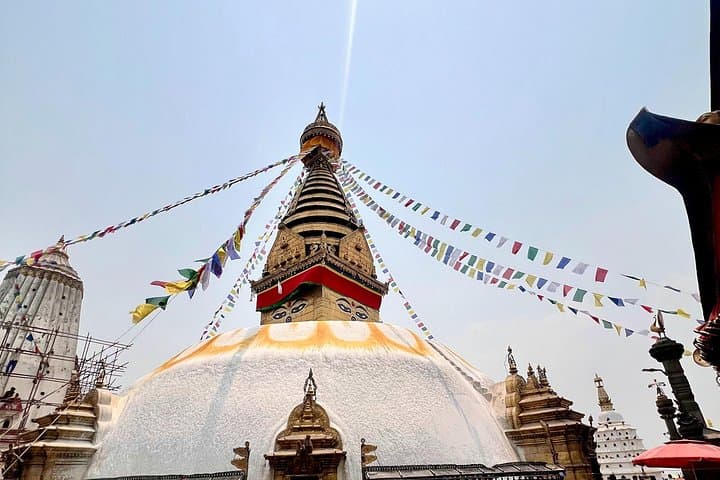
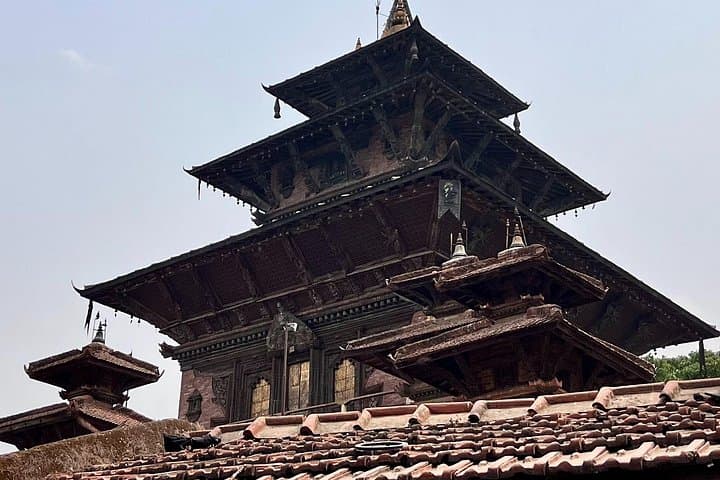
Patan Durbar Square opens like a living museum: carved wooden windows, bronze statues from the Malla era, and locals trading spices in the shadows of an ancient palace. Higher still, Swayambhunath perches on a wooded hill; playful rhesus macaques guard sweeping views of the valley while saffron-robed monks chant below. Together these sites map Kathmandu’s layered history — Newar craftsmanship, centuries of Buddhist and Hindu devotion, and the valley’s long role as a cultural crossroads.
Expect narrow alleys, temple courtyards, stone steps, and occasional crowds; photography rules and dress codes vary by site. This private 3–4 hour loop is best early or late in the day to avoid peak heat and traffic. Wear modest, comfortable clothing, sturdy shoes for temple steps, and carry a small amount of cash for donations and stalls. Your guide will handle permits and local context — listen for practical pointers about where photography is restricted, how to behave at cremation ghats, and how to support local artisans respectfully.
In short: a compact, sensory day that pairs panoramic views with hands-on cultural insight — ideal if you want a concentrated introduction to Kathmandu’s UNESCO heritage without trekking beyond the city.
easy.
3–4 hours.
Suitable for most fitness levels; requires walking on uneven ground and climbing several temple steps.
The tour runs approximately 3–4 hours depending on traffic and how long you spend at each site.
This tour description notes admissions are not included; your guide will advise on fees and where to buy tickets if required.
Non-Hindus can visit the outer temple complex and view the ghats from designated areas, but access to inner sanctums is restricted—follow your guide’s direction.
Yes—this is physically easy and family-friendly, though infants should be supervised at busy sites and near ghats.
Kathmandu Valley’s UNESCO sites reflect centuries of Newar culture and the Malla-period kingdoms; temples and stupas evolved alongside trade routes between India and Tibet.
These heritage sites face pressure from pollution, crowds, and seismic risk—visit with respect, avoid littering, and support local conservation and craftspeople when possible.
Beyond The Limits Treks & Expedition P ltd operates guided outdoor trips and adventures with an emphasis on safety, stewardship, and memorable experiences.
Morning light slices across the Kathmandu Valley as your car threads through narrow streets and prayer flags snap in the wind. You step first onto the banks of the Bagmati at Pashupatinath — a working Hindu temple where ritual fire and incense rise above riverside ghats — then move to the quieter, circular calm of Boudhanath's vast white stupa, its painted eyes watching the slow rotation of prayer wheels.
Morning light slices across the Kathmandu Valley as your car threads through narrow streets and prayer flags snap in the wind. You step first onto the banks of the Bagmati at Pashupatinath — a working Hindu temple where ritual fire and incense rise above riverside ghats — then move to the quieter, circular calm of Boudhanath's vast white stupa, its painted eyes watching the slow rotation of prayer wheels.
Patan Durbar Square opens like a living museum: carved wooden windows, bronze statues from the Malla era, and locals trading spices in the shadows of an ancient palace. Higher still, Swayambhunath perches on a wooded hill; playful rhesus macaques guard sweeping views of the valley while saffron-robed monks chant below. Together these sites map Kathmandu’s layered history — Newar craftsmanship, centuries of Buddhist and Hindu devotion, and the valley’s long role as a cultural crossroads.
Expect narrow alleys, temple courtyards, stone steps, and occasional crowds; photography rules and dress codes vary by site. This private 3–4 hour loop is best early or late in the day to avoid peak heat and traffic. Wear modest, comfortable clothing, sturdy shoes for temple steps, and carry a small amount of cash for donations and stalls. Your guide will handle permits and local context — listen for practical pointers about where photography is restricted, how to behave at cremation ghats, and how to support local artisans respectfully.
In short: a compact, sensory day that pairs panoramic views with hands-on cultural insight — ideal if you want a concentrated introduction to Kathmandu’s UNESCO heritage without trekking beyond the city.