THE ADVENTURE COLLECTIVE® · Independent discovery and booking for outdoor travel

Follow a route from Kathmandu’s holy rivers to the high sanctity of Muktinath, mixing centuries-old temples with high-altitude vistas. This multi-day loop delivers culture, hot springs and clear Himalayan views with practical accessibility for non-technical travelers.
Follow a route from Kathmandu’s holy rivers to the high sanctity of Muktinath, mixing centuries-old temples with high-altitude vistas. This multi-day loop delivers culture, hot springs and clear Himalayan views with practical accessibility for non-technical travelers.
The trip opens amid Kathmandu’s early-morning chaos: incense smoke from Pashupatinath drifts across the Bagmati while vendors arrange marigolds and brass puja bowls. From the city’s crowded lanes the route moves west—over terraced hills and rivers—toward the calmer shore of Phewa Lake in Pokhara, then up the Kali Gandaki valley where the landscape sharpens into wind-swept cliffs and distant, stony ridgelines.
Verified experiences and guided adventures in the surrounding area.
Operated by Shepherd Holidays · Muktinath, Gandaki Province
The trip opens amid Kathmandu’s early-morning chaos: incense smoke from Pashupatinath drifts across the Bagmati while vendors arrange marigolds and brass puja bowls. From the city’s crowded lanes the route moves west—over terraced hills and rivers—toward the calmer shore of Phewa Lake in Pokhara, then up the Kali Gandaki valley where the landscape sharpens into wind-swept cliffs and distant, stony ridgelines.
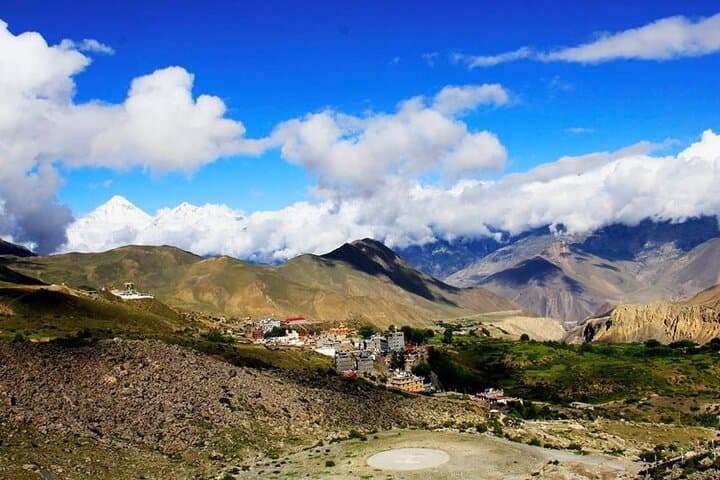
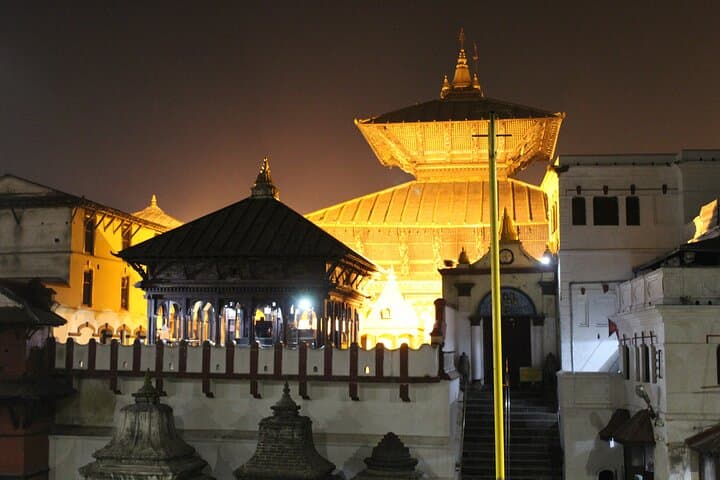
Pashupatinath is a working Hindu complex where ritual life and funerary rites play out along the river; its pagoda roofs and carved struts are centuries old. Geologically, the drive follows a deep, rain-carved gorge—the Kali Gandaki—famous for fossils (shaligrams) and the dramatic east-west alignment of the Annapurna and Dhaulagiri massifs that frame the horizon.
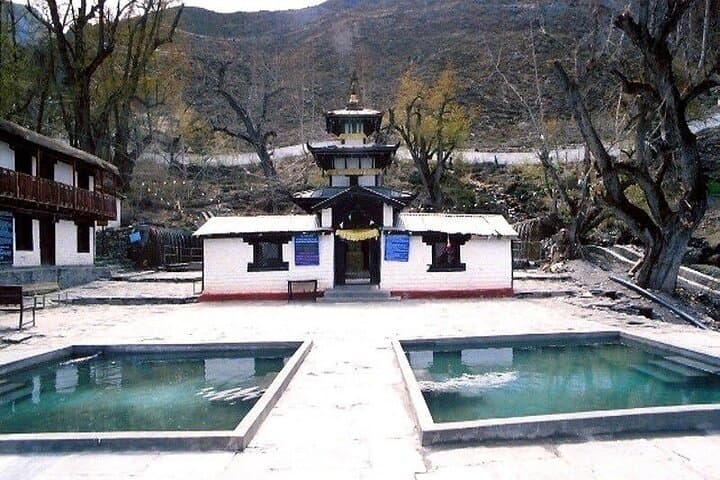
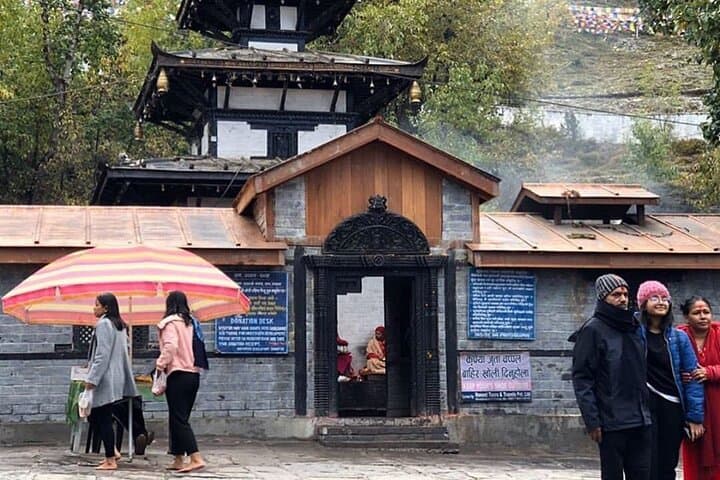
Muktinath sits at high altitude as a syncretic pilgrimage: a Buddhist gompa and Hindu temple share the same site, with 108 sacred water spouts that encourage ritual bathing. Nearby Mustang country preserves a Tibetan-influenced culture; local teahouses and markets sell Shaligram stones and woolen goods. Tatopani offers a practical contrast—natural hot springs where muscles find relief after road travel.
Practical guidance: expect long drives on variable mountain roads and short, active walks at altitude—Muktinath is above 3,700 m. Carry layers, sun protection and basic altitude precautions: hydrate, avoid heavy exertion first 24 hours, and discuss medication with a clinician if you’re sensitive to altitude. Accommodations along the route range from 3-star hotels in Kathmandu and Pokhara to simple guesthouses in Jomsom and Muktinath. The itinerary blends cultural immersion with accessible mountain scenery—suitable for travelers who want pilgrimage, photo opportunities and manageable high-country travel without technical trekking.
moderate.
7–8 days.
Light to moderate fitness; able to handle long vehicle transfers and short hikes at altitude.
Permits for the Annapurna region and a TIMS card are typically included by the operator; carry ID and your booking confirmation.
The trip involves long drives and short walks; it’s not technical but includes high-altitude exposure, so basic mobility and stamina are needed.
Yes—flights between Kathmandu and Pokhara or Jomsom are possible weather permitting and can save time, though they add cost and are subject to cancellations.
October–December and March–April offer the most reliable weather and clear mountain views while avoiding monsoon road damage.
Muktinath has served as a pilgrimage site for Hindu and Buddhist devotees for centuries, while Pashupatinath is one of Kathmandu’s oldest and most venerated Shaiva temples.
Travelers should minimize plastic use, stay on established roads and trails, and support local guides and lodges that follow waste-management practices to protect fragile mountain ecosystems.
Shepherd Holidays operates guided outdoor trips and adventures with an emphasis on safety, stewardship, and memorable experiences.
The trip opens amid Kathmandu’s early-morning chaos: incense smoke from Pashupatinath drifts across the Bagmati while vendors arrange marigolds and brass puja bowls. From the city’s crowded lanes the route moves west—over terraced hills and rivers—toward the calmer shore of Phewa Lake in Pokhara, then up the Kali Gandaki valley where the landscape sharpens into wind-swept cliffs and distant, stony ridgelines.
The trip opens amid Kathmandu’s early-morning chaos: incense smoke from Pashupatinath drifts across the Bagmati while vendors arrange marigolds and brass puja bowls. From the city’s crowded lanes the route moves west—over terraced hills and rivers—toward the calmer shore of Phewa Lake in Pokhara, then up the Kali Gandaki valley where the landscape sharpens into wind-swept cliffs and distant, stony ridgelines.
Pashupatinath is a working Hindu complex where ritual life and funerary rites play out along the river; its pagoda roofs and carved struts are centuries old. Geologically, the drive follows a deep, rain-carved gorge—the Kali Gandaki—famous for fossils (shaligrams) and the dramatic east-west alignment of the Annapurna and Dhaulagiri massifs that frame the horizon.
Muktinath sits at high altitude as a syncretic pilgrimage: a Buddhist gompa and Hindu temple share the same site, with 108 sacred water spouts that encourage ritual bathing. Nearby Mustang country preserves a Tibetan-influenced culture; local teahouses and markets sell Shaligram stones and woolen goods. Tatopani offers a practical contrast—natural hot springs where muscles find relief after road travel.
Practical guidance: expect long drives on variable mountain roads and short, active walks at altitude—Muktinath is above 3,700 m. Carry layers, sun protection and basic altitude precautions: hydrate, avoid heavy exertion first 24 hours, and discuss medication with a clinician if you’re sensitive to altitude. Accommodations along the route range from 3-star hotels in Kathmandu and Pokhara to simple guesthouses in Jomsom and Muktinath. The itinerary blends cultural immersion with accessible mountain scenery—suitable for travelers who want pilgrimage, photo opportunities and manageable high-country travel without technical trekking.